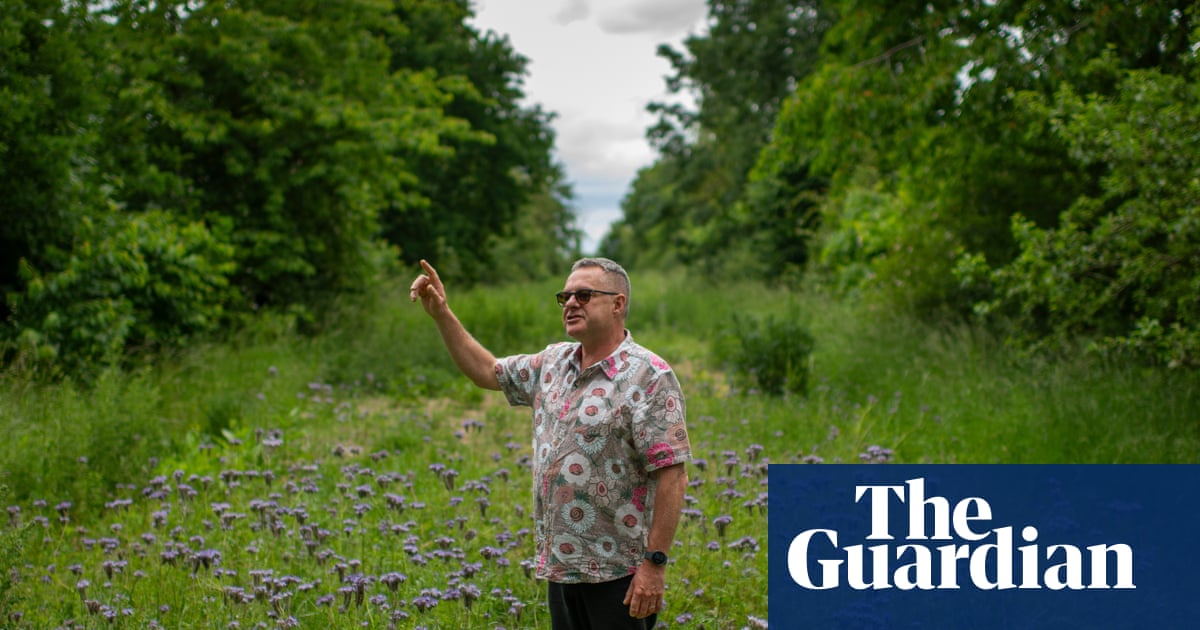
Jay Wilde’s family bought the farm in 1956 and Jay helped his father run it as an organic farm until his father’s death in 2011. As a long term vegetarian, Jay found taking the cows to be slaughtered to be very unsettling and was always on the lookout for alternatives. In the summer of 2017, after speaking to The Vegan Society, the 59 year old farmer decide to give up 59 of his cattle to a UK sanctuary to be cared for. He felt so guilty sending the cows to be slaughtered that he could no longer operate the farm the same way he had in the past and believed he could create an alternative business model that did not rely on animals as commodities. They have kept a handful of cows on the property as they truly care for the animals and enjoy their presence.
Crop–livestock integration beyond the farm level: a review
AbstractParadoxically, the number of crop–livestock farms is declining across Europe, despite the fact that crop-livestock farms are theoretically optimal to improve the sustainability of agriculture. To solve this issue, crop–livestock integration may be organized beyond the farm level. For instance, local groups of farmers can negotiate land-use allocation patterns and exchange materials such as manure, grain, and straw. Development of such a collective agricultural system raises questions, rarely documented in the literature, about how to integrate crops and livestock among farms, and the consequences, impacts, and conditions of integrating them. Here, we review the different forms of crop–livestock integration beyond the farm level, their potential benefits, and the features of decision support systems (DSS) needed for the integration process. We identify three forms of crop–livestock integration beyond the farm level: local coexistence, complementarity, and synergy, each with increasingly stronger temporal, spatial, and organizational coordination among farms. We claim that the forms of integration implemented define the nature, area, and spatial configuration of crops, grasslands, and animals in farms and landscapes. In turn, these configurations influence the provision of ecosystem services. For instance, we show that the synergy form of integration promotes soil fertility, erosion control, and field-level biological regulation services through organizational coordination among farmers and spatiotemporal integration between crops, grasslands, and animals. We found that social benefits of the synergy form of integration include collective empowerment of farmers. We claim that design of the complementarity and synergy forms of crop–livestock integration can best be supported by collective participatory workshops involving farmers, agricultural consultants, and researchers. In these workshops, spatialized simulation modeling of crop–livestock integration among farms is the basis for achieving the upscaling process involved in integrating beyond the farm level. Facilitators of these workshops have to pay attention to the consequences on governance and equity issues within farmers groups.
Click, clack, moo: cows that type
When Farmer Brown's cows find a typewriter in the barn they start making demands, and go on strike when the farmer refuses to give them what they want

Ruth Watson: Inside the new grassroots movement that wants your support
THE fields near my home are bursting with life. Lambs are big enough to rampage through their flocks in headlong, head-butting gangs. Highland cows…

A social-ecological framework for analyzing and designing integrated crop–livestock systems from farm to territory levels
Integrated crop–livestock systems are often considered a promising way to address agricultural sustainability issues. Many authors claim that complementarities and synergies between crops and livestock can improve nutrient cycling and delivery of ecosystem services (ES) in agricultural systems. They have analyzed effects of interactions at the farm level and affirmed the potential advantage of developing crop–livestock interactions at the territory level. However, potential benefits of developing synergies beyond the farm level have not been clearly identified. Thus, we developed a conceptual framework that can be used to analyze, design and perform integrated assessment of crop–livestock systems at the territory level. To address crop–livestock interaction issues, we define it as a social-ecological system called the territorial crop–livestock system (TCLS). The ecological system is represented as three interacting components, crops, grasslands and animals, allowing description of various land uses and their potential effects on nutrient cycling and ES. The social system, represented as farmers interacting with natural-resource managers and agro-food chain actors, determines land use and the nature and intensity of ES delivered. We highlight the importance of coordination and learning among actors to support implementation of complex adaptive systems such as TCLSs. We illustrate the expressive power of our conceptual framework through development of a generic typology of crop–livestock systems. Then we show how our conceptual framework can be used as an intermediary object with stakeholders in participatory design approaches. We illustrate this process by representing four archetypal TCLSs. We provide an example of the design approach implemented in Southwestern France to address severe recurrent water shortages, which includes analysis of land use in the current crop–livestock system and the associated key metabolic and ES issues, identification of options for change and multi-criteria analysis of these options. We conclude that this framework shows great potential to support development of sustainable farming systems at the territory level.

After three years of dead ends and cheeky developer comments, Diablo 4 players have finally found the cow level, but the mystery isn’t solved yet
After three years and multiple expansions, Diablo 4 players have seemingly completed the secret cow level.

Here’s How You Can Make Meat Way More Sustainable
You can be a carnivore and an environmentalist.

Arrêtons de demander aux gens de s’engager à devenir véganes
Face aux nombreux partages d’actions d’associations animalistes visant à transformer les gens en véganes immédiatement sur les réseaux sociaux, la question de l’efficacité de telles méthodes se pose. Dans cet article, nous esquissons une critique de cette méthode et nous proposons une méthode alternative qui nous paraît plus prometteuse pour atteindre le même objectif
Welcome to Farm Hack | FarmHack
Agriculture needs changes to help save climate and farmers, says national agriculture group | CBC News
A report released Wednesday by the National Farmers Union concludes that some elements of old-fashioned mixed farming combined with the latest technology can reduce greenhouse gas emissions and keep more farm families on the land.

Diversification and ecosystem services for conservation agriculture: Outcomes from pastures and integrated crop–livestock systems | Renewable Agriculture and Food Systems | Cambridge Core
Diversification and ecosystem services for conservation agriculture: Outcomes from pastures and integrated crop–livestock systems - Volume 28 Issue 2
Want to have a real impact on climate change? Time to become a vegetarian | Travis McKnight
Travis McKnight: Millennials who care about the environment should put their money where their mouths are and stop eating meat
Sepp Holzer's Permaculture: A Practical Guide to Small-Scale, Integrative Farming and Gardening
Sepp Holzer farms steep mountainsides in Austria 1,500 meters above sea level. His farm is an intricate network of terraces, raised beds, ponds, waterways and tracks, well covered with productive fruit trees and other vegetation, with the farmhouse neatly nestling amongst them. This is in dramatic contrast to his neighbors' spruce monocultures.In this book, Holzer shares the skill and knowledge acquired over his lifetime. He covers every aspect of his farming methods, not just how to create a holistic system on the farm itself, but how to make a living from it. Holzer writes about everything from the overall concepts, down to the practical details.In Sepp Holzer's Permaculturereaders will learn: How he sets up a permaculture system The fruit varieties he has found best for permaculture growing How to construct terraces, ponds, and waterways How to build shelters for animals and how to work with them on the land How to cultivate edible mushrooms in the garden and on the farm and much more! Holzer offers a wealth of information for the gardener, smallholder or alternative farmer yet the book's greatest value is the attitudes it teaches. He reveals the thinking processes based on principles found in nature that create his productive systems. These can be applied anywhere.

The brutal trade-off that will decide the future of food
A growing number of thinkers say factory farming can help save the planet. Are they right?

What Is a Pig Butchering Scam?
This type of devastating scheme ensnares victims and takes them for all they’re worth—and the threat is only growing.
‘Doves and food and fun’: the fight to save a farming pioneer
Wakelyns needs £1.2m to save its diverse organic crops and ‘micro’ enterprises including a bakery and honeybee hives