

Redact sensitive trace content before saving locally or uploading to Hugging Face.
badlogic/pi-share-hf
Collect, review, and upload redacted pi session files to a Hugging Face dataset
Introducing OpenAI Privacy Filter
OpenAI Privacy Filter is an open-weight model for detecting and redacting personally identifiable information (PII) in text with state-of-the-art accuracy
The Tor Project | Privacy & Freedom Online
Defend yourself against tracking and surveillance. Circumvent censorship.

Safety Without Compromising on Privacy
Our approach to safeguards in Tinfoil Chat that keeps your conversations private: model evaluations before hosting, plus safeguard models that run exclusively inside secure enclaves.

There Are Files Stored in This Video
openPDS/SafeAnswers - The privacy-preserving Personal Data Store
Protecting the Privacy of Metadata through SafeAnswers
Tibo on Twitter / X
Today we’re previewing Private Safety Processing, designed to let us keep offering Zero Data Retention while improving our safeguards. Even when benefiting from frontier intelligence, customers shouldn’t have to give up control of sensitive data.For ZDR deployments, content… https://t.co/W6Ls8W7x2l— Tibo (@thsottiaux) August 19, 2026
Backend infrastructure - Tinfoil Documentation
This page provides a description of the different components that make up our backend infrastructure. It also describes how Tinfoil guarantees code auditability and data confidentiality using these components.

C2PA | Providing Origins of Media Content
Enhance digital safety through the use of content authenticity tools. C2PA provides a way to ensure content transparency by analyzing the origin of media.
It's all a blur
If you follow information security discussions on the internet, you might have heard that blurring an image is not a good way of redacting its contents.
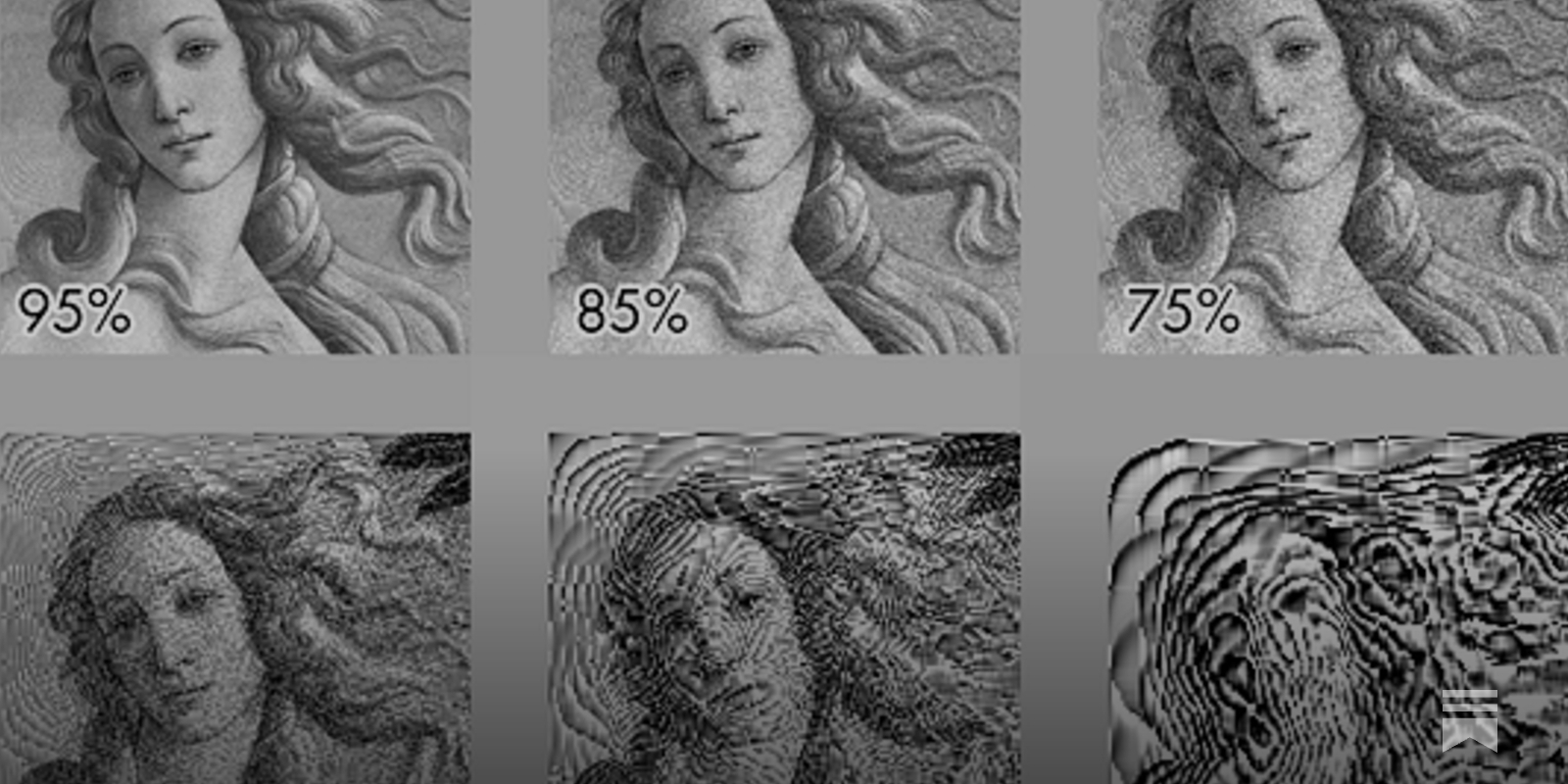
Nightshade: Protecting Copyright
bsky.app | WhoTracks.Me
Explore the tracking landscape of bsky.app on WhoTracks.Me, revealing the most common trackers like Sentry and their impact on privacy

microsoft/presidio
An open-source framework for detecting, redacting, masking, and anonymizing sensitive data (PII) across text, images, and structured data. Supports NLP, pattern matching, and customizable pipelines.
The Consent Layer: Using ligatures to make web text expensive to scrape without asking
ShieldFont is an open-source creative technology project that offers a practical opt-out from unauthorized AI training and disrupts what is collected when that choice is ignored. It swaps 45.8% of content words (around 24.4% of all words) in a page's source code for other (partially) random words, while the font restores the original text on screen. Readers see the work as intended; mass scrapers collect an altered version. In testing, shielding caused over 90% of pages that would otherwise pass the quality filter to be rejected, keeping them out of the training pipeline. Of those that still passed, 19.4% of all words conveyed false meaning, adding noise to unauthorized AI training datasets. This paper's goal is to walk newcomers through the whole process, in plain language and in order: the project's rationale, how it was built, the results, how to deploy it, and where to contribute.
Is this a thing? Something about private data on AT Proto, where a person could purchase content and have a copy of said content injected into their Private Data, so it could not be removed without their consent? I’m thinking “I’ve bought a copy of a book, and now the book blob lives in my PDS”
