


Concepts, Cases and Achieving Progressive Change
Scoping report: Future challenges to democracy | CoP CC on Participatory and Deliberative Democracy
The report from the European Commission identifies 10 key challenges and emerging trends impacting European democratic systems and suggests future policy options. These challenges are structured across three interconnected levels: citizens and societal dynamics, the information and knowledge environment, and institutions and the democratic system. This framework aims to provide a comprehensive and integrated view of democracy as a connected ecosystem, emphasising how challenges in one area can affect the entire system.
The Authoritarian Stack
How Tech Billionaires Are Building a Post-Democratic America — And Why Europe Is Next
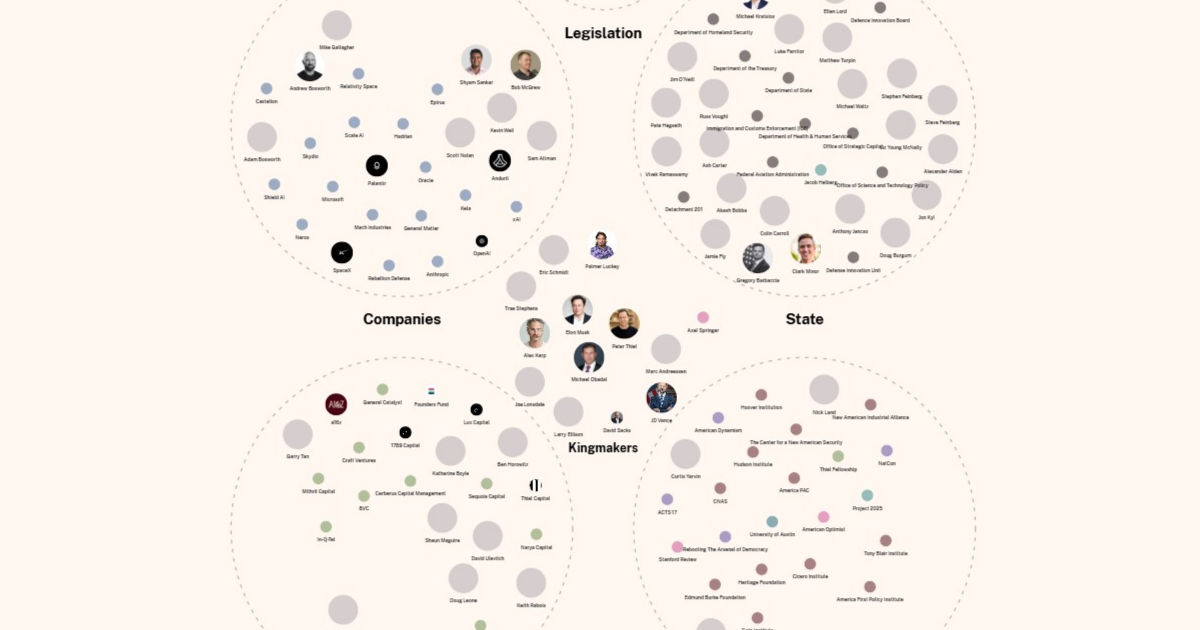
The Authoritarian Stack
How Tech Billionaires Are Building a Post-Democratic America — And Why Europe Is Next
Horizon Europe
The EU's research and innovation funding programme 2021-2027
European Macro Policy Network
Shaping sustainable public finances that drive full employment, prosperity, and shared growth.
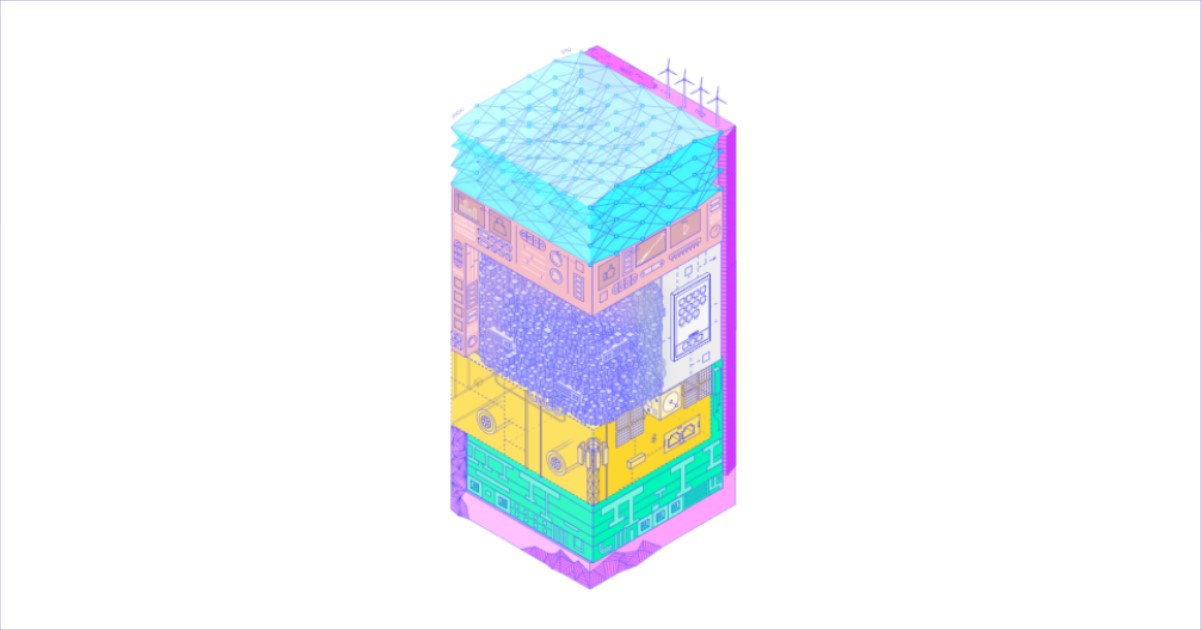
Democratic digital infrastructure for civil society · Theta
How civil society and Danish foundations can support digital democracy
En Europe, 20 ans d'activisme extra-parlementaire de l’extrême droite
À travers le projet de recherche européen de l’Observatoire des protestations d’extrême droite en Europe (FARPO), Caterina Froio et Pietro Castelli Gattinara, chercheurs en sciences politiques,

What is a “European Alternative” to X? – Open Future
European alternatives to Big Tech platforms must go beyond sovereignty—they need decentralized models, robust safety, and public funding.

Reinventing Commons Governance in Modern Times | David Bollier
I gave the following remarks about commons governance on September 27 as part of the U!REKA Lab Lecture Series. U!REKA -- which stands for Urban Research and Education Knowledge Alliance -- is a consortium of eight European universities that studies urban commons. The subtitle of my talk was "Find Answers by Living the Questions."
L'écologie sacrifiée sur l'autel des règles budgétaires européennes
La discussion budgétaire, focalisée sur la réduction de la dette, ne répond pas aux besoins d’investissements urgents pour la transition écologique et sociale.…

Fractured reality
The report examines the evolving impact of digital technologies on European democracy. In an era of a global struggle to control the information space, this report offers critical insights into the fracturing of perceived realities, the rise of the ‘fantasy-industrial complex’, and the systemic risks posed by the attention economy. It exposes how platforms algorithmically prioritise engagement over accuracy, reinforcing ideological echo chambers and amplifying mis- and disinformation that erode democratic resilience. The report highlights how structural incentives and foreign control of the most important players in the information space undermine information integrity, collective knowledge and civic discourse. In response, the report presents a number of recommendations from fostering alternative public spaces and crowd-sourced knowledge systems to reforming business models, restoring user agency, and advancing EU digital sovereignty through decentralised infrastructure

Digitalisation in Europe – 2025 edition - Interactive publications - Eurostat
Digital technologies are transforming the world we live and work in. They touch many different aspects of our lives, from everyday tasks like making phone calls and shopping to how businesses and public services operate. Digital transformation is one of the key priorities for the EU. The digital decade initiative sets out the EU targets that will guide digital transformation until 2030.
Digitalisation in Europe – 2025 edition - Interactive publications - Eurostat
Digital technologies are transforming the world we live and work in. They touch many different aspects of our lives, from everyday tasks like making phone calls and shopping to how businesses and public services operate. Digital transformation is one of the key priorities for the EU. The digital decade initiative sets out the EU targets that will guide digital transformation until 2030.
