


Setting up a personal Home Lab is not a task for lazy people: it incurrs a big cost of maintenance and issues arise even though we might use the best IT-Infrastructure practices… but we can always learn a lot out of it and make it also super fun. In this post I would like to share my journey and share some tips and tricks and issues I bumped into. Let’s jump in!
State of My Homelab 2025
An overview of my current homelab architecture, focusing on a transition from complex orchestration to a simplified Docker Compose-based setup.

5 Podman Features You Should Know: Kubernetes & Containers Simplified
The platform engineer's survival guide to Kubernetes networking, Tue, Jul 9, 2024, 10:00 AM | Meetup
Kubernetes networking can be intimidating for platform engineers, but with the right knowledge, it can become a powerful tool. Understanding the various layers of Kubernete

Running a PDS in Kubernetes for fun & profit - at://hayden.moe
The trials and tribulations of running a PDS on self-hosted Kubernetes with the Gateway API and other such fun things
10 Linux Tweaks I Make on Every New Home Lab Server
These are the Linux configuration changes I make on every new home lab server to improve security, reliability, monitoring, logging, and long-term maintenance.

ajfriesen
A home for my projects, thoughts, and ideas. Home Automation with Home Assistant, Linux things, building a Home Lab and more.
My declarative multi-machine homelab, explained | Bas Nijholt
Friends keep asking how my homelab works, so I wrote it all down, starting from zero. Four NixOS machines run about 150 containers behind one Traefik front door, and with WireGuard and my own Headscale server I reach my self-hosted services from anywhere over encrypted HTTPS connections, while strangers on the internet get nothing. The part I think is the coolest is the balance: everything is declarative and lives in git, but with as little machinery as possible.

Self-host and scale web apps without Kubernetes complexity | Uncloud
Take your Docker Compose apps to production with zero-downtime deployments, automatic HTTPS, and cross-machine scaling. Self-hosting made reliable without the complexity.

So, you want to start self-hosting? Part 1 - How to install Proxmox and pick your hardware.
Creating a Simple Kubernetes Debug Pod: Premium Ubuntu Sleep Pod YAML|downey.io
Sample YAML for creating a debug pod that runs Ubuntu and sleeps for a week.
The future of Kubernetes and cloud infrastructure
New development approaches and open-source tools are set to address the complexity and scaling challenges of Kubernetes and evolve cloud infrastructure as we know it today.
A Research Lab for Open Source ✸ Software Stewardship Lab
Today, we're launching a world-class research lab dedicated to Open Source sustainability with a team of some of the most experienced people in the world.
Cloud native Go: building reliable services in unreliable environments
What do Docker, Kubernetes, and Prometheus have in comm…

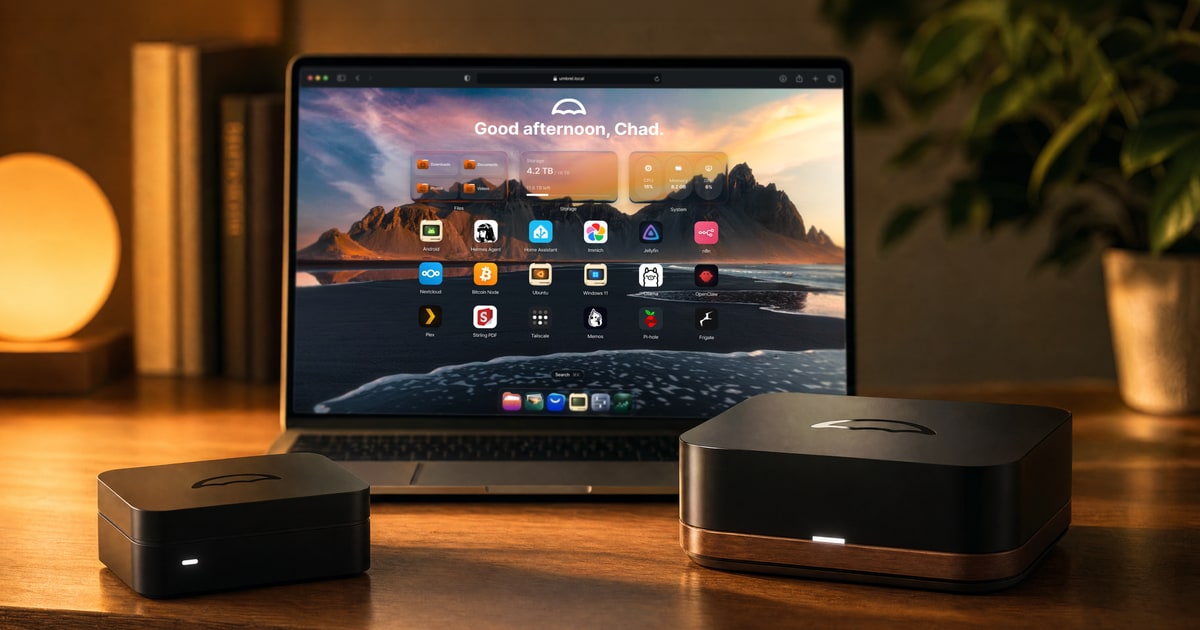
Umbrel - Personal home cloud and OS for self-hosting
Bring the cloud to your home with umbrelOS - a beautiful home server OS for self-hosting, and Umbrel Home and Umbrel Pro - plug-and-play home servers. Install Nextcloud, Jellyfin, Bitcoin node, and hundreds of self-hosted apps in one click.
linuxkit/linuxkit
A toolkit for building secure, portable and lean operating systems for containers
Why you should take a look at Nomad before jumping on Kubernetes
Hashicorp's Nomad is a great, easy to use and very flexible task scheduler/orchestrator, and actually fares up decently against Kubernetes.