

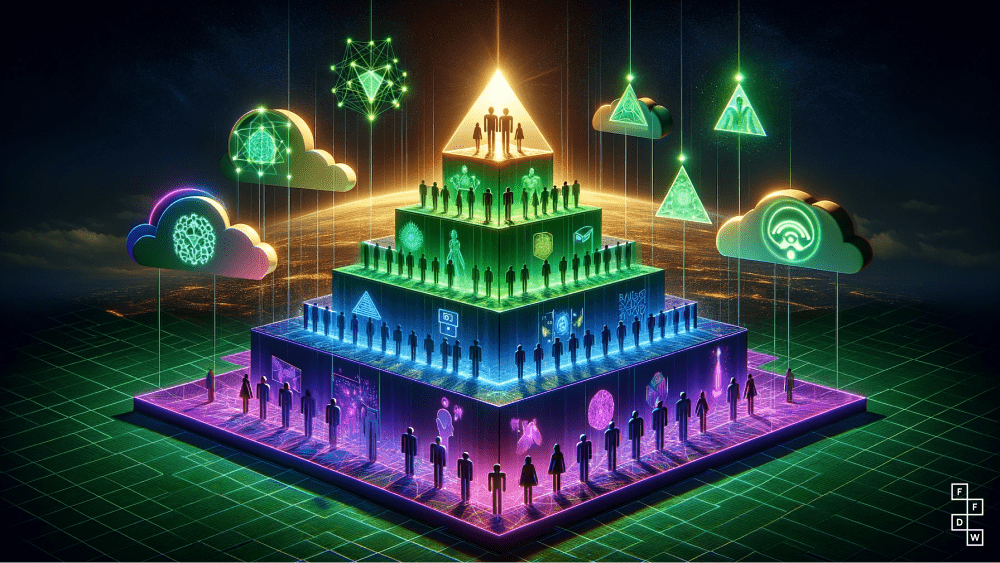
Explore how personal technology and digital rights protect our fundamental freedom to think, learn, and grow independently in an increasingly centralized digital world.
Digital Echoes and Unquiet Minds - Christopher Butler
There's a psychological burden of digital life even heavier than distraction.

Declaration of Digital Autonomy
We demand a world in which technology is created to protect and empower those who are impacted by it. Our technology must respect the rights and freedoms of those users. We need to take control for the purpose of collectively building a better world in which technology works in service to the good of human kind, protecting our rights and digital autonomy as individuals.
Digital Freedom
Roberta Fischli & Thomas Beschorner argue that our digital future is not preprogrammed: it’s about time we start thinking about what it should look like.
Reclaim Control | over your technology, your devices, your data, your digital life.
You have the right to control your data, devices, and services. We coordinate, develop and foster communities of Reclaimers who want digital independence. Together, let's reclaim the right to a technical future of data sovereignty, digital autonomy, responsible governance, and collective care online for all.
Understanding the influence of digital technology on human cognitive functions: A narrative review
In the era of rapid digitalization, the widespread integration of digital technology into various aspects of daily life has sparked significant interest in understanding its impact on cognitive mental processes. While the emerging data suggests that its influence may be positive or negative, the depth of evidence regarding neurobiological mechanisms remains limited. This review aims to synthesize previously published studies and develop a comprehensive framework that systematically categorizes digital technologies, the cognitive functions they impact, and developmental stages around the concept of neuroplasticity, while clearly illustrating their interconnections. Despite acknowledged limitations, through an exhaustive approach, this paper intends to offer a dynamic perspective on the effects of digital media on the human brain, before the onset of addiction.
The Digital Sublime: Myth, Power, and Cyberspace
Interpreting the myths of the digital age: why we believed in the power of cyberspace to open up a new world.The digital era promises, as did many other te
Freedom Isn't Free
An inquiry into the failure of the free software movement, and a proposal for recovering its radical soul.

The Digital Life Collective
The Digital Life Collective is an enabler. If you think we should be doing something we're not currently doing, we're here to help you and your project make the change you want to see in the world.
freedoms-for-who, revisited briefly
In talking with someone about “preferred form for modification” over the weekend at FOSDEM, the FSF (now sort-of-OSI?) four freedoms came up.
Why we must reclaim digital sovereignty
A new white paper envisions a radically different technological future
Open strategic questions for digital minds
My current takes on issues the field should focus on more

WE ALL WE GOT
Welcome to We All We Got: A Digital Green Book for the Culture—a guide for navigating the ever-growing wave of digital manipulation aimed at dividing, deceiving, and discouraging Black communities.
Advancing Women & Technology: Empowering Futures Through Digital Skills: 2025: News and Resources: About Us: Center of Excellence for Women & Technology: Indiana University Bloomington
In today’s fast-paced digital world, technology isn’t just a career path-it’s a compelling tool for empowerment.
'Technology Freedom Cooperative' To Build Infrastructure for Human Rights and Justice Groups
A conversation with Maheen Khan, director of technology at the Invisible Institute, and Patrick Ball, director of research at HRDAG.

Empowering Users, Not Overlords: Overcoming Digital Helplessness
Disclosure: I’m on the board of Bluesky, so feel free to take as many grains of salt as you want in reading it, though all of it applies equally to other decentralized social media ecosys…

“The internet represents a closing of the parenthesis and a return to older models of understanding. Human consciousness in the digital age, which de-emphasizes the categorization that marked the age of print, makes us think in a way that is reminiscent of a medieval peasant.”
The Gutenberg Parenthesis
web.mit.edu