Are Information Disclosures Effective? Evidence from the Credit Card Market
Consumer protection in financial markets in the form of information disclosure is high on government agendas, even though there is little evidence of its effectiveness. We implement a randomized control trial in the credit card market for a large population of indebted cardholders and measure the impact of Truth-in-Lending-Act-type disclosures, de-biasing warning messages and social comparison information on default, indebtedness, account closings, and credit scores. We conduct extensive external validity exercises in several banks, with different disclosures, and with actual policy mandates. We find that providing salient interest rate disclosures had no effects, while comparisons and de-biasing messages had only modest effects at best.
Community Wealth Building (Scotland) Act 2026
This version of this Act contains provisions that are prospective.
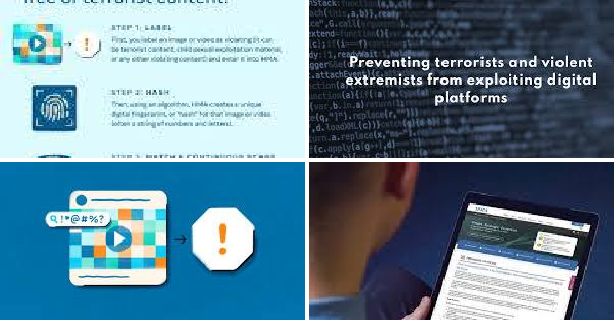
🔎 hma moderation - Google Search
Detailed Receipts - AEC - Transparency Website
Part XX of the Commonwealth Electoral Act 1918 requires all political parties, significant third parties and associated entities to set out the details of all receipts above the disclosure threshold each financial year.
Shaming Microloan Delinquents: Evidence from a Field Experiment in China
We study the effects of village credit information sharing on individual microloan repayment, using a randomized experiment with loan applicants from 40 villages in rural China. In our main treatment, customers received a message on the loan application form that “overdue payment (40 days after each installment due date) will be considered for public disclosure among the village by showing debtors’ names on a blackboard outside the village office of the microlending institution.” On average, this social appeal reduces the share of delinquents and the individual delinquency rate by 18.6% and 5.6% from baseline rates of 79.5% and 15.2%, respectively. The effects appear more pronounced among male and older borrowers. Additional treatments help to benchmark the effect against lender credit information sharing and separate the effects on adverse selection and moral hazard. Mechanism analysis shows that the publicly disclosed “blacklist” of delinquents affects borrowers’ repayment behaviors, partially through borrowers’ fear of losing informal risk insurance from the village society and predominately through public shaming penalties. Overall, these results support that, in traditional societies, social appeals can provide not only pecuniary, but also psychological incentives to improve loan repayment. Psychological incentives, to some extent, have stronger effects. This paper was accepted by Gustavo Manso, finance.

Disclosure: Psychology Changes Everything
We review literature examining the effects of laws and regulations that require public disclosure of information. These requirements are most sensibly imposed in situations characterized by misaligned incentives and asymmetric information between, for example, a buyer and seller or an advisor and advisee. We review the economic literature relevant to such disclosure and then discuss how different psychological factors complicate, and in some cases radically change, the economic predictions. For example, limited attention, motivated attention, and biased assessments of probability on the part of information recipients can significantly diminish, or even reverse, the intended effects of disclosure requirements. In many cases, disclosure does not much affect the recipients of the information but does significantly affect the behavior of the providers, sometimes for the better and sometimes for the worse. We review research suggesting that simplified disclosure, standardized disclosure, vivid disclosure, and social comparison information can all be used to enhance the effectiveness of disclosure policies.

FinCEN Permanently Ends Beneficial Ownership Reporting Requirements for Millions of Small Business Owners
Will Delete Information Previously Reported by U.S. PersonsWASHINGTON––Today, the U.S. Department of the Treasury’s Financial Crimes Enforcement Network (FinCEN) is issuing a final rule that permanently removes the requirement for U.S. companies and U.S. persons to report beneficial ownership information to FinCEN under the Corporate Transparency Act. The final rule is effective on its publication in the Federal Register. FinCEN today also announced that it will delete previously reported information by U.S. persons—now exempt from the reporting requirements—from the beneficial ownership information database. “Today’s action is a victory for common sense and American small businesses,” said Secretary of the Treasury Scott Bessent. “President Trump promised to cut red tape, and this final rule delivers. Treasury is eliminating a burdensome reporting requirement for millions of law-abiding business owners without compromising our national security.” The final rule:adopts the exemptions set out in the interim final rule issued in March 2025, making the rollback of beneficial ownership reporting by U.S. companies permanent;exempts U.S. persons who have obtained FinCEN IDs from any obligation to update or correct the information they originally provided to FinCEN to obtain their FinCEN IDs;eliminates the requirement for foreign companies to report U.S. person “company applicants” (i.e., the individuals who helped those foreign companies register to do business in the United States);exempts foreign pooled investment vehicles registered in the United States from reporting the beneficial ownership information of a U.S person in control of the investment vehicle; andconfirms that FinCEN will delete information about any individuals—company applicants, beneficial owners, or recipients of a FinCEN ID—that FinCEN reasonably believes is a U.S. person (e.g., the information is linked to a U.S. passport or U.S. driver’s license).Under the final rule, foreign entities that are reporting companies will still be required to report beneficial ownership information for foreign individuals. In addition to the final rule, FinCEN has issued Frequently Asked Questions, and will be updating guidance on FinCEN.gov to reflect the final rule. ###
Digital ID: What it means for the digitally excluded – Digital Poverty Alliance
By 2029, proving your right to work in the UK may no longer mean showing a passport or residence permit. Under Government proposals, it could require a digital

Bill to ease data protection law for AI development clears Japan's lower house
TOKYO (Kyodo) -- A bill to revise Japan's personal data protection law passed the House of Representatives on Tuesday, paving the way for eased restri

The UK’s War on Anonymity Has Come to America — Effort
The NGOs Behind Britain's Digital ID Laws are Targeting American Statehouses
YC Safe Financing Documents | Y Combinator
Information about startup documents, including the safe (simple agreement for future equity).

Sending Out an SMS: The Impact of Automatically Enrolling Consumers Into Overdraft Alerts
Incidental charges incurred by UK consumers on their Personal Current Account (PCA) are steep, especially for small amounts of unplanned borrowing and unpaid it

Permissioned data by dholms · Pull Request #94 · bluesky-social/proposals
This is an initial proposal for permissioned data. Details, terminology, and behaviors are all likely to change. For a friendly introduction to the protocol, check my my Leaflets. For discussion, f...
A Duty of Loyalty for Privacy Law
Data privacy law fails to stop companies from engaging in self-serving, opportunistic behavior at the expense of those who trust them with their data. This is a
Information disclosure and credit card repayments: evidence from Malaysia
Purpose This study analyzes the role of information disclosure in influencing credit card repayments by focusing on three intervention methods for improving repayment decisions among credit cardholders. Design/methodology/approach This study uses the survey method to collect data. Four questionnaires are designed to identify which types of disclosure elicit better repayment decisions among credit cardholders. The participants were approached using the mall intercept method, and a total of 1,775 responses were obtained. Findings Estimations using means comparison tests show that not providing minimum payment information improves repayments. The expected benefits are not delivered by the provision of higher minimum payment information or additional information that highlights the negative effects of making the minimum repayment only. Further analysis using logit estimation reconfirms the benefit of not providing minimum payment information. However, when such information is given, low minimum payment information elicits better repayment decisions than high minimum payment information or additional information. Repayment worsens under the additional information condition compared to the high minimum payment condition. Research limitations/implications The findings of this study have a bearing on the decisions of policy makers, credit card issuers and consumers. Originality/value This paper clarifies the role of information in improving debt repayment decisions.
MyData
The human-centric approach to data is aimed at a fair, sustainable, and prosperous digital society. In such a society, people get value from their data and set the agenda on how it is used. And for organisations, the ethical use of data is always the most attractive option.