


Preserve humanity's most important information on Filecoin, the decentralized storage network with verifiable integrity, global redundancy, and no centralized control. Build apps, store data securely, or become a storage provider today.
Why is decentralized and distributed file storage critical for a better web?
The team behind IPFS and Filecoin explain how advances in distributed data storage and strong alignment of market incentives are combining to create a much more secure and efficient web.

Home
Filecoin is a distributed storage network based on a blockchain mechanism. Filecoin miners can elect to provide storage capacity for the network, and thereby earn units of the Filecoin cryptocurrency (FIL) by periodically producing cryptographic proofs that certify that they are providing the capacity specified. In addition, Filecoin enables parties to exchange FIL currency through transactions recorded in a shared ledger on the Filecoin blockchain. Rather than using Nakamoto-style proof of work to maintain consensus on the chain, however, Filecoin uses proof of storage itself: a miner’s power in the consensus protocol is proportional to the amount of storage it provides.
Fil One Object Storage
S3-compatible object storage on Filecoin with no egress fees and verifiable data integrity, proven daily.

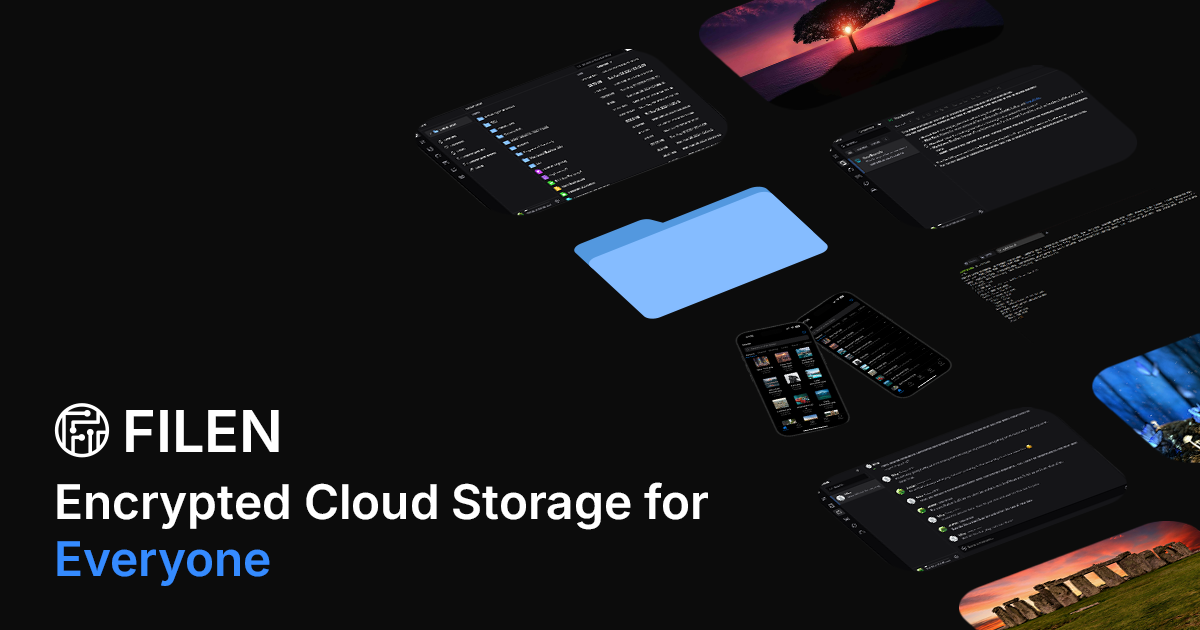
Filen – Next Generation End-To-End Encrypted Cloud Storage
Filen – Next Generation End-To-End Encrypted Cloud Storage. Get started with 10 GiB of free space.
CCFS cryptographically curated file system
The Internet was originally designed to be a next-generation phone system that could withstand a Soviet attack. Today, we ask the Internet to perform tasks that no longer resemble phone calls in the face of threats that no longer resemble Soviet bombardment. However, we have come to rely on names that can be subverted at every level of the stack or simply be allowed to rot by their original creators. It is possible for us to build networks of content that serve the content distribution needs of today while withstanding the hostile environment that all modern systems face. This dissertation presents the Cryptographically Curated File System (CCFS), which offers five properties that we feel a modern content distribution system should provide. The first property is Strong Links, which maintains that only the owner of a link can change the content to which it points. The second property, Permissionless Distribution, allows anyone to become a curator without dependence on a naming or numbering authority. Third, Independent Validation arises from the fact that the object seeking affirmation need not choose the source of trust. Connectivity, the fourth property, allows any curator to delegate and curate the right to alter links. Each curator can delegate the control of a link and that designee can do the same, leaving a chain of trust from the original curator to the one who assigned the content. Lastly, with the property of Collective Confidence, trust does not need to come from a single source, but can instead be an aggregate affirmation. Since CCFS embodies all five of these properties, it can serve as the foundational technology for a more robust Web. CCFS can serve as the base of a web that performs the tasks of today’s Web, but also may outperform it. In the third chapter, we present a number of scenarios that demonstrate the capacity and potential of CCFS. The system can be used as a publication platform that has been re-optimized within the constraints of the modern Internet, but not the constraints of decades past. The curated links can still be organized into a hierarchical namespace (e.g., a Domain Naming System (DNS)) and de jure verifications (e.g., a Certificate Authority (CA) system), but also support social, professional, and reputational graphs. This data can be distributed, versioned, and archived more efficiently. Although communication systems were not designed for such a content-centric system, the combination of broadcasts and point-to-point communications are perfectly suited for scaling the distribution, while allowing communities to share the burdens of hosting and maintenance. CCFS even supports the privacy of friend-to-friend networks without sacrificing the ability to interoperate with the wider world. Finally, CCFS does all of this without damaging the ability to operate search engines or alert systems, providing a discovery mechanism, which is vital to a usable, useful web. To demonstrate the viability of this model, we built a research prototype. The results of these tests demonstrate that while the CCFS prototype is not ready to be used as a drop-in replacement for all file system use cases, the system is feasible. CCFS is fast enough to be usable and can be used to publish, version, archive, and search data. Even in this crude form, CCFS already demonstrates advantages over previous state-of-the-art systems. When the Internet was designed, there were relatively fewer computers that were far weaker than the computers we have now. They were largely connected to each other over reliable connections. When the Internet was first created, computing was expensive and propagation delay was negligible. Since then, the propagation delay has not improved on a Moore’s Law Curve. Now, latency has come to dominate all other costs of retrieving content; specifically, the propagation time has come to dominate the latency. In order to improve the latency, we are paying more for storage, processing, and bandwidth. The only way to improve propagation delay is to move the content closer to the destination. In order to have the content close to the demand, we store multiple copies and search multiple locations, thus trading off storage, bandwidth, and processing for lower propagation delay. The computing world should re-evaluate these trade-offs because the situation has changed. We need an Internet that is designed for the technologies used today, rather than the tools of the 20th century. CCFS, which regards the trade-off for lower propagation delay, will be better suited for 21st-century technologies. Although CCFS is not preferable in all situations, it can still offer tremendous value. Better robustness, performance, and democracy make CCFS a contribution to the field. Robustness comes from the cryptographic assurances provided by the five properties of CCFS. Performance comes from the locality of content. Democracy arises from the lack of a centralized authority that may grant the right of Free Speech only to those who espouse rhetoric compatible with their ideals. Combined, this model for a cryptographically secure, content-centric system provides a novel contribution to the state of communications technology and information security.
IPFS: A Complete Analysis of The Distributed Web
In our recent comprehensive analysis, we discuss Interplanetary File System (IPFS). This article summarizes the reasons that excite us…
felipe-software/feridinha.com
The most overengineered file hosting service. Online since 2021
JuiceFS - Open Source Distributed POSIX File System for Cloud
JuiceFS is a cloud-based high-performance distributed file system, based on object storage and database to achieve data and metadata separation architecture, easily carrying tens of billions of file storage, to meet the random read performance requirements of big data, AI, autonomous driving, gene sequencing and other massive data.
Internxt — Best Encrypted cloud storage & more
Experience the next-gen best encrypted cloud storage for ultimate protection. Secure your files with Internxt’s zero-knowledge technology. Get started for free!
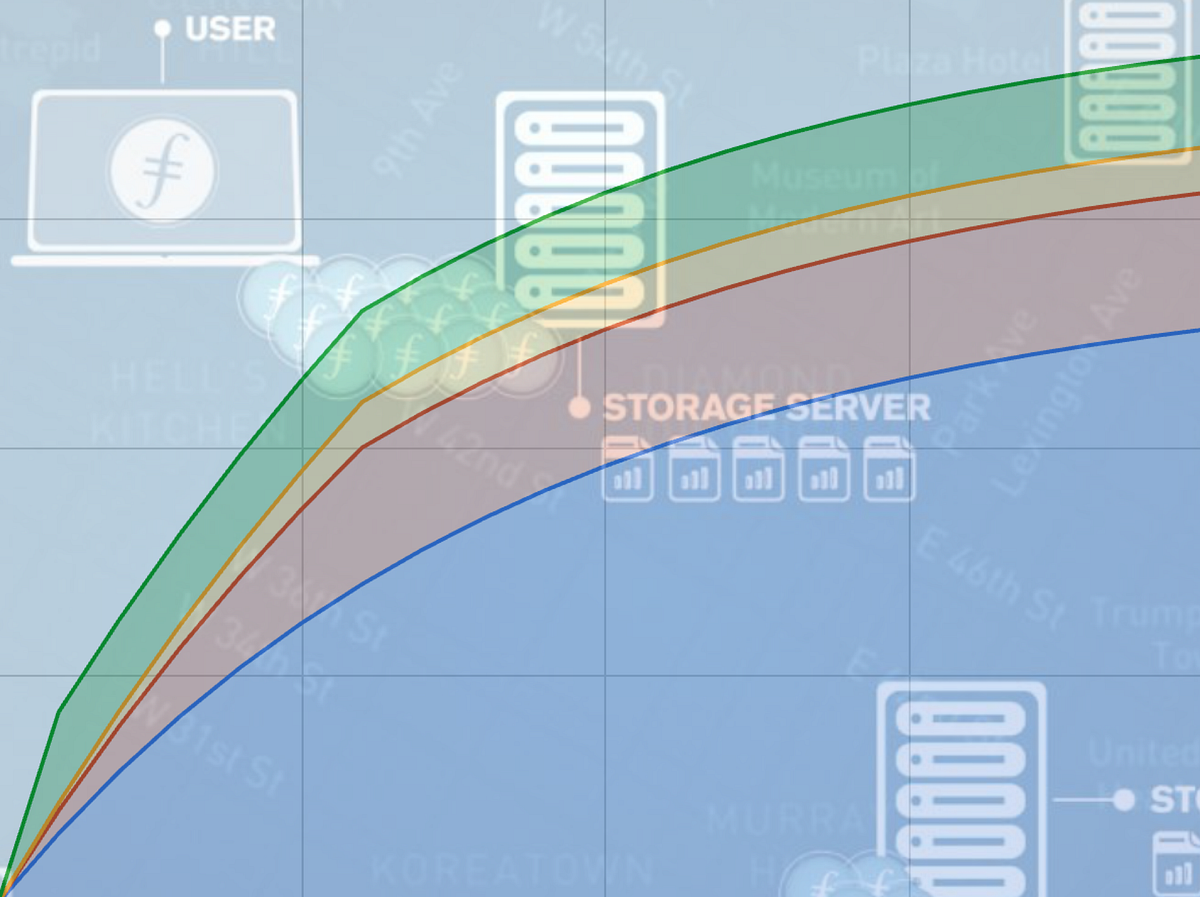
Ultimate Guide to Filecoin: Breaking Down Filecoin Whitepaper & Economics
What is Filecoin, How it Works? Understanding Technical & Economic Aspects of Filecoin.

Money, blockchains, and social scalability
Introduction Blockchains are all the rage. The oldest and biggest blockchain of them all is Bitcoin , which over its eight-year hist...

Money, blockchains, and social scalability
Introduction Blockchains are all the rage. The oldest and biggest blockchain of them all is Bitcoin , which over its eight-year hist...