

There’s a certain kind of person who’s becoming extinct. You’ve probably met one. Maybe you are one. Someone who actually understood the tools they used. Someone who could sit down at an unfamiliar system, poke at it for twenty minutes, and have a working mental model of what it was doing and why. Someone who read error messages instead of dismissing them. Someone who, when something broke, treated it as a puzzle rather than a betrayal.
🐌 Slow Software for a Burning World 🔥
In a world of “move fast and break things,” we’ve chosen a different tempo — one rooted in care, deep listening, and collective stewardship. Slow software means building for long-term resilience and meaningful participation, rather than chasing novelty, speed, or scale.
A programmer's loss of identity - ratfactor
This is the follow-up to last year’s I’m an American software developer and the "broligarchs" don’t speak for me. In that essay, I tried to express why I was so agonized by the leaders in my industry doing a speedrun towards dystopia and how it all felt so divorced from what technology could, and should be. Everything I wrote there is still true, but amplified.
Geeks, MOPs, and sociopaths in subculture evolution (2015) | Hacker News
Any marginally successful group attracts sociopaths. The more power available to someone installing themselves at the centre of an elite clique that runs the organisation, the more attractive it is. No-one ever sees it fully until they get on the wrong end of one of these toxic power dynamics, there is so much subtle BS working against anyone trying to face this stuff down that it's almost pointless wasting your life trying.
Kyle Booten
Noöhacking1 is the title of my current research program. I use this term for ways that artists and everyday digital media users build and repurpose algorithmic tools in order to take care of their own minds/spirits, an especially challenging and important task amidst a digital milieu that seems designed to make us alienated, unintelligent, and miserable.
Turing Complete User
With the disappearance of the computer, something else is silently becoming invisible as well — the User.
Hello Systems by Loris Cro
Personas - USABLE Tools
Personas, or profiles of end users, play an important role in the design process and allow developers to better understand community needs and facilitate the creation of user stories and more concrete use-cases for their products. In some of the most challenging security environments in the world, understanding the users capacity, threats, risks, and strengths can be difficult. The USABLE project has harnessed the knowledge of the digital security training community to build personas of high-risk users from around the globe. Learn more about USABLE Personas here.
When Cursor Wiped a User's PC: A Cautionary Tale of AI Overreach
We recently received a sobering story from a subscriber, a stark reminder of the potential pitfalls when granting AI agents unfettered access to your system.

The shape of a knowledge worker
In a recent post, I threw around the term 'cognitive exponent' a bunch. Today I'd like to talk about a thing that might help us frame our investigation of what puts someone on the right side of that exponential graph.
Death of a Software Developer
The software developer is a type of guy, and his decline will be cultural as well as economic
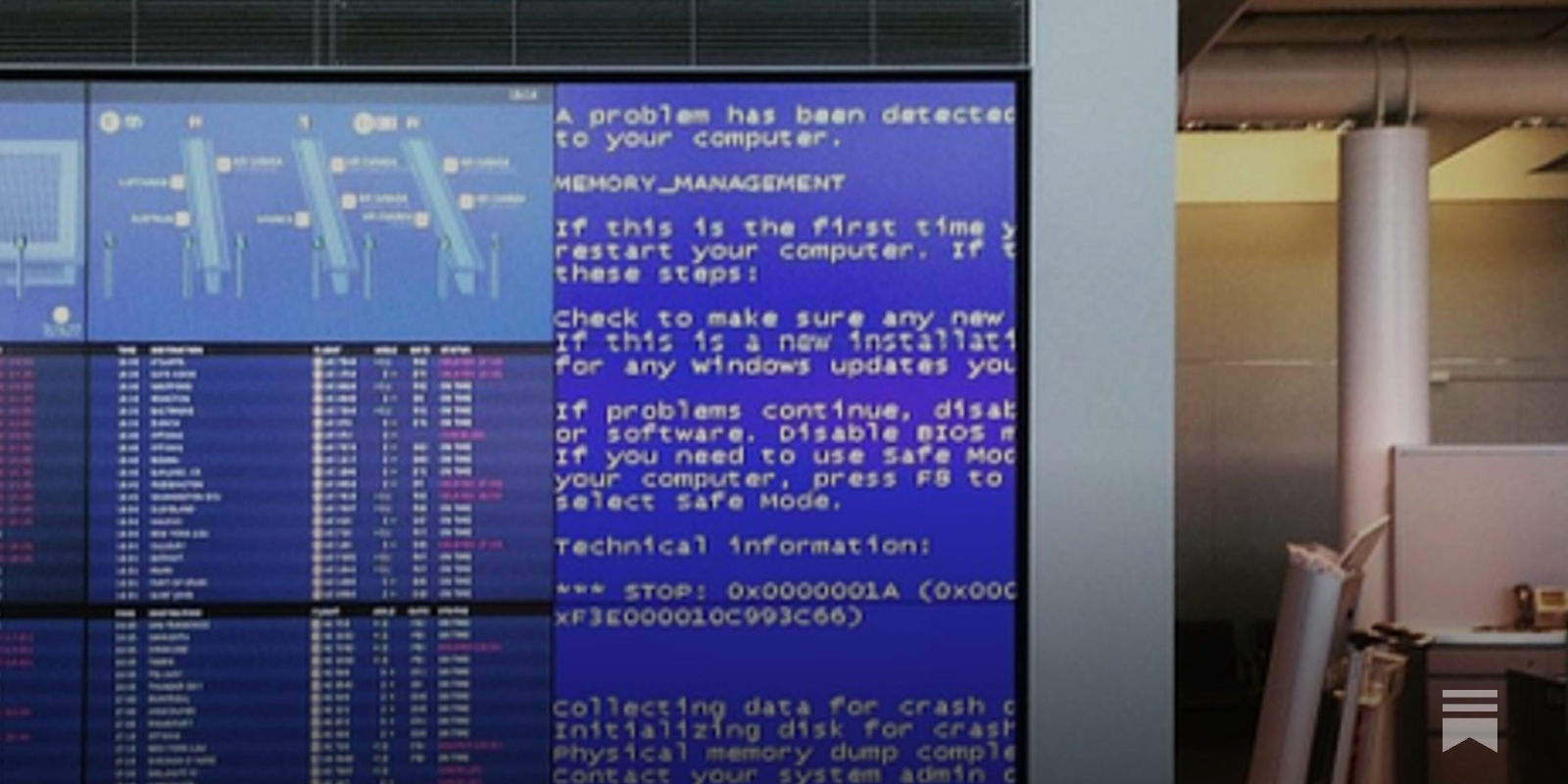
Death of a Software Developer
The software developer is a type of guy, and his decline will be cultural as well as economic
Death of a Software Developer
The software developer is a type of guy, and his decline will be cultural as well as economic
Disability Driven Development
Disability Driven Development (DDD) is a practice that reimagines computing from a disabled perspective, challenging its seemingly seamless and stable hegemonic operations. It asks who is left out of creating (and joyfully using) digital technology, and how this can be changed. It is a practice by and for those who did not get to shape computing to meet their needs. It is a work related to crip technoscience, a practice of critique, alteration, and reinvention of our material-discursive world1. It is also heavily inspired by "fourth wave" womanist thinkers like EbonyJanice Moore, drawing on the notion of "a revolution that does not cost us our whole spirit, soul, and bodies."2 DDD was coined by Amelia Laumann to describe her work on SpoonStack 3.
Disability Driven Development
Disability Driven Development (DDD) is a practice that reimagines computing from a disabled perspective, challenging its seemingly seamless and stable hegemonic operations. It asks who is left out of creating (and joyfully using) digital technology, and how this can be changed. It is a practice by and for those who did not get to shape computing to meet their needs. It is a work related to crip technoscience, a practice of critique, alteration, and reinvention of our material-discursive world1. It is also heavily inspired by "fourth wave" womanist thinkers like EbonyJanice Moore, drawing on the notion of "a revolution that does not cost us our whole spirit, soul, and bodies."2 DDD was coined by Amelia Laumann to describe her work on SpoonStack 3.
I read Joel Spolske's User Interface Design for Programmers book in 2001. Rewired me forever: When the program model deviates from the user model (me), I am SHOCKED AND HORRIFIED. Been designing to break the law... er, align with the user model ever since. joelonsoftware.com/2001/10/24/user-interface-des…
The "user" is dead. Long live the interactor!

𝕮
"Computers as Theatre" by Brenda Laurel (1991) cs.cmu.edu/~social/reading/Laurel-Comput…
