

This paper re-imagines the governance of artificial intelligence (AI) through a transfeminist lens, focusing on challenges of power, participation, and injustice, and on opportunities for advancing equity, community-based resistance, and transformative change. AI governance is a field of research and practice seeking to maximize benefits and minimize harms caused by AI systems. Unfortunately, AI governance practices are frequently ineffective at preventing AI systems from harming people and the environment, with historically marginalized groups such as trans people being particularly vulnerable to harm. Building upon trans and feminist theories of ethics, I introduce an approach to transfeminist AI governance. Applying a transfeminist lens in combination with a critical self-reflexivity methodology, I retroactively reinterpret findings from three empirical studies of AI governance practices in Canada and globally. In three reflections on my findings, I show that large-scale AI governance systems structurally prioritize the needs of industry over marginalized communities. As a result, AI governance is limited by power imbalances and exclusionary norms. My reflections reveal that re-grounding AI governance in transfeminist ethical principles can support AI governance researchers, practitioners, and organizers in addressing those limitations.
The tech industry hijacking of the AI ethics research agenda and why we should reclaim it
This paper reflects on the tech industry’s colonization of the AI ethics research field and addresses conflicts of interest in public policymaking concerning AI. The AI ethics research community faces two intertwined challenges: In the first place, we have a tech industry heavily influencing the AI ethics research agenda. Secondly, cleaning up after the tech industry has implied that we have turned to value-driven design methods to bring ethics to AI design. But by framing research questions relevant to a technical practice, we have facilitated the technological solutionism behind the tech industry’s business model. Therefore, this paper takes the first steps to reshape the AI ethics research agenda by suggesting moving toward an emancipatory framework that brings politics to design while, at the same time, bearing in mind that AI is not to be treated as an inevitability. As a research community, we must focus on the repressive power dynamics exacerbated by AI and address challenges facing the vulnerable groups seldom heard, despite the fact that they are the ones most negatively affected by AI initiatives.

From the Platform Society to the AI Society: Towards Critical Studies of Generative AI
The era of AI has begun. Generative AI is rapidly reshaping knowledge production, culture, and political authority, giving rise to an emerging AI society. Yet this transformation did not emerge ex nihilo. This paper argues that the AI society can only be understood in relation to the platform society from which it arises. Tracing the transition from platforms to AI, we identify interlinked economic, epistemic, and political shifts. Economically, AI emerges within platform-based rentier capitalism but reconfigures the monopoly mechanisms on which its accumulation depends. Epistemically, LLMs mark a shift from predictive to generative epistemics, entangling theory formation and knowledge production with private research-as-a-service infrastructures. Politically, governance shifts from data politics to alignment politics: from shaping visibility to shaping what can be said, thought, and imagined. Together, these transformations signal a qualitative shift in mediation—from governing interaction to governing cognition itself—and call for a Critical AI Studies.
The ethics of AI business practices: a review of 47 AI ethics guidelines
Many AI ethics guidelines have recently been published that center the fairness, accountability, sustainability, and transparency of algorithmic decision-making. Relatively few guidelines center the ethics of the business practices and political economies in which AI systems are situated. We present the findings of a semi-systematic literature review and thematic analysis aimed at determining the extent to which the ethics of AI business practices are considered in a large sample of guidelines. Our review reveals that the political and economic implications of AI business practices are greatly underrepresented in AI ethics guidelines. In its current state, AI ethics guidelines focus disproportionately on issues of algorithmic decision-making, while the fairness, accountability, sustainability, and transparency of the business decision-making contexts in which AI systems are situated remain seriously undermined by competitive and speculative norms, ethics washing, corporate secrecy, and other harmful business practices. We discuss these challenges, and we suggest that the ontological and disciplinary scope of future AI ethics guidelines should be expanded to better contend with them.
RadicalxChange
RadicalxChange is an international nonprofit advancing participatory governance in the age of AI. We build and field-test mechanisms that let people who disagree steward what they share.
Against “Democratizing AI”
This paper argues against the call to democratize artificial intelligence (AI). Several authors demand to reap purported benefits that rest in direct and broad participation: In the governance of AI, more people should be more involved in more decisions about AI—from development and design to deployment. This paper opposes this call. The paper presents five objections against broadening and deepening public participation in the governance of AI. The paper begins by reviewing the literature and carving out a set of claims that are associated with the call to “democratize AI”. It then argues that such a democratization of AI (1) rests on weak grounds, because it does not answer to a demand of legitimization, (2) is redundant in that it overlaps with existing governance structures, (3) is resource intensive, which leads to injustices, (4) is morally myopic and thereby creates popular oversights and moral problems of its own, and finally, (5) is neither theoretically nor practically the right kind of response to the injustices that animate the call. The paper concludes by suggesting that AI should be democratized not by broadening and deepening participation but by increasing the democratic quality of the administrative and executive elements of collective decision making. In a slogan: The question is not so much whether AI should be democratized but how.

AI, Decomputing and the Interregnum
This paper treats AI as diagnostic for the deeper changes taking place in the existing order of things. It uses AI's alignment with both the political economy and with the dualisms that underpin it, including race, gender and anthropocentrism, to highlight the nihilistic character of the current restructuring. AI's scaling and accelerationism are taken as examples of the wider tactics being invoked by hegemonic power to maintain control under changing conditions. From this perspective, the massive build-out of data centres isn't simply a seizure of energy resources but a manifestation of an aggressive and misogynist technopolitics. The paper argues that a liberal push for digital sovereignty doesn't interrupt these dynamics but plays into the hands of emerging technofascism. It proposes instead the prefigurative tactic of 'decomputing', which draws on degrowth, deautomatisation and a convivial approach to technology. It explores decomputing as a means to mitigate both material and relational harms and as a decisive turn towards infrastructuring the common good. The paper concludes that AI is the contradiction that reveals many others, not least the gap between claims to legitimacy and the actuality of destructive violence, and proposes an alternative technopolitics of reciprocity that prioritises care and sustainability.
Field Theory: AI as Social Science Question, Object & Tool
Uses of advanced artificial intelligence are changing how societies organize labor, govern, produce knowledge, and make meaning. In light of these developments, this essay argues that AI models, tools, and systems pose three interrelated imperatives for social science: they demand renewed attention to social theories of how technology, human experience, and social order are entangled; they require study as objects of inquiry in their own right; and they offer capabilities that may transform—or upend—the practice of social investigation itself. From Weber’s analysis of rationalization to Du Bois’s study of technology and inequality to contemporary scholarship on algorithmic governance, the essay examines what social science distinctively offers: the capacity to historicize the apparently unprecedented, to trace connections across scales, and to center those most affected by technological change. It identifies how algorithmic systems are remaking the distribution of opportunity and risk as a central task of social inquiry and asks what futures social science might help bring into being.
Democratizing AI Companies — The Collective Intelligence Project
As AI reshapes society, the companies behind these technologies face a critical challenge: how to build corporate governance structures that prioritize public benefit over profit maximization;.

NEW BOOK: Why AI Undermines Democracy and What to Do about It
Mark Coeckelbergh's "Why AI Undermines Democracy and What to Do about It" offers a philosophical critique of AI's impact on democratic principles. The book argues that the concentration of power in tech companies and governmental use of AI pose risks to democracy, potentially leading to digital totalitarianism. While light on novel solutions, it provides a concise overview of common concerns in AI ethics literature and calls for increased democratic input in AI design and global governance. The book serves as an accessible entry point for those new to the topic, offering a valuable, if pessimistic, perspective on AI's challenges to democracy.
How Shifting Responsibility for AI Harms Undermines Democratic Accountability | TechPolicy.Press
The moralization of individual AI use deflects responsibility away from powerful actors like corporations and governments, Suvradip Maitra and others write.

Inside the fight to reclaim AI from Big Tech’s control
For years, Big Tech has set the global AI research agenda. Now, groups like Black in AI and Queer in AI are upending the field’s power dynamics to build AI that serves people.

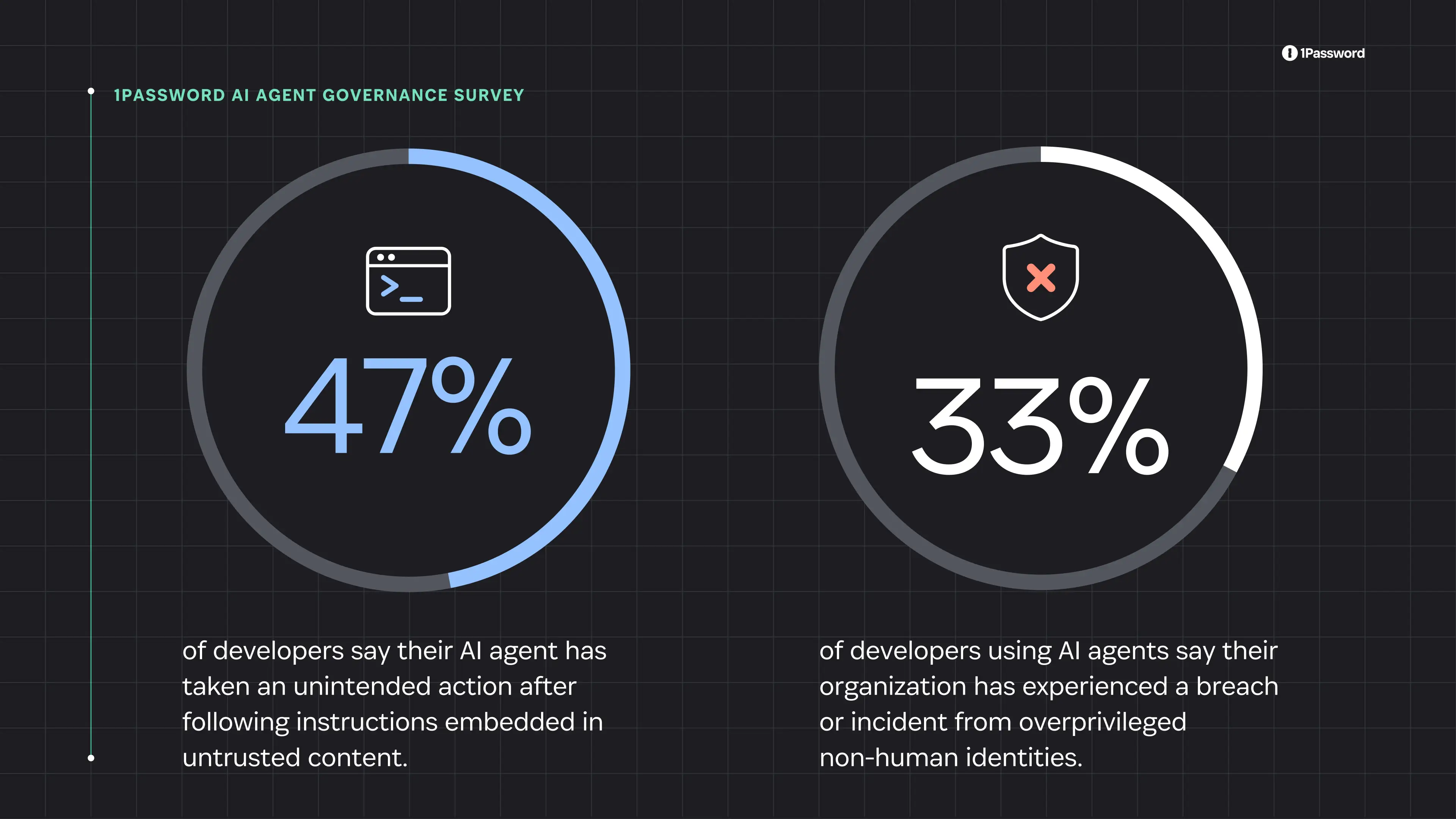
1Password's research finds AI agent adoption is outpacing governance | 1Password
1Password's AI agent governance survey reveals widespread security, visibility, governance, and accountability challenges as AI agents move into production.
Beyond AI: Infrastructuring the Common Good
Rather than taking AI as a central focus, this paper treats it as diagnostic of deeper contradictions. AI intensifies extractivism while being unable to deliver on its promises, and its rampant scaling of energy and resource demands heralds a form of ‘total mobilisation’. This paper proposes decomputing as a programme for pushing back against such technocratic nihilism. Decomputing adopts a degrowth framework and advocates for reclaiming agency through deautomatisation and people’s councils, in order to develop convivial alternatives that centre an ethics of care. It is a philosophical and tactical response to the wider crisis of care induced by the collapse of existing systems. Decomputing proposes a prefigurative praxis for those experiencing ruptures in the infrastructures of everyday life, while minimising the opening for an authoritarian turn or war economy. Rather than capitulating to an increasingly fascistic world order, decomputing advocates a shift in the idea of order itself, one that means challenging the idea that ever more advanced tech is synonymous with progress. The paper argues that reclaiming critical infrastructures can be decoupled from the collapse of the general technopolitical regime, and makes a plausibility argument informed by destituent power and largely forgotten British cybernetics. Where the Luddite call was to ‘put down all machinery hurtful to the Commonality’, the goal of decomputing is the infrastructuring of the common good.
Effective Altruism: doing transhumanism better
Effective Altruism (EA) is a Trojan horse for transhumanism, through which EA movement leaders and funders aim to naturalize transhumanism as the logical extension of the existing global aid and development sector. This paper traces transhumanism's mainstreaming, first via its rebranding as a humanitarian effort to save lives, protect vulnerable populations, and ensure global flourishing (what I term transhumanitarianism), and later by embedding transhumanitarianism in EA (now under the rubric of longtermism). A key component of this strategy was inverting transhumanism's techno-optimism to instead focus on safety and preventing existential risks ( x-risk ) from emerging technologies like AI and biotechnology, while simultaneously advocating for the creation of these same technologies. The paper focuses on some components of this strategy: the use of inoculation, speculative ethics, anticipatory governance, and the mobilization of apocalyptic discourse as means for producing material outcomes in the form of policy and research agendas.
Collective Governance for AI: Points of Intervention
People often speak about AI as if it is one thing. It can seem like that when we use today’s most popular interfaces: a single product, packaged by an unfathomably big company. But that view is both misleading and disempowering. It implies that only the big companies could possibly create and control this technology, because only they can handle its immensity. But another orientation is possible.