

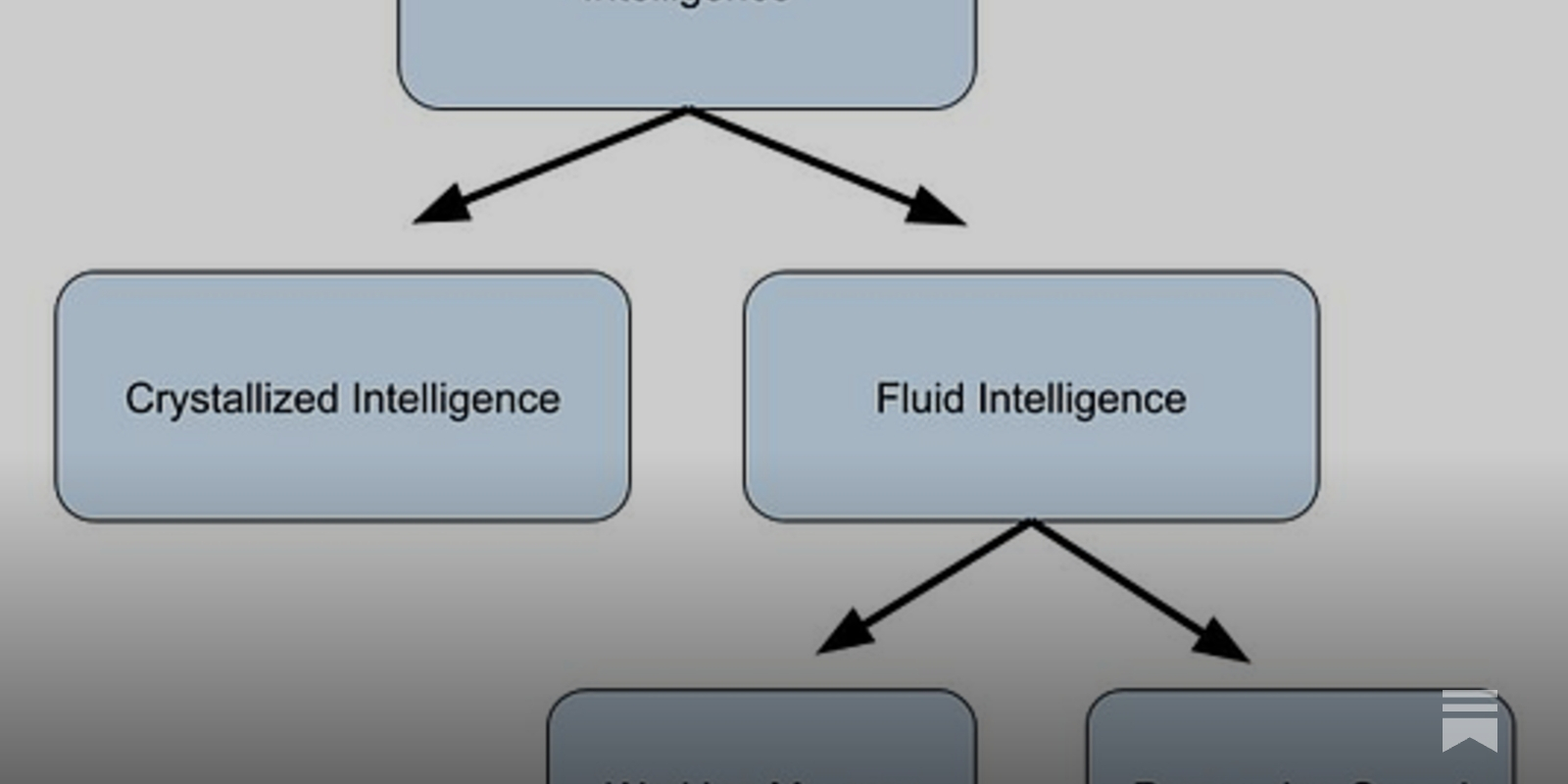
A hypothesis about teaching and learning
Why Some Students Learn Faster
A hypothesis about teaching and learning
How Learning Happens | Seminal Works in Educational Psychology and Wha
How Learning Happens introduces 28 giants of educational research and their findings on how we learn and what we need to learn effectively, efficiently, and

Cognitive Load Theory and its Applications for Learning - Scott H Young
What makes learning hard? How can we make it easier? Cognitive load theory explains how we learn and how to do it better.
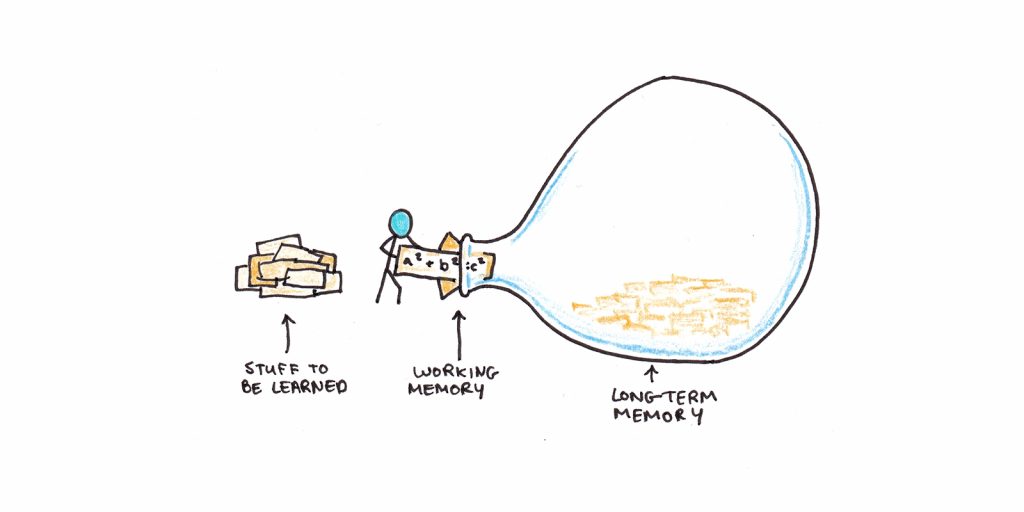
Learning How to Learn (And 20+ Studies) – Max's Two Cents
I have been interested in cognitive science and effective learning methods for years. I’ve read multiple books and articles and put many ideas to test. In this post, I aim to synthesize my notes and provide references to scientific studies.
Math Academy
The Math Academy curriculum and pedagogy leverage cutting-edge cognitive learning theory. Why? Because it’s been studied extensively, backed up and proven to work. We aren’t providing edu-tainment. This isn’t enrichment. We teach math as if we were training a professional athlete or musician, or anyone looking to acquire a skill to the highest degree possible. This is real work for a student who is serious about learning math. We expect every student using our system to actually master the material, and do it efficiently and effectively.
The Busy Person's Guide to Thinking
Thinking better isn't about learning more; it's about doing a few simple things that really help create unstoppable progress.
Experimental Evidence on the Learning Impact of Generative AI
We study whether access to off-the-shelf generative AI changes how much students learn in a timed assignment. In a proctored, in-person randomized experiment, undergraduates study an unfamiliar topic and write an essay with or without AI, then complete unaided assessments immediately and one week later. AI access raises test scores, and a smaller gain persists a week later. Gains remain for students who use AI as a tutor ("augmentation") and fade for students who have AI write for them ("automation"). We document two mechanisms: students shift time from writing toward reading and searching for information, and report greater learning enjoyment.

Teacher spends two days as a student and is shocked at what she learns
'Teachers work hard, but I now think that conscientious students work harder. '

Unlocking Scientific Concepts: How Effective Are LLM-Generated Analogies for Student Understanding and Classroom Practice?
Teaching scientific concepts is essential but challenging, and analogies help students connect new concepts to familiar ideas. Advancements in large language models (LLMs) enable generating analogies, yet their effectiveness in education remains underexplored. In this paper, we first conducted a two-stage study involving high school students and teachers to assess the effectiveness of LLM-generated analogies in biology and physics through a controlled in-class test and a classroom field study. Test results suggested that LLM-generated analogies could enhance student understanding particularly in biology, but require teachers’ guidance to prevent over-reliance and overconfidence. Classroom experiments suggested that teachers could refine LLM-generated analogies to their satisfaction and inspire new analogies from generated ones, encouraged by positive classroom feedback and homework performance boosts. Based on findings, we developed and evaluated a practical system to help teachers generate and refine teaching analogies. We discussed future directions for developing and evaluating LLM-supported teaching and learning by analogy.

ChatGPT as a cognitive crutch: Evidence from a randomized controlled trial on knowledge retention
The rapid integration of generative artificial intelligence into higher education has outpaced empirical understanding of its effects on fundamental learning processes. To address this gap, this randomized controlled trial (n = 120) tested ChatGPT's impact on long-term knowledge retention in undergraduates learning AI. Participants were randomly assigned either to use ChatGPT as a study aid (AI-Assisted Group) or to use only traditional, non-AI study methods (traditional learning group). Knowledge retention was assessed with a surprise test 45 days after learning. Students who used ChatGPT scored significantly lower on the retention test (57.5 % correct) compared to those who studied traditionally (68.5 % correct), t (83) = −3.19, p = .002, Cohen's d = 0.68. This suggests that unrestricted ChatGPT use impaired long-term retention, likely by reducing the cognitive effort that supports durable memory. The findings align with cognitive offloading theory and the ‘desirable difficulties’ principle: while AI assistance may ease initial learning, it appears to undermine the effortful processes needed for robust learning. These results have important implications for how generative AI tools should be integrated into higher education.
Social learning preserves both useful and useless theories by canalizing learners’ exploration
In many domains, learning from others is crucial for leveraging cumulative cultural knowledge, which encapsulates the efforts of successive generations of innovators. However, anecdotal and experimental evidence suggests that reliance on social information can reduce the exploration of the problem space. Here, we experimentally investigate the extent to which cultural transmission fosters the persistence of arbitrary solutions in a context where participants are incentivized to improve a physical system across multiple trials. Participants were exposed to various theories about the system, ranging from accurate to misleading. Our findings indicate that even under conditions conducive to exploration, the transmission of cultural knowledge canalizes learners’ focus, limiting their consideration of alternative solutions. This effect was observed in both the theories produced and the solutions attempted by participants, irrespective of the accuracy of the provided theories. These results challenge the notion that arbitrary solutions persist only when they are efficient or intuitive and underscore the significant role of cultural transmission in shaping human knowledge and technologies.

Retrieval Practice Produces More Learning than Elaborative Studying with Concept Mapping
Educators rely heavily on learning activities that encourage elaborative studying, whereas activities that require students to practice retrieving and reconstructing knowledge are used less frequently. Here, we show that practicing retrieval produces greater gains in meaningful learning than elaborative studying with concept mapping. The advantage of retrieval practice generalized across texts identical to those commonly found in science education. The advantage of retrieval practice was observed with test questions that assessed comprehension and required students to make inferences. The advantage of retrieval practice occurred even when the criterial test involved creating concept maps. Our findings support the theory that retrieval practice enhances learning by retrieval-specific mechanisms rather than by elaborative study processes. Retrieval practice is an effective tool to promote conceptual learning about science.

Let me remind me
Truly learning a lesson is deeper than simply knowing the lesson. It’s possible to know a whole lot more than you’re capable of acting on with regularity. And it’s the act, not the mere knowing, th…

Thinking Fast, Slow, Artificially: AI and Your Brain
AI can boost your decisions — or quietly undermine them. Wharton researchers introduce a new theory of cognition that every leader needs to understand.

Mastery learning
Mastery learning is an instructional strategy and educational philosophy that emphasizes the importance of students achieving a high level of competence (e.g., 90% accuracy) in prerequisite knowledge before moving on to new material. This approach involves providing students with individualized support and repeated opportunities to demonstrate mastery through assessments. If a student does not initially achieve mastery, they receive additional instruction and support until they do. Mastery learning is based on the idea that all students can learn effectively with appropriate instruction and sufficient time, and it contrasts with traditional teaching methods that often focus on covering a set amount of material within a fixed timeframe, regardless of individual student needs.
When students stop reading long books, what do they lose? According to one professor: the ability to follow complex arguments, think independently and wrestle with difficult ideas. theconversation.com/college-professors-face-an-em…
