

The social model of disability holds that disability is produced by environments, not by bodies — that when software fails to accommodate a person’s needs, the environment is disabling them. We argue that the dominant organization of computing produces such interaction mismatches structurally: the commodity form of software requires a standardized consumer, and everyone whose needs diverge from this imagined subject is disabled by the software environment. The substrates research community has identified properties — disclosure, composability, malleability — that would address this, but the commodity form actively selects against these properties because they dissolve the boundaries on which exchange value depends. This raises a question: how can infrastructure organized against the grain of commodity logic be made durable? We find a precedent in accessibility infrastructure — sustained not by patronage but by the organized counter-power of disability rights movements. Through Allio, a system for cross-application augmentation built on accessibility APIs, we illustrate both what this foundation makes possible and where its limits lie. We argue that the accessibility case reframes the substrates programme’s central challenge as political-economic: the question of who sustains substrate infrastructure, and through what social mechanisms, is as important as the question of what properties it should have.
Substrates via Accessibility
The social model of disability holds that disability is produced by environments, not by bodies — that when software fails to accommodate a person’s needs, the environment is disabling them. We argue that the dominant organization of computing produces such interaction mismatches structurally: the commodity form of software requires a standardized consumer, and everyone whose needs diverge from this imagined subject is disabled by the software environment. The substrates research community has identified properties — disclosure, composability, malleability — that would address this, but the commodity form actively selects against these properties because they dissolve the boundaries on which exchange value depends. This raises a question: how can infrastructure organized against the grain of commodity logic be made durable? We find a precedent in accessibility infrastructure — sustained not by patronage but by the organized counter-power of disability rights movements. Through Allio, a system for cross-application augmentation built on accessibility APIs, we illustrate both what this foundation makes possible and where its limits lie. We argue that the accessibility case reframes the substrates programme’s central challenge as political-economic: the question of who sustains substrate infrastructure, and through what social mechanisms, is as important as the question of what properties it should have.
Digital accessibility is real and tangible
A workshop using real-life examples and first-hand experience of how assistive technology works can result in a deeper understanding of accessibility needs

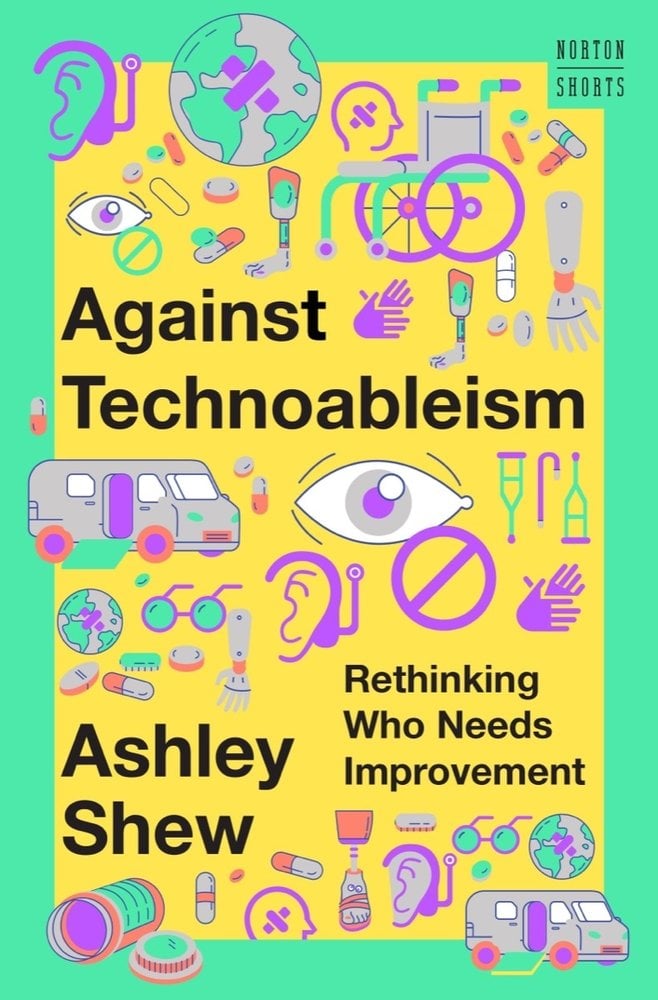
Against Technoableism
When bioethicist and professor Ashley Shew became a self-described "hard-of-hearing chemobrained amputee with Crohn's disease and tinnitus," there was no returning to "normal." Suddenly well-meaning people called her an "inspiration" while grocery shopping or viewed her as a needy recipient of technological wizardry. Most disabled people don't want what the abled assume they want--nor are they generally asked. Almost everyone will experience disability at some point in their lives, yet the abled persistently frame disability as an individual's problem rather than a social one. In a warm, feisty voice and vibrant prose, Shew shows how we can create better narratives and more accessible futures by drawing from the insights of the cross-disability community. To forge a more equitable world, Shew argues that we must eliminate "technoableism"--the harmful belief that technology is a "solution" for disability; that the disabled simply await being "fixed" by technological wizardry; that making society more accessible and equitable is somehow a lesser priority. This badly needed introduction to disability expertise considers mobility devices, medical infrastructure, neurodivergence, and the crucial relationship between disability and race. The future, Shew points out, is surely disabled--whether through changing climate, new diseases, or even through space travel. It's time we looked closely at how we all think about disability technologies and learn to envision disabilities not as liabilities, but as skill sets enabling all of us to navigate a challenging world.
Crip Technoscience Manifesto
As disabled people engaged in disability community, activism, and scholarship, our collective experiences and histories have taught us that we are effective agents of world building and dismantling toward more socially just relations.The grounds for social justice and world remaking, however, are frictioned;technologies, architectures, and infrastructures are often designed and implemented without committing to disability as a difference that matters. This manifesto calls attention to the powerful, messy, non-innocent, contradictory, and nevertheless crucial work of what we name as “crip technoscience,” practices of critique, alteration, and reinvention of our material-discursive world. Disabled people are experts and designers of everyday life. But we also harness technoscience for political action, refusing to comply with demands to cure, fix, or eliminate disability. Attentive to the intersectional workings of power and privilege, we agitate against independence and productivity as requirements for existence. Instead, we center technoscientific activism and critical design practices that foster disability justice.
The influence of artificial intelligence on individuals with disabilities
The rapid advancement of artificial intelligence (AI) is reshaping assistive technologies, offering new possibilities for enhancing the independence, communication and quality of life of individuals with disabilities. This study presents a qualitative scoping review of 47 peer-reviewed articles published between 2018 and 2025, examining how AI has been integrated into assistive tools across domains such as mobility, communication, cognitive support, education and independent living. Specific AI applications include object recognition, gesture-based control, navigation assistance, emotion detection and natural language processing. The review highlights significant progress in personalization and real-time adaptation, while also identifying persistent challenges such as algorithmic bias, cost barriers, data privacy concerns and unequal access, particularly in low-resource settings. Ethical considerations and the need for inclusive, user-centered design approaches are emphasized. The study also underscores future research priorities, including standardization of development protocols, empirical evaluation of long-term effectiveness and policy frameworks to ensure equitable access. By synthesizing recent developments and critical gaps, this review contributes to understanding how AI can responsibly and effectively support assistive technologies, ultimately promoting more inclusive environments for people with disabilities.
What is Malleable Software Now | Bryan Min (02-27-2026)
WebAIM: Web Accessibility In Mind
Expanding the potential of the web for people with disabilities by empowering individuals and organizations to create accessible content.
Malleable software: Restoring user agency in a world of locked-down apps
The original promise of personal computing was a new kind of clay. Instead, we got appliances: built far away, sealed, unchangeable. In this essay, we envision malleable software: tools that users can reshape with minimal friction to suit their unique needs.

A threat model for accessibility on the web - Alice
A explanation of the primary threat to accessibility on the web, and a call to action for the web standards community

Accessibility of low-code approaches: A systematic literature review
Context: Model-driven approaches are increasingly used in different domains, such as education, finance and app development, in order to involve non-developers in the software development process. Such tools are hugely dependent on visual elements and thus might not be accessible for users with specific challenges, e.g., visual impairments. Objectives: To locate and analyse existing literature on the accessibility of low-code approaches, their strengths and weaknesses and key directions for future research. Methods: We carried out a systematic literature review and searched through five leading databases for primary studies. We used both quantitative and qualitative methods for data synthesis. Results: After reviewing and filtering 918 located studies, and conducting both backward and forward snowballing, we identified 38 primary studies that were included in our analysis. We found most papers focusing on accessibility of visual languages and block-based programming. Conclusion: Limited work has been done on improving low code programming environment accessibility. The findings of this systematic literature review will assist researchers and developers in understanding the accessibility issues in low-code approaches and what has been done so far to develop accessible approaches.
Ubiquitous Accessibility for People with Visual Impairments: Are We There Yet?
Ubiquitous access is an increasingly common vision of computing, wherein users can interact with any computing device or service from anywhere, at any time. In the era of personal computing, users with visual impairments required special-purpose, assistive technologies, such as screen readers, to interact with computers. This paper investigates whether technologies like screen readers have kept pace with, or have created a barrier to, the trend toward ubiquitous access, with a specific focus on desktop computing as this is still the primary way computers are used in education and employment. Towards that, the paper presents a user study with 21 visually-impaired participants, specifically involving the switching of screen readers within and across different computing platforms, and the use of screen readers in remote access scenarios. Among the findings, the study shows that, even for remote desktop access—an early forerunner of true ubiquitous access—screen readers are too limited, if not unusable. The study also identifies several accessibility needs, such as uniformity of navigational experience across devices, and recommends potential solutions. In summary, assistive technologies have not made the jump into the era of ubiquitous access, and multiple, inconsistent screen readers create new practical problems for users with visual impairments.

recommended techniques for accessibility champions - A11y Toolkit
An open-source library of techniques to avoid the most common accessibility failures.
lukeslp/awesome-accessibility
Curated list of accessibility resources, tools, and best practices for creating inclusive digital experiences
Accessibility Beyond Accommodations: A Systematic Redesign of Introduction to Computer Science for Students with Visual Impairments
Computer science education has evolved extensively; however, systemic barriers still prevent students with visual impairments from fully participating. While existing research has developed specialized programming tools and assistive technologies, these solutions remain fragmented and often require complex technical infrastructure, which limits their classroom implementation. Current approaches treat accessibility as individual accommodations rather than integral curriculum design, creating gaps in holistic educational support. This paper presents a comprehensive framework for redesigning introductory computer science curricula to provide equitable learning experiences for students with visual impairments without requiring specialized technical infrastructure. The framework outlines five key components that together contribute a systematic approach to curriculum accessibility: accessible learning resources with pre-distributed materials and tactile diagrams, in-class learning kits with hands-on demonstrations, structured support systems with dedicated teaching assistance, an online tool repository, and psychosocial support for classroom participation. Unlike existing tool-focused solutions, this framework addresses both technical and pedagogical dimensions of inclusive education while emphasizing practical implementation in standard university settings. The design is grounded in universal design principles and validated through expert consultation with accessibility specialists and disability services professionals, establishing foundations for future empirical evaluation of learning outcomes and student engagement while serving as a template for broader institutional adoption.

Usability/UX/Accessability Research? · Issue #819 · w3c-fedid/FedCM
I'm curious if this work has any usability, UX, or accessibility research that supports the designs here? Are there non-goals, or handling of failure case scenarios that have been envisioned an...