

ForgeFed is a federation protocol for software forges and code collaboration tools for the software development lifecycle and ecosystem. This includes repository hosting websites, issue trackers, code review applications, and more. ForgeFed provides a common substrate for people to create interoperable code collaboration websites and applications.
Answering Forgejo federation questions
Federation is about creating open protocols so that different servers can communicate with each other. Once Forgejo gains federation support via the ForgeFed protocol, you’ll be able to do things like create issues for projects on other Forgejo instances without creating an account on that instance. But federation doesn’t just solve the problem of having to create many Forgejo accounts. The power of federation comes from building an interoperable ecosystem, since any other code collaboration site or development tool can also add ForgeFed support. Just look at GitHub: it’s the epicenter of a giant ecosystem of apps and integrations and tools that cements GitHub’s position. It’s a textbook example of a walled garden. We want to create something similar, but in an open ecosystem where everything speaks the ForgeFed protocol, so you’re never locked-in by which forge or code collaboration software that you use.
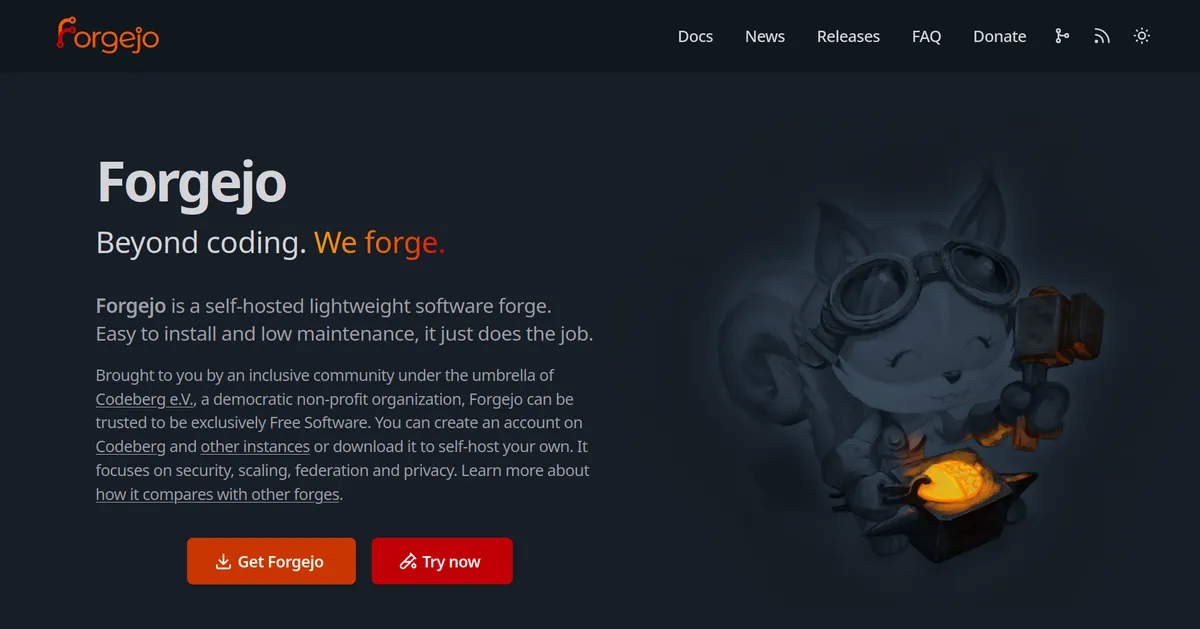
Forgejo – Beyond coding. We forge.
Forgejo is a self-hosted lightweight software forge. Easy to install and low maintenance, it just does the job.
The federated code forge · The Tangled Blog
For most of the past two decades, the code forge has been where projects live: where code is hosted, where changes are reviewed, and where contributors find each other. Forges offered convenience in exchange for centralisation.
The federated code forge · The Tangled Blog
For most of the past two decades, the code forge has been where projects live: where code is hosted, where changes are reviewed, and where contributors find each other. Forges offered convenience in exchange for centralisation.
First forgejo monthly report - December 2022
Forgejo was announced in December 2022 and this report explains how it happened. It is the creation of a collective of people from diverse backgrounds united towards a common goal: enabling Free Software contributors with Free Software tools. The software forge it provides can be downloaded and used right away and it has a unique non-technical feature: the community that drives its roadmap can be trusted to put the interest of the general public first. Forging Free Software is not just about writing code, it is a social construct that involves everyone in a continuous loop.
sourcehut - the hacker's forge
sourcehut is a network of useful open source tools for software project maintainers and collaborators, including git repos, bug tracking, continuous integration, and mailing lists.
Ode to the code
Forgejo is a self-hosted lightweight software forge. Easy to install and low maintenance, it just does the job.

NLnet; Friendly Forge Format (F3)
Proposed Standard for secure communication between software forges
Forgejo forks its own path forward
Since its inception, Forgejo (a self-hosted git forge, like GitHub) has been a soft fork of Gitea. Upgrading to it was - and for the time being, remains to be - as simple as changing the URL from which the release is downloaded. Over time, the way Forgejo is governed and developed evolved. To be able to provide stable, secure, reliable releases, Forgejo requires a reasonable effort made at writing tests for each change that goes into the code. This has worked out remarkably well, as it caught both regressions in imported code, and mistakes in proposed changes. Furthermore, Forgejo has accepted features and other changes that are not available in Gitea, and has diverged in other ways already.
Friendly Forge Format (F3) — F3 v4.0 documentation
The Friendly Forge Format (abbreviated F3) is an Open File Format for storing the information from a forge such as issues, pull/merge requests, milestones, release assets, etc. as well as the associated VCS (Git, Mercurial, etc.).
Why I'm leaving GitHub for Forgejo | Jorijn Schrijvershof
I left GitHub for self-hosted Forgejo on a hardened NUC. The reason is digital sovereignty, not reliability outages. Here's the thinking and the architecture.
One TypeScript client, every forge
Work with issues, pull requests, notifications, checks and webhooks on every forge through one typed client
Beyond coding. We forge.
After many days of hard work and preparation by a team of former Gitea maintainers and enthusiasts from the FOSS community, we are proud to announce that the Forgejo project is now live.
Forgejo v1.18 stable is released
Today Forgejo v1.18.0-1 was released. This is the first stable release of Forgejo, and is based on Gitea v1.18.0 which was also released today.
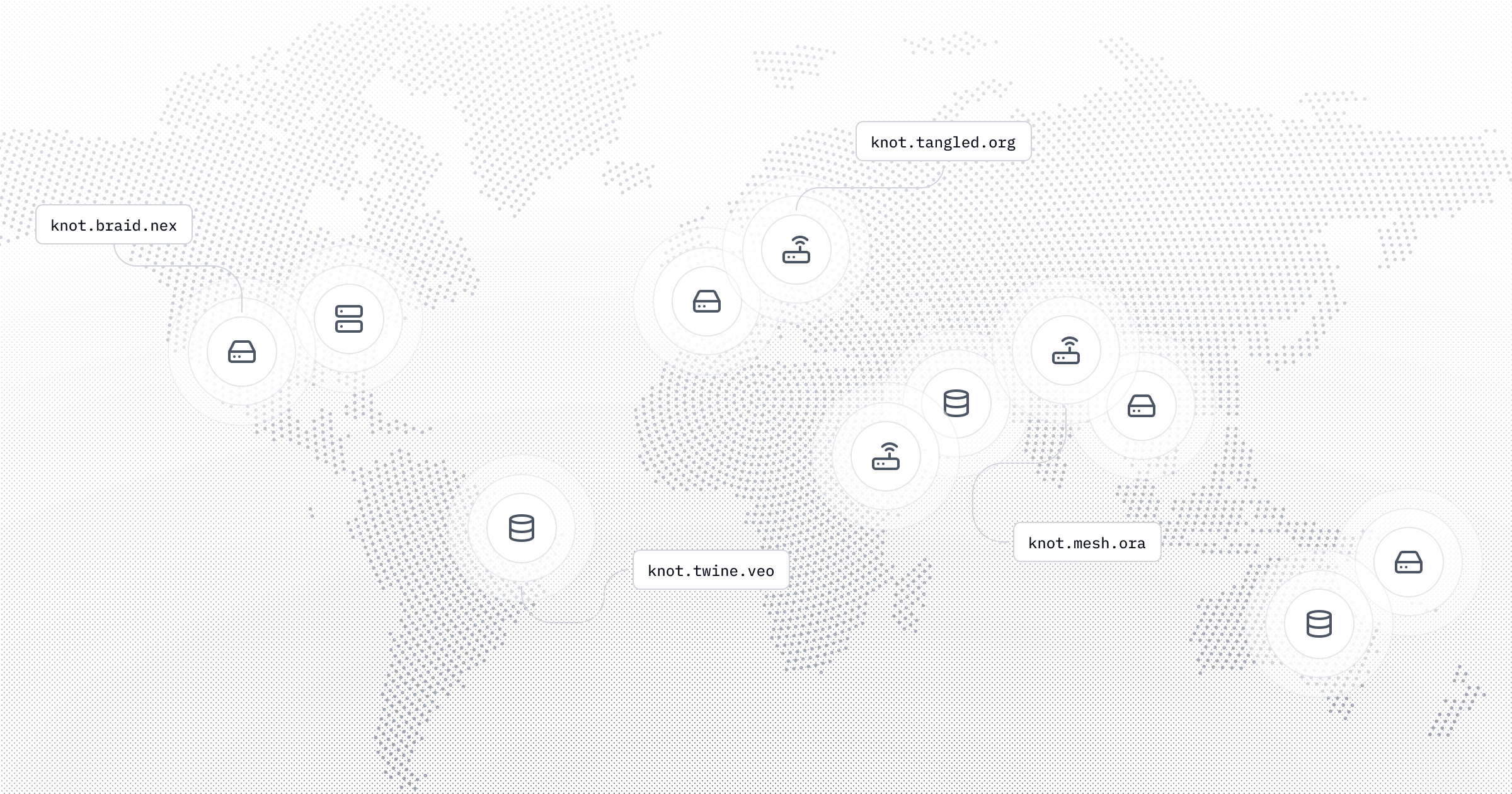
Tangled · Your code forge for the next decade
Tangled is your open, federated code forge for the next decade. Host your code anywhere, review in stacks and run CI on your own machines.
