In Part 14, we looked at the potential for massively increasing our bandwidth by creating “personal productivity networks.” These networks are made up of packets of work that move between “nodes” where some kind of intelligence is applied, whether human or software-based. But what does it look like to operate such a network in our day to day work?
Just-In-Time PM #14: Personal Productivity Networks - Forte Labs
In Part 13, we looked at the benefits of Component Thinking, which involves thinking of any product we are working on as made up of subcomponents, which can be evolved or swapped out over time. Now I’d like to take a step back and consider the big picture of what it means to work in small packets.

Network of shared purpose · Issue #369 · muni-town/roomy
Excerpted from Weird Web Pages. The Network is effectively a global jobs board, but for mutual collaborations rather than work-for-hire. Easiest way to prototype this might be with GitHub issues/di...

Just-In-Time PM #4: Intermediate Packets - Forte Labs
In Part 3, I argued that having a personal knowledge base is the linchpin of success in a creative economy. A knowledge base allows you to reuse past work, draw from past experiences, share your knowledge in concrete form, and eventually, build products and services out of that knowledge. This requires strategically structuring your work in the first place, as a series of what I call intermediate packets.

Deep work. Essentialism in asynchronous culture
Deep work Nowadays, we are getting accustomed to working in a continuously interrupting environment. Smartphone notifications, hundreds of e-mails, open spaces, and meetings slicing our workday. We are feeling busy, and overworked, but are we more productive? If I am a salesman or project coordinator that way of working can bring good effects and even improve my skills. However, for Software Developers, Designers, and other professionals that need a quiet environment for creative effort, it can lead only to frustration and burnout. They need something that is called deep work. Deep work is a concept popularized by Cal Newport in his book under the same title published in 2016. The author divides mental activity into two categories: shallow work, that does not need intensive concentration like sending e-mails, formatting documents, chatting using communicators, etc. deep work, that demands distraction-free focus on one task like writing a document, learning a new skill, designing a software system, etc.
Just-In-Time PM #5: The Iron Triangle - Forte Labs
In Part 4, I introduced the idea of “intermediate packets.” Instead of delivering value in a big project that spans huge amounts of time, we want to deliver it in smaller chunks at more frequent intervals. This follows a basic principle that has revolutionized many industries: small batch sizes.

Just-In-Time PM #12: Just-In-Case to Just-In-Time - Forte Labs
In Part 11, I introduced the concept of a “critical path” of tasks in a project, and the rationale for pushing tasks as late as possible on the timeline. The late starts approach inspires a tremendous amount of resistance, especially from creative knowledge workers. It sounds an awful lot like taking control from individual employees, centralizing it in a central decision maker, and forcing people to finish everything at breakneck speed at the last minute.

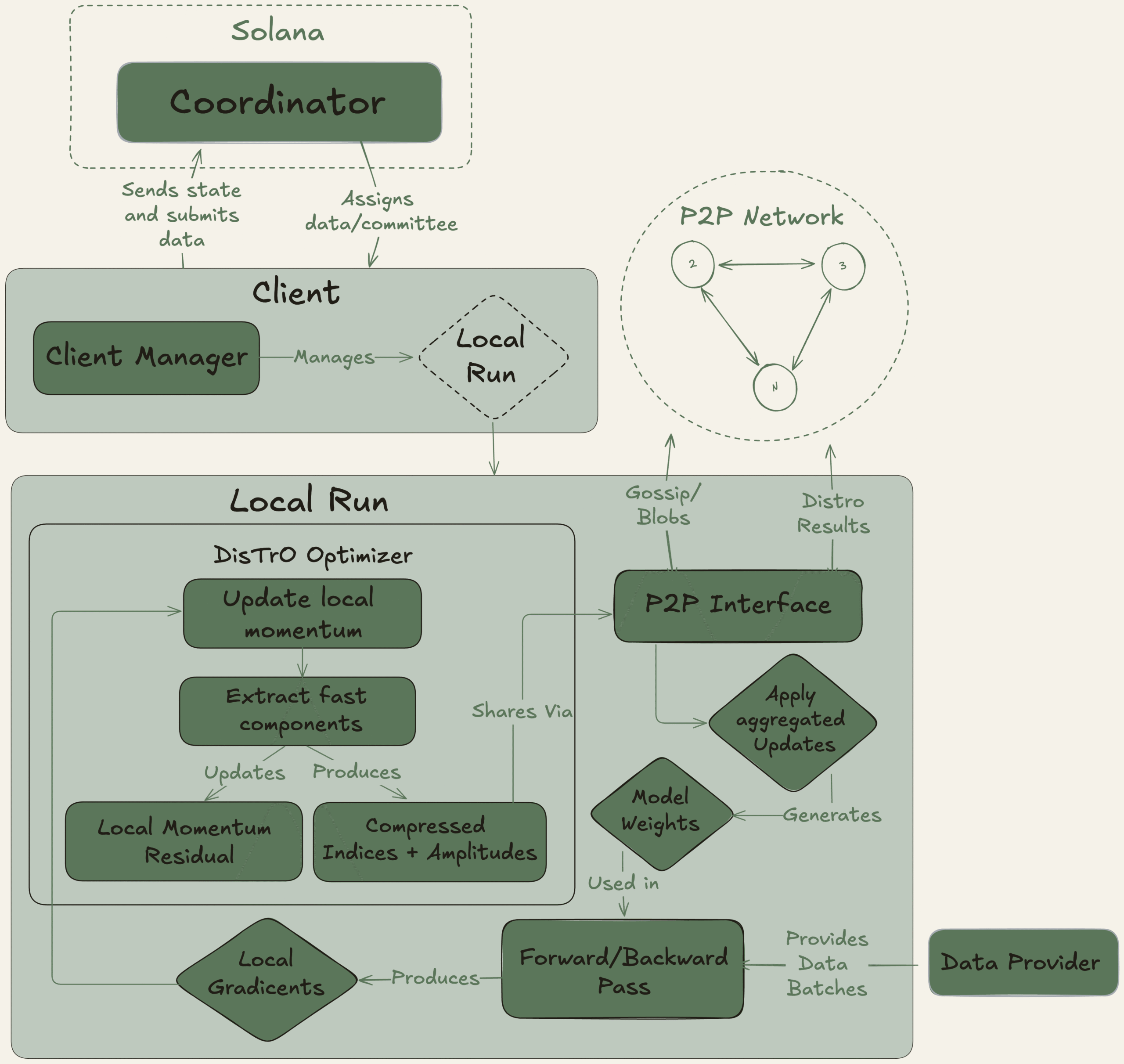
Democratizing AI: The Psyche Network Architecture - NOUS RESEARCH
Psyche is an open infrastructure that democratizes AI development by decentralizing training across underutilized hardware. Building on DisTrO and its predecessor DeMo, Psyche reduces data transfer by several orders of magnitude, making distributed training practical. Coordination happens on the Solana blockchain, ensuring a fault-tolerant and censorship-resistant network.
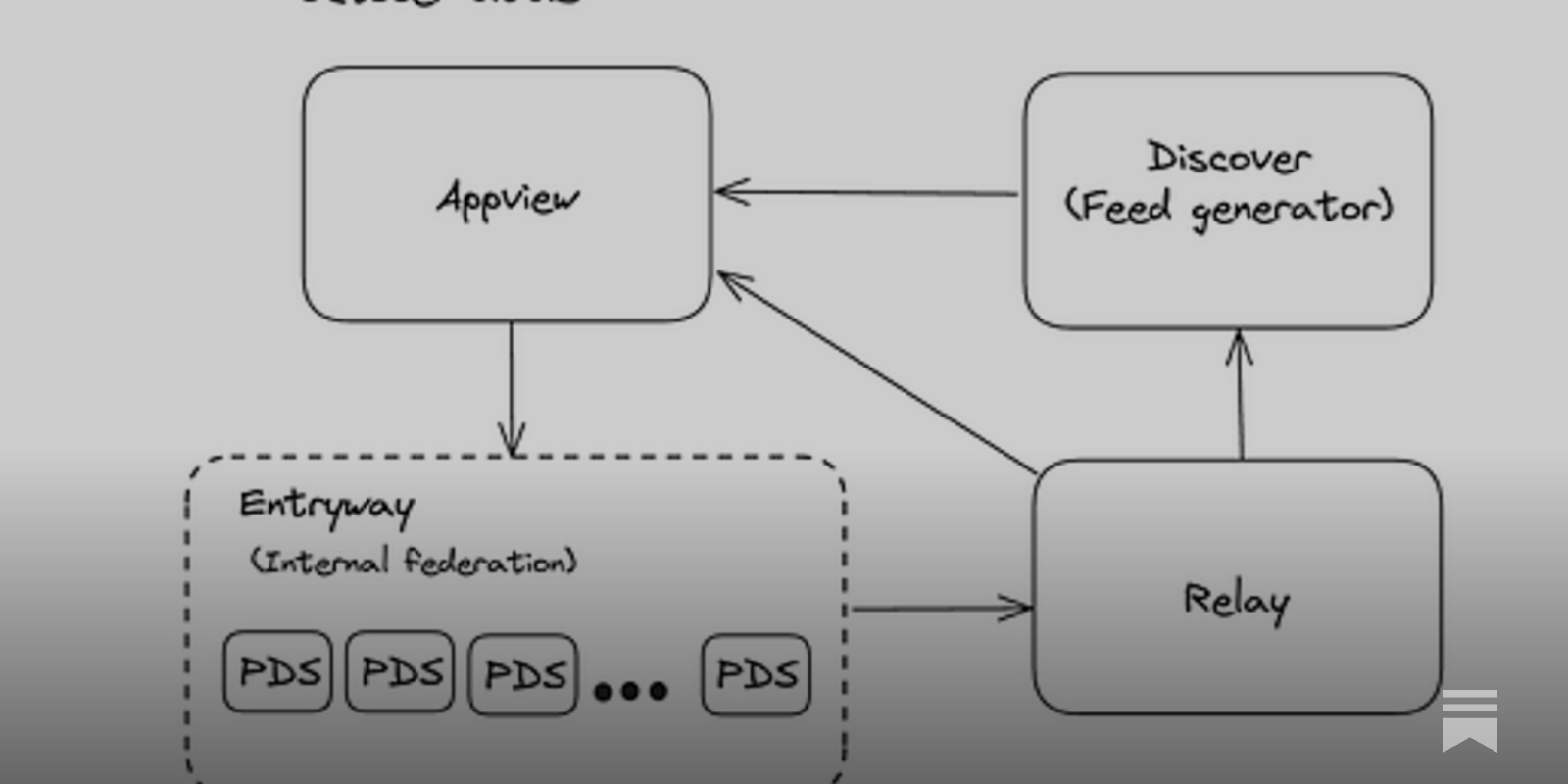
A conceptual model of ATProto and ActivityPub
If you were to design an open social networking protocol, what would that look like? Which metaphors and comparisons would you use to get a general idea of how the network functions? And what would you answer if people ask if your network is decentralised and federated?

Social Networking Utopia — Matt
In discussing the network topology of social networks — whether centralized like Facebook or federated like ActivityPub — I think the ult...

Fragile narrow laggy asynchronous mismatched pipes kill productivity - Tristan Hume
Something I’ve been thinking about recently is how when I’ve worked on any kind of distributed system, including systems as simple as a web app with frontend and backend code, probably upwards of 80% of my time is spent on things I wouldn’t need to do if it weren’t distributed. I came up with the following description of why I think this kind of programming requires so much effort: Everything is fragile narrow laggy asynchronous mismatched untrusted pipes. I think every programmer who’s worked on a networked system has encountered each of these issues, this is just my effort to coherently describe all of them in one place. I hope to prompt you to consider all the different hassles at once and think about how much harder/easier your job would be if you did/didn’t have to deal with these things. I think this is part of why web companies like Twitter seem to have so much lower impressiveness per engineer productivity than other places like game companies or SpaceX, although there’s other pieces to that puzzle. While part of the difficulty of distributed systems is inherent in physics, I think there’s lots of ideas for making each part of the problem easier, many already in common use, and I’ll try to mention lots of them. I hope that we as programmers continually develop more of these techniques and especially general implementations that simplify a problem. Like serialization libraries reducing the need for hand-written parsers/writers, I think there’s a lot of developer time out there to save by implementing generalized solutions where we currently painstakingly reimplement common patterns. I also think all these costs mean you should try really hard to avoid making your system distributed if you don’t have to.
A World Without Email: Reimagining Work in an Age of Communication Overload
A New York Times and Wall Street Journal bestsellerFrom New York Times bestselling author Cal Newport comes a bold vision for liberating workers from the tyranny of the inbox--and unleashing a new era of productivity.Modern knowledge workers communicate constantly. Their days are defined by a relentless barrage of incoming messages and back-and-forth digital conversations--a state of constant, anxious chatter in which nobody can disconnect, and so nobody has the cognitive bandwidth to perform substantive work. There was a time when tools like email felt cutting edge, but a thorough review of current evidence reveals that the "hyperactive hive mind" workflow they helped create has become a productivity disaster, reducing profitability and perhaps even slowing overall economic growth. Equally worrisome, it makes us miserable. Humans are simply not wired for constant digital communication.We have become so used to an inbox-driven workday that it's hard to imagine alternatives. But they do exist. Drawing on years of investigative reporting, author and computer science professor Cal Newport makes the case that our current approach to work is broken, then lays out a series of principles and concrete instructions for fixing it. In A World without Email, he argues for a workplace in which clear processes--not haphazard messaging--define how tasks are identified, assigned and reviewed. Each person works on fewer things (but does them better), and aggressive investment in support reduces the ever-increasing burden of administrative tasks. Above all else, important communication is streamlined, and inboxes and chat channels are no longer central to how work unfolds.The knowledge sector's evolution beyond the hyperactive hive mind is inevitable. The question is not whether a world without email is coming (it is), but whether you'll be ahead of this trend. If you're a CEO seeking a competitive edge, an entrepreneur convinced your productivity could be higher, or an employee exhausted by your inbox, A World Without Email will convince you that the time has come for bold changes, and will walk you through exactly how to make them happen.
Our Networks
Conference about the past, present, and future of building our own network infrastructures.
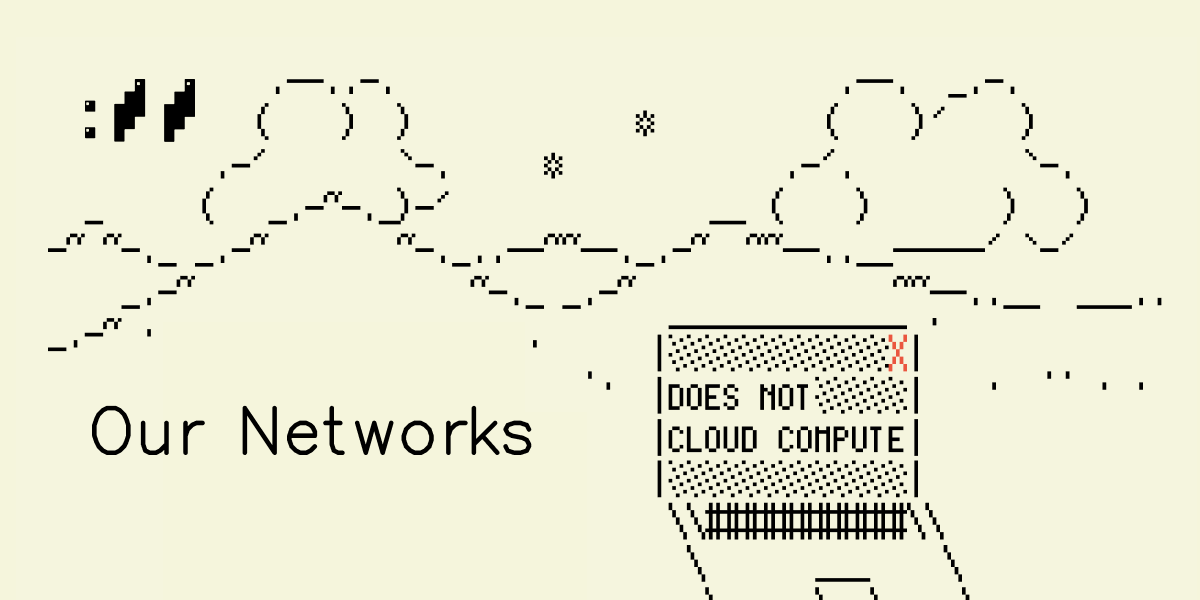
Our Networks
Conference about the past, present, and future of building our own network infrastructures.
Building Bluesky: a Distributed Social Network (Real-World Engineering Challenges)
Bluesky is built by around 10 engineers, and has amassed 5 million users since publicly launching in February this year. A deep dive into novel design decisions, moving off AWS, and more.