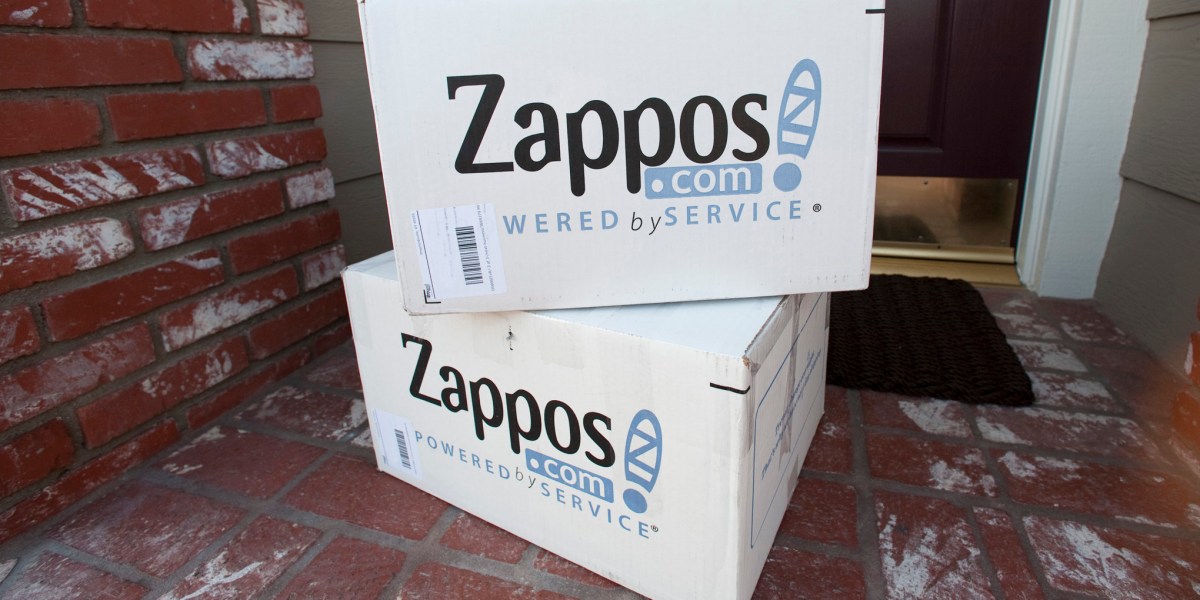
These companies pride themselves on managing a little differently that most.
Holacracy: a red herring in the quest for leadership
Does Holacracy liberate employees from the shackles of traditional management structures so they can perform like entrepreneurial leaders? Well, for me the answer’s a definite no. It’s a paradox that for Holacracy to succeed employees need a leadership mindset. But if they have that mindset in the first place they don’t actually need Holacracy. Let’s […]


HoloChats: Matthew Schutte and Brian Robertson
The Holacracy Community of Practice is now the Self-Management Accelerator | Holacracy
A new identity for a new direction A new identity for a new direction

Holacracy Is Fundamentally Broken
Holacracy is a top-down, bureaucratic, big government framework. It is completely the opposite of what agile, scalable organizations need in the 21st century.

Autopsy of a Failed Holacracy: Lessons in Justice, Equity, and Self-Management | Nonprofit Quarterly | Civic News. Empowering Nonprofits. Advancing Justice.
As many nonprofits look at the enormous potential benefits of building shared leadership in and around their organizations, they will surely stumble across the holacracy model, but does it offer a real path forward? In this article, a veteran of one change process intelligently critiques the model, providing guidance on what other organizations may wish to avoid. This is the first of a 3-part series on shared leadership we will run over the coming month.

Beyond the Holacracy Hype
Most observers who have written about holacracy and other forms of self-management take extreme positions, either celebrating these “bossless,” “flat” work environments for fostering flexibility and engagement or denouncing them as naive experiments that ignore how things really get done. To gain a more accurate, balanced perspective, the authors—drawing on examples from Zappos, Morning Star, and other companies—examine why these structures have evolved and how they operate, both in the trenches and at the level of enterprise strategy and policy. Self-organization models typically share three characteristics: Teams are the structure. Within them, individual “roles” are collectively defined and assigned to accomplish the work. Teams design and govern themselves, while nested within a larger structure. Leadership is contextual. It’s distributed among roles, not individuals, and responsibilities shift according to fit and as the work changes. Adopting self-management wholesale—using it to determine what should be done, who should do it, and how people will be rewarded across an entire enterprise—is hard, uncertain work, and the authors argue that in many environments it won’t pay off. But their research and experience also suggest that elements of self-organization can be valuable tools for companies of all kinds, and they look at circumstances where it makes more sense to blend the new approaches with traditional models.

Holacracy, Zappos and Employment Law (LMFTFY)
Holacracy is a non-hierarchical management philosophy that is getting a lot of attention these days. As readers might know, Zappos recently adopted this ideology, famously eliminating bosses and j…

3 Cognitive Habits of People Who Get Things Done
High-achieving workers have these things in common.

Holawhat? Meet The Alt-Management System Invented By A Programmer And Used By Zappos - Fast Company
Zappos, Medium, and David Allen have all embraced the non-hierarchical management system. Should your company adopt it too?


Scaling organizations from 50 to 150 | willowbl00
There’s this thing that some organizational theory nerds (hi) talk about called the “rule of threes.” What it means, basically, is that every time your organization grows by x3, the way the organization operates has to change. While that blog post breaks down the numbers differently, I see one of the main inflection points as being between 50 and 150. One of my dear friends is on the board of a maker space, and they’ve recently started experiencing growing pains at the 120 mark where trust is breaking down and folks aren’t as aligned as they once were. This is a blog post about what I recommended to him based on the stage they’re at.
Which Way Do You Run? | Andreessen Horowitz
The difference between a good CEO and a great one? Trusting your gut and confronting your fears head on.

Taking Holacracy governance to the next level - Loomio
Explore how Holacracy's integrative decision-making process can help teams develop proposals together.

Zappos CEO Tony Hsieh: Adopt Holacracy Or Leave - Fast Company
An internal memo provided to Fast Company by Zappos.