Calling all programming language nerds! Distinguished computer scientist Mark S. Miller (presently at Agoric) joins us to tell us all about distributed object programming languages and their history! We talk about actors, a bit of Xanadu, and little known but incredibly influential programming languages like Flat Concurrent Prolog, Joule, and E!
A Conceptual Introduction to Spritely Goblins
A transformative paradigm for distributed systems programming.
Composition in Distributed Systems
Ideas from PL research, such as functional combinators, behavioural types, and compiler correctness proofs, can be applied to distributed systems, facilitating their understanding, implementation, …

Distributed systems theory for the distributed systems engineer | Paper Trail
Writing about distributed systems, compilers, virtual machines, databases and research papers from SOSP, ATC, NSDI, OSDI, EuroSys and others
Goblins: Distributed Programming — Spritely Institute
At the heart of Spritely is Goblins, its distributed object programming environment. Goblins provides an intuitive security model, automatic local transactions for locally synchronous operations, and an easy to use and efficient asynchronous programming interface for encapsulated objects which can live anywhere on the network. Its networking model abstracts away these details so the programmer can focus on object programming rather than protocol architecture.
Pony
An open-source, object-oriented, actor-model, capabilities-secure, high-performance programming language.
Distributed Systems lecture series
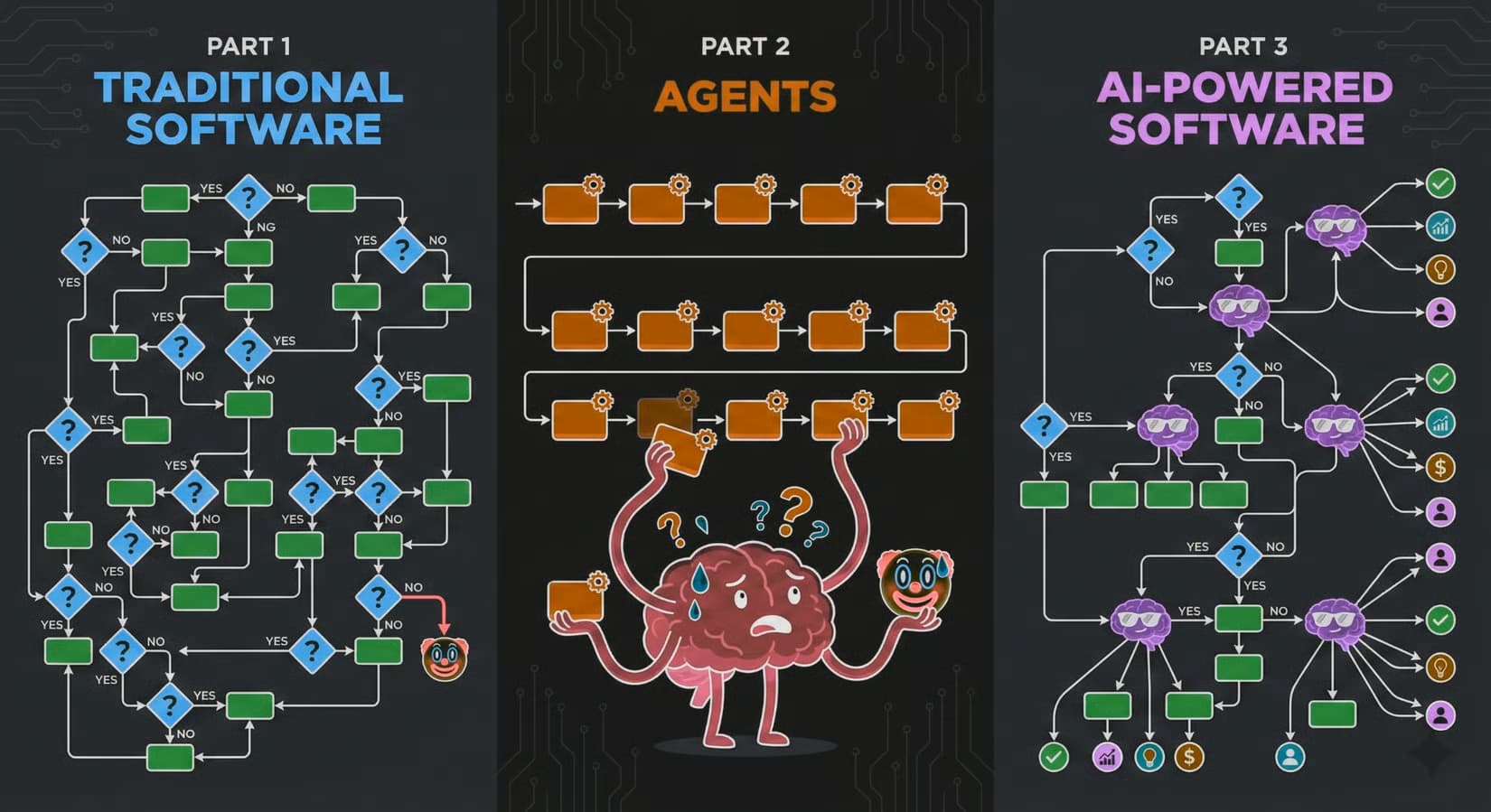
The mythical matched modules | Proceedings of the 24th ACM SIGPLAN conference companion on Object oriented programming systems languages and applications
Certified compilers are complex software systems. Like other large systems, they demand modular, extensible designs. While there has been progress in extensible metatheory mechanization, scaling extensibility and reuse to meet the demands of full ...

Programming Language Foundations in Agda – Table of Contents
This book is an introduction to programming language theory using the proof assistant Agda.
Boomerang | Proceedings of the 35th annual ACM SIGPLAN-SIGACT symposium on Principles of programming languages
Bidirectional programming languages are a practical approach to the view update problem. Programs in these languages, called lenses, define both a view and an update policy - i.e., every program can be read as a function mapping sources to views as well ...

Structured reasoning about actor systems | Proceedings of the 2013 workshop on Programming based on actors, agents, and decentralized control
Successfully attaining consensus in the absence of a centralized coordinator is a fundamental problem in distributed multi-agent systems. We analyze progress in the Synod consensus protocol—which does not assume a unique leader—under the ...
Programming Language Design in the Era of LLMs: A Return to Mediocrity?
The most exciting part of Programming Languages (PL) research for me has always been in Programming Language Design.
The Next 7000 Programming Languages
Landin’s seminal paper “The next 700 programming languages” considered programming languages prior to 1966 and speculated on the next 700. Half-a-century on, we cast programming languages in a Darwinian ‘tree of life’ and explore languages, their features (genes) and language evolution from the viewpoint of ‘survival of the fittest’.
The Topos of Programming | Yon
A topos-oriented programming language. Native via MLIR and LLVM, with a content-addressed heap on the Leech lattice.