


Elias Elmo Lewis created a formula that changed marketing forever. But his method applies beyond marketing. Here's how to think in funnels:
AIDA model | Marketing | Research Starters | EBSCO Research
<p>The AIDA model is a marketing framework that outlines the stages consumers typically go through when making a purchasing decision: Attention, Interest, Desire, and Action. Developed in the late 19th century by American marketer Elias St. Elmo Lewis and later refined by Edward Strong in the 1920s, this model aims to guide marketers in capturing potential buyers' attention and leading them toward a purchase. </p> <p>In the Attention stage, marketers employ engaging strategies to attract consumers, often using eye-catching visuals or intriguing information. Next, the Interest stage focuses on maintaining that attention through memorable content or relatable messaging. The Desire stage demonstrates how a product or service fulfills the consumer's needs, often using persuasive techniques like testimonials or demonstrations. Finally, the Action stage prompts the consumer to make a purchase, providing clear instructions on how to proceed.</p> <p>While the AIDA model remains relevant, marketers today may adapt it to incorporate new elements, such as Retention or Satisfaction, reflecting the evolving digital landscape and consumer behavior. Overall, the AIDA model serves as a foundational tool for understanding consumer engagement and facilitating effective marketing strategies.</p>

Search, Discovery, Pills, and Portals
Solving the distribution crisis in marketing

How to Hire a Great Marketing Person - Noah Kagan
I got this question asked and figured others might be curious on how I do it. The challenge about marketing output is that it’s not always numbers based and the ROI isn’t immediate. With that being said I think it can be and here’s how I would solve how to find and how to know […]

Field Experimentation in Marketing Research
Despite increasing efforts to encourage the adoption of field experiments in marketing research (e.g., Campbell 1969 ; Cialdini 1980 ; Li et al. 2015 ), the majority of scholars continue to rely primarily on laboratory studies ( Cialdini 2009 ). For example, of the 50 articles published in Journal of Marketing Research in 2013, only three (6%) were based on field experiments. The goal of this article is to motivate a methodological shift in marketing research and increase the proportion of empirical findings obtained using field experiments. The author begins by making a case for field experiments and offers a description of their defining features. She then demonstrates the unique value that field experiments can offer and concludes with a discussion of key considerations that researchers should be mindful of when designing, planning, and running field experiments.

Growth Loops are the New Funnels | Reforge Blog
Reforge drives team performance, with the most actionable learning from vetted operators that your team will actually use and apply.

Signaling theory in entrepreneurial fundraising and crowdfunding research
Researchers often employ signaling theory to explain the effect of entrepreneurial communication on fundraising success. This focus on signaling can lead researchers to overlook alternative explana...

SaaS Marketing: 41+ Strategies That Work | Apollo Digital
What SaaS marketing really is, plus 41+ strategies that grow MRR: SEO, content, product-led growth, and the channels worth your budget. A practical playbook.
Opinion | Why Is Behavioral Economics So Popular? (Published 2018)
The recent vogue for this academic field is in part a triumph of marketing.

Revenue Models (2026): 19 Different Ways to Make Money [B2B & B2C] - Gust de Backer
So many different revenue models... But, which one fits your business? Over the past few decades, many new revenue models have proven to be profitable. That's why I'm going to show you 16 different revenue models so you can evaluate if there might be a better way to monetize the value you deliver to your customer. Let's start... What is…

There Are Actually Just Three Ways To Grow
Most brands obsess over distribution when the real growth comes from moves marketers can’t make alone

How Targeting Affects Customer Search: A Field Experiment
It has become common practice for retailers to personalize direct marketing efforts based on customer transaction histories as a tactic to increase sales. Targeted email offers featuring products in the same category as a customer’s previous purchases generate higher purchase rates. However, a targeted offer emphasizing familiar products could result in curtailed search for unadvertised products, as a closely matched offer weakens a customer’s incentives to search beyond the targeted items. In a field experiment using email offers sent by an online wine retailer, targeted offers resulted in decreased search activity on the retailer’s website. This effect is driven by a lower rate of search by customers who visit the site, rather than a lower incidence of search. There are several ways this could potentially hurt retailers and consumers, such as reduced cross-selling and fewer opportunities for customers to explore new products. This paper was accepted by Pradeep Chintagunta, marketing.

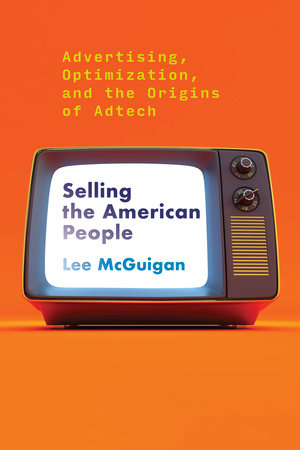
Selling the American People: Advertising, Optimization, and the Origins of Adtech
How marketers learned to dream of optimization and speak in the idiom of management science well before the widespread use of the Internet.Algorithms, data
Introduction to the Journal of Marketing Research Special Interdisciplinary Issue on Consumer Financial Decision Making
If you have citation software installed, you can download citation data to the citation manager of your choice
Advertising as a Reminder: Evidence from the Dutch State Lottery
We show that advertising can act as a reminder for consumers who intend to buy a product. , Consumers who intend to buy a product may forget to do so because they suffer from limited attention. Therefore, they may value being reminded by an advertisement. This reminder effect of advertising could be important in many markets but is usually difficult to document. We study it in the context of buying a product that has existed for almost 300 years: a ticket for the Dutch State Lottery. This context is particularly suitable for our analysis because the product is simple, it is very well known, and there are multiple fixed and known purchase cycles per year. Moreover, radio and TV advertisements are designed explicitly to remind consumers to buy a lottery ticket before the draw. This can conveniently be done online. We develop an approach to distinguish reminder effects of advertising from other effects, such as conveying information about the size of the jackpot. The key idea is that reminder effects are short lived. We use minute-level advertising and online sales data and find that the reminder effect of advertising is strong. Reaching 1% of the population by a radio advertisement leads to an increase in online sales of 1.55% in the four hours after the advertisement is aired. For TV advertisements, the increase is 0.78%. We show that the effects generally last longer for radio advertisements. We also provide direct evidence that reminding consumers not only affects the timing of purchases but also leads to market expansion. Finally, we estimate a model of consumer behavior under limited attention to quantify the effect on total sales. We find that total sales would be 16.7% lower without the reminder effect of advertising and that shifting advertising to the week of the draw would lead to a 9.2% increase in sales. History: Puneet Manchanda served as the senior editor and Günter Hitsch served as associate editor for this article. Supplemental Material: A replication package with code and log files and an Online Appendix are available at https://doi.org/10.1287/mksc.2022.1405 .

Product-Market Fit (2026): What, Why and How [+ Pyramid] - Gust de Backer
Do you already have a Product-Market Fit (PMF)? I've been hearing it more and more lately, the question of whether someone has a PMF yet. Maybe you're already familiar with the term, you already have it or you just want to know how to get it… I'm going to explain to you: What a Product-Market Fit (PMF) is How to…

Why Marketing Flywheels Work - SparkToro
The first few years of my career were awful. Drowning in debt, losing nine out of ten pitches for new business, failing to earn clients. It felt like
