
Inefficient does not mean ineffective, and it is certainly not the same as lazy. You get things done – just not in the most effective way possible. You’re a bit sloppy, and use more energy. But don’t feel bad about it. There is real value in not being the best.
How to Beat Procrastination
Part 2. Where does a procrastinator go wrong and how can you actually improve your procrastination habits?

Doing nothing at work
Many engineers should be doing less work. I don’t necessarily mean producing less code or fewer changes, but literally working fewer hours in the day. When they do work, they should be working at a slower pace. I like to aim to be running at 80% utilization by default: unless I have a high-pressure project going on, I spend 20% of my workday away from the computer.

Self-Control and Optimal Goals: A Theoretical Analysis
Consumers set goals to achieve a variety of objectives such as losing weight, saving for retirement, and achieving better health. A large body of literature in psychology and consumer behavior shows that goals can help consumers achieve these objectives. However, there is almost no research that examines how we should set optimal goals. The purpose of this paper is to develop a parsimonious framework that examines how goals can help performance and how we should set optimal goals. We use the literature on hyperbolic discounting to model these issues. Our results show that goals can often increase performance but can also sometimes encourage procrastination. We show that some goals are worse than having no goals, even when the goals are achieved and the consumer exerts more effort because of the goal. We also find that the presence of goals can lead to myopic consumers behaving as if they were hyperopic. Our results also show that the most difficult goals should be assigned to consumers with moderate levels of motivation and self-control problems. We also find that it is sometimes optimal to set goals that are never achieved.

Harnessing Frustration: Using LLMs to Overcome Activation Energy
One of my biggest weaknesses as a software engineer is procrastination when facing a new project. When the scope is unclear, I have a tendency to wait until I feel I’ve “felt out” the problem to start doing anything. I know I’ll feel better and work much faster when I get “stuck in” but I still struggle with that first step, overcoming the “activation energy” required to engage with the details. LLMs have been a game-changer for me in this respect: I can just throw a couple of sentences at them with the shape of the problem. This leads to one of two outcomes: The LLM comes up with a good solution, usually in a slightly different way than what I was thinking. I realize “oh wow the solution is much simpler than I thought”. Straight away I start thinking about the consequences of implementing and improving what the LLM suggested. The LLM comes up with a solution that I intuitively recognize as “wrong”. My immediate reaction is frustration (“How could it get it so wrong”) which leads me to go back and forth with the model, explaining to it why its solution could not possibly work. But in the process of arguing with the model, my brain is churning away and generating variations or different approaches that could work. After a while, even if the AI is still on the wrong track, the debate will trigger a moment of inspiration where suddenly the solution will come to me. I’ll excitedly start up a new conversation and start working through it with the model. The key is the emotional reaction I have immediately to the LLM’s response, either excitement or frustration. By harnessing this immediate feedback loop, I get my brain out of its passive, procrastination mode. It’s almost like a jolt: either I’m thrilled because it’s simpler than I thought, or I’m spurred to action by the urge to correct a perceived ‘wrong’ answer. This forces me to engage with the problem in a meaningful way.
Opinion | The Tyranny of Convenience (Published 2018)
All the personal tasks in our lives are being made easier. But at what cost?

To Anyone Who Thinks They're Falling Behind In Life
You don't need more motivation. You don't need to be inspired to action. You don't need to read any more lists and posts about how you're not doing enough. There's a magic beyond us that works in ways we can't understand.

The efficiency-gain illusion: People underestimate the rate of AI use and overestimate its benefits on simple tasks
People are increasingly turning to AI assistance for simple tasks, e.g., arithmetic, spell-check, and answering simple questions. But does AI assistance actually save users time and effort? We investigate people's propensity to use AI for cognitively simple tasks and assess whether their reliance is well-calibrated. Across three pre-registered user studies (N = 2691), we find that people frequently choose to use AI even when doing so is inefficient (i.e. provides no meaningful time or effort savings). We identify systematic miscalibration at two levels: (1) a self-estimate miscalibration where people on average believe that they are using AI less than they actually are, and (2) efficiency-gain illusions where people overestimate how much time and effort savings AI use affords. We also identify a session-level carryover effect where a participant's prior AI use leads to further AI adoption and entrenches their miscalibration about time savings. Our results shed light on the mechanisms and biases underlying people's choice of whether to use AI as well as the risk of an overreliance feedback loop.

The Akrasia Effect: Why We Don’t Follow Through on What We Set Out to Do and What to Do About It
Plus, 3 strategies to help you start beating procrastination now.
In 2026, I’m no longer interested in ‘working on myself’
We think of ourselves as full-time projects, but what if doing so much inner work does more harm than good?

Ditch the niceties in AI prompts to save energy use, say researchers
A UN report warns of the rapid growth in AI energy consumption, but suggests users can improve efficiency by making prompts more concise

The Case for Lowering Your Expectations
It may be the key to happiness and sustainable performance

The Optimization Trap: Why Too Much Efficiency Makes Us Fragile - The Great Simplification
In this episode, Nate is joined by biologist and biophysicist Olivier Hamant to explore why living systems prioritize robustness over performance, and what that means for a civilization built almost entirely in the opposite direction.

How to make Slack less bad for you | Robert Heaton
Slack claim to be in the business of "making your working life simpler, more pleasant, and more productive". We’re about to be cynical, so let’s acknowledge that this claim is probably at least par...

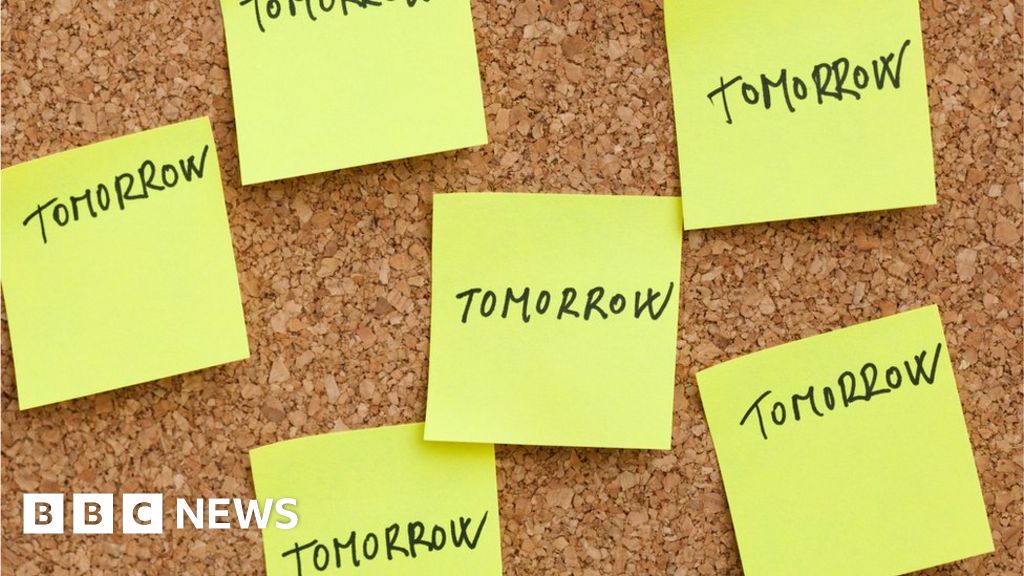
Procrastination: It's pretty much all in the mind
Scans show differences in the brains of those who love to put things offs compared with the "doers".
If you don’t finish then you’re just busy, not productive – Jack Simpson
One of the biggest realisations I’ve come to as part of my PhD, is how little people care about how I spend my time, they only care about what I am able to deliver. Yet in order to deliver, you need to finish. I was recently reading an article on this topic, and I think the advice can be best summed up as:

How I got to 200 productive hours a month
A tested approach to improve your focus and productivity