

A cross-platform interface to file system operations, built on top of the libuv C library.
TigerFS
A filesystem backed by PostgreSQL, and a filesystem interface to PostgreSQL. TigerFS mounts a database as a directory. Every file is a real row. Writes are transactions. Multiple agents and humans can read and write concurrently with full ACID guarantees, locally or across machines. Any tool that works with files works out of the box.
JuiceFS - Open Source Distributed POSIX File System for Cloud
JuiceFS is a cloud-based high-performance distributed file system, based on object storage and database to achieve data and metadata separation architecture, easily carrying tens of billions of file storage, to meet the random read performance requirements of big data, AI, autonomous driving, gene sequencing and other massive data.
RAFS Filesystem | dragonflyoss/nydus | DeepWiki
RAFS (Registry Acceleration File System) is a read-only, chunk-deduplicated, on-demand-loading filesystem designed for container image serving. The filesystem implementation is located in the `rafs/`
FUSE — The Linux Kernel documentation
A filesystem in which data and metadata are provided by an ordinary userspace process. The filesystem can be accessed normally through the kernel interface.
libkrun/libkrun
A dynamic library providing Virtualization-based process isolation capabilities
anthropic-experimental/sandbox-runtime
A lightweight sandboxing tool for enforcing filesystem and network restrictions on arbitrary processes at the OS level, without requiring a container.
How programs get run: ELF binaries
The previous article in this series described the general mechanisms that th [...]
mitchellh/libxev
libxev is a cross-platform, high-performance event loop that provides abstractions for non-blocking IO, timers, events, and more and works on Linux (io_uring or epoll), macOS (kqueue), and Wasm + WASI. Available as both a Zig and C API.
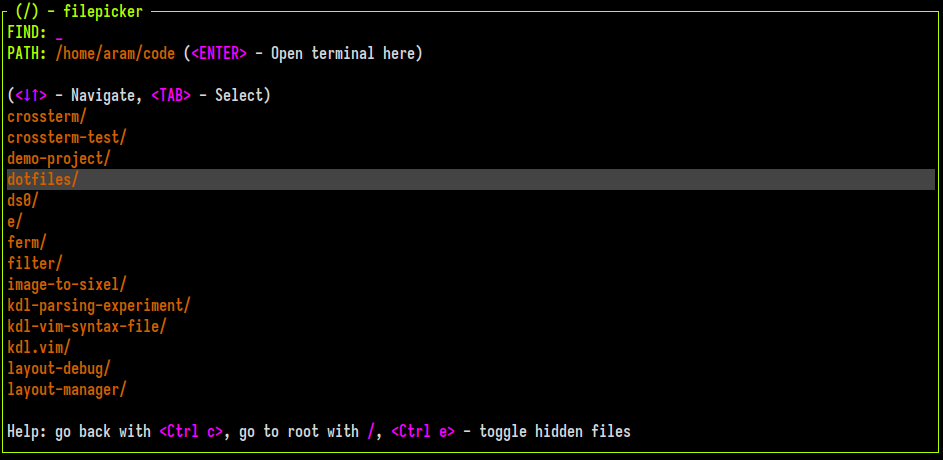
The Zellij Filepicker
Explore the Zellij filepicker plugin. Learn dynamic filesystem traversal with fuzzy finding for faster file navigation and workflows.
Plan B: an operating system for ubiquitous computing environments
The conventional approach for building pervasive environments relies on middleware to integrate different systems. Instead, we have built a system that can deal with these environments by exporting system resources through distributed virtual file systems. This requires no middleware, simplifies interoperation, and permits applying general purpose tools to any system resource. A constraint-based file system import mechanism allows the system to adapt to changes in the environment and permits users to customize the environment and tailor adaptation according to their needs. The system has been in use for over a year to carry out our daily work and is underlying the smart space that we built for our department
To Be Determined File System; a Preview

Genode - Genode Operating System Framework
We understand the complexity of code and policy as the most fundamental security problem shared by modern general-purpose operating systems. Because of high functional demands and dynamic workloads, however, this complexity cannot be avoided. But it can be organized. Genode is a novel OS architecture that is able to master complexity by applying a strict organizational structure to all software components including device drivers, system services, and applications. The Genode OS framework is an open-source tool kit for building highly secure component-based operating systems. It scales from embedded devices to dynamic general-purpose computing.