FLI steers transformative technology away from large-scale risks. Read more about the Future of Life Institute's Mission, principles and initiatives.
Appropriate Measures — Real Life
Changing the tech we use is not enough to mitigate the environmental and social harm of mass technology

Preprints and Papers Come to Life at FORCE2026
The future of interactive preprints and papers were on display at the FORCE2026 conference in Singapore, and here I discuss what was presented and what the future of "living figures" might hold

Intent-Based Architecture and Their Risks - Paradigm
Paradigm is a frontier technology investment firm that builds and invests in crypto, AI, robotics, and across new frontiers from the earliest stages.
other futures: tech, resistance & imagining otherwise
big tech wants to control our future, but there are other paths we can choose instead. on "other futures" we bring together leading tech researchers, organizers, critics, and storytellers to help us imagine what more liberatory and human-centered tech futures could look like—and how we can build them together. brought to you by DAIR and the All Tomorrows Institute.
Inside the AI Index: 12 Takeaways from the 2026 Report | Stanford HAI
The annual report reveals a field hitting breakthrough capabilities while raising urgent questions about environmental costs, transparency, and who benefits from the technology.

Human Life in a Post-AGI World - Google DeepMind Talk
Tyler Cowen at Google DeepMind on life after AGI: rebuilding every institution, the rise of "AI maniacs," and why the future will be drenched in meaning.
Instadapp
Building a suite of tools to leverage the full potential of DeFi and bring it to the masses

Action Plan to increase the safety and security of advanced AI
The first U.S. government-commissioned assessment on catastrophic national security risks from advanced AI on the path to AGI.

Opinion | How Scared Should We Be of A.I. Right Now?
The dark and distressing way that Silicon Valley talks about A.I. can be traced to a philosophy that influenced many tech executives.

LifeBench: Evaluating Large Language Models as Lifelong Decision-Makers in a Simulated Human Life
Large language models have improved rapidly on reasoning, coding, and mathematics, yet comparatively little is known about how these gains transfer to tasks that demand long-horizon planning, awareness of compounding consequences, and the management of risk and uncertainty. We introduce **LifeBench**, an evaluation suite that probes these capabilities by casting an LLM as the decision-maker in a simulated human life. LifeBench is a life-course harness: beginning at age 18, an agent commits a single action each year until death, spanning education, career, finance, health, relationships, and well-being. Each action modifies the underlying stocks that govern how the life trajectory evolves. The simulator is stochastic, and the evaluation is designed to reflect the uncertainty inherent to real lives. Life trajectories are scored on three fronts: wealth, health, and well-being. We aggregate these three fronts into a single index called the Life Trajectory Index (LTI). On this index, the evaluated models cluster in a narrow band, and all fall well short of a ceiling established by search over the action space. To resolve this clustering and to assess trajectories on more subjective grounds, we also score using an LLM-as-judge with research-grounded rubrics that compare lives pairwise, switching presentation order to reduce position bias and aggregating verdicts into a Bradley-Terry score per model. We further characterize the steering behavior these models exhibit over long horizons by ablating across prompt variants.
Inventing New Nature
Defining the Protocol Institute's research mission

An End-to-End View of AI Safety
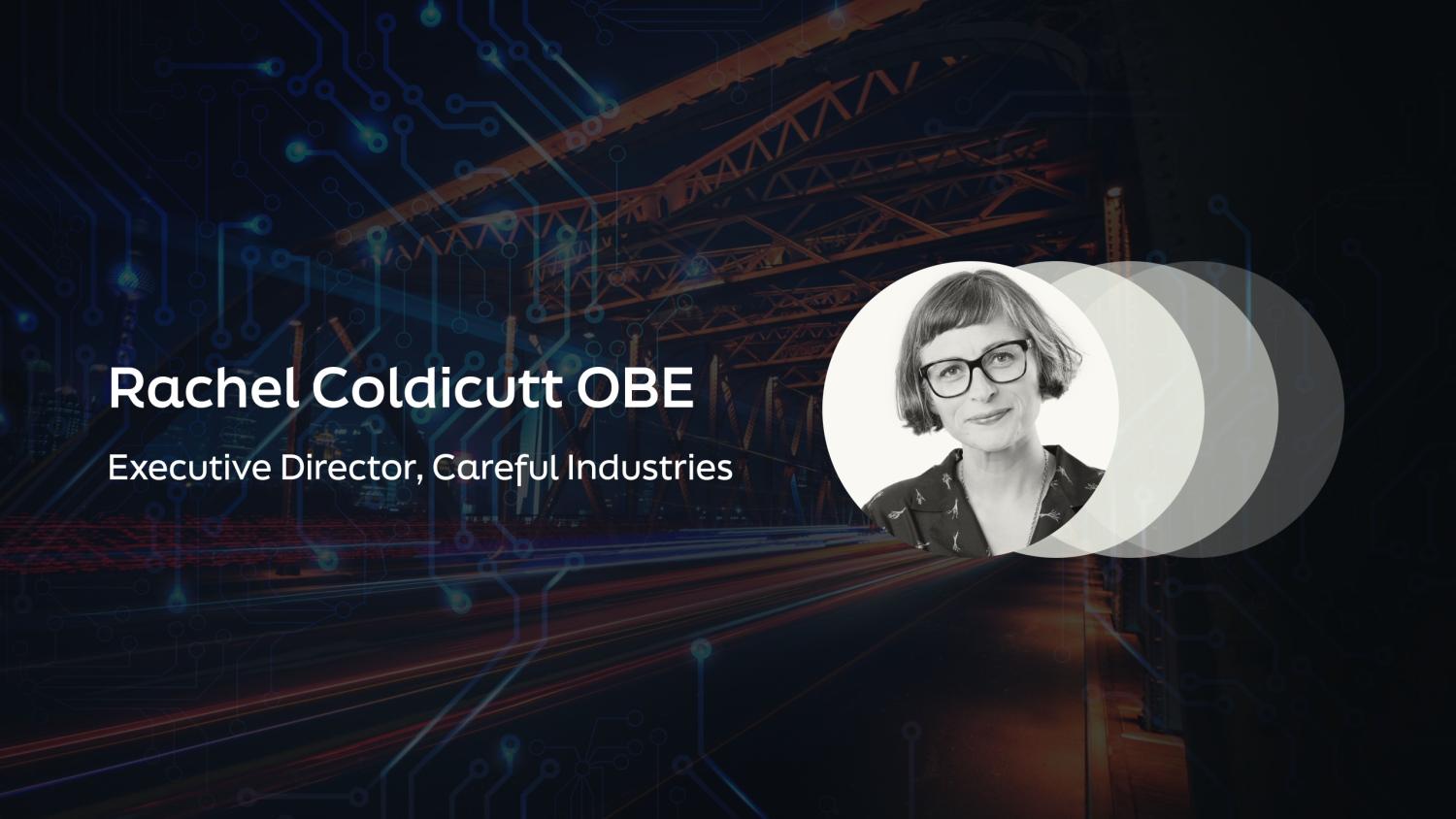
In this blog, Rachel Coldicutt OBE, Executive Director, Careful Industries discusses our newly published literature review on the safe adoption of artificial intelligence in engineered systems.
Investing in resilient infrastructure to safeguard scientific knowledge
Political threats to scientific data demand coordinated, resilient open infrastructure — IOI is helping build it.
Dario Amodei — We Must Pace the Frontier
I have worked on AI for the last twelve years because I believe it could dramatically raise the quality of human life. I’ve written often about these incredible benefits: I believe that AI could cure most major diseases in the next 5–10 years, greatly accelerate economic growth rates, create a world of abundance and empowerment, and usher in a renaissance of democracy and freedom. I feel the urgency personally. My own father died of a disease that was cured just a few years after his death, and I myself survived an early-stage cancer that would not have been treatable even fifty years ago. Carefully wielded, AI can be the latest in a long line of technological miracles that have uplifted and ennobled humanity.