AI's wide proliferation shares some striking similarities with the ways viruses spread, as an international team of researchers argue.
David Bellamy on Twitter / X
I must be among an extremely small group of people (n=1?) that have both 1) trained a frontier LLM and 2) designed and synthesized custom viruses in a lab with my own two hands.And I think that the takes on AI killing us all by creating dangerous viruses is total bogus.— David Bellamy (@DavidRBellamy) September 13, 2026
Pluralistic: LLMs are real, AI is fake (12 Sep 2026) – Pluralistic: Daily links from Cory Doctorow
Once you understand the corporate culture of AI "hyperscalers" consists primarily of everyone cooking their brains by locking themselves in the bathroom, holding flashlights under their chins, and saying "Aaaaaaaaaay Eyeeeeeee" until they wet themselves in terror, a lot of things snap into focus:
Large-Language Models as a Cognitive Virus
Large-language models (LLMs) are rapidly becoming part of human culture, reshaping how information is produced, transmitted, and used. Here we propose that their diffusion can be understood through a viral analogy, with LLM use spreading through populations, becoming embedded in cognitive and cultural practices. We model transitions among uncoupled, coupled, and persistently dependent users, and show that the interplay between social transmission, recovery, and collective reinforcement can generate tipping points and technological lock-in. A central consequence is the possibility of runaway dynamics: once a critical threshold is crossed, small increases in adoption can trigger rapid population-level shifts toward persistent dependence, with abrupt losses in cognitive competence. The same framework, however, identifies conditions for cognitive immunization, based on reducing transmission and facilitating reversibility. Our results highlight how LLM adoption may involve nonlinear collective transitions with important consequences for cognitive autonomy.

How LLMs are and are not like the brain
Hi from buttondown! At the bottom of this newsletter is a bit of administrivia about the new platform How LLMs are and are not like the brain Beneath all the...
How Do We Talk about LLMs?
By Jim Clifford It is never fun to watch friends argue. Generative AI has created multiple fractures across our universities and the community of historians. The stakes are high and we are all deal…

Why do LLMs make stuff up? New research peers under the hood.
Claude's faulty "known entity" neurons sometimes override its "don't answer" circuitry.



[Keynote 03] Simulating Emergent LLM Social Behaviors in Multi Agent Systems
Cognitive exponents and LLM leverage
I know a few people for whom LLMs have been a near-immediate multiplier of attention and effort. I know a lot for whom LLMs clearly make them worse at thinking and doing things. So: why?
A Microsoft researcher sent some goats on a mission in Age of Empires II to make a point about LLMs | IBM
A Microsoft researcher built a working neural network out of Age of Empires II goats to show that human-like AI traits are a property of the chat window, not the technology beneath it.

Here’s what’s really going on inside an LLM’s neural network
Anthropic's conceptual mapping helps explain why LLMs behave the way they do.

Artificial
An LLM is a computer program. We should talk about it like a computer program.

Artificial
An LLM is a computer program. We should talk about it like a computer program.
Happy, those able to know the causes of things
[This is a guest post by Nestor Guillen, crossposted from his blog. This blog post was initially written in a different file format and converted using AI. — T.] Keywords: LLMs, cultural tech…

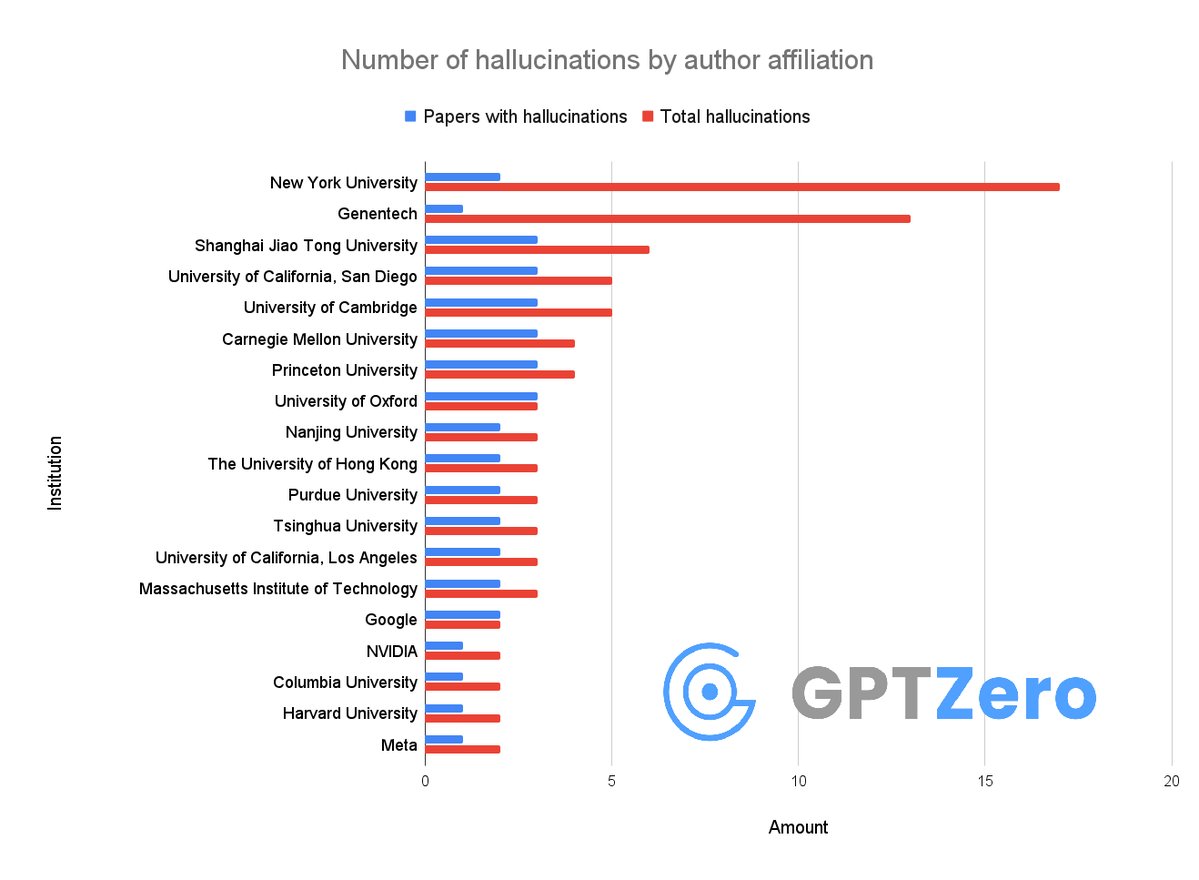
Okay so, we just found that over 50 papers published at @Neurips 2025 have AI hallucinations by @alexcdot(Alex Cui) | Twitter Thread Reader
Okay so, we just found that over 50 papers published at @Neurips 2025 have AI hallucinations I don't think people realize how bad the slop is right now It's not just that researchers from @GoogleDeepMind, @Meta, @MIT, @Cambridge_Uni are using AI - they allowed LLMs to generate hallucinations in their papers and didn't notice at all. It's insane that these made it through peer review👇