

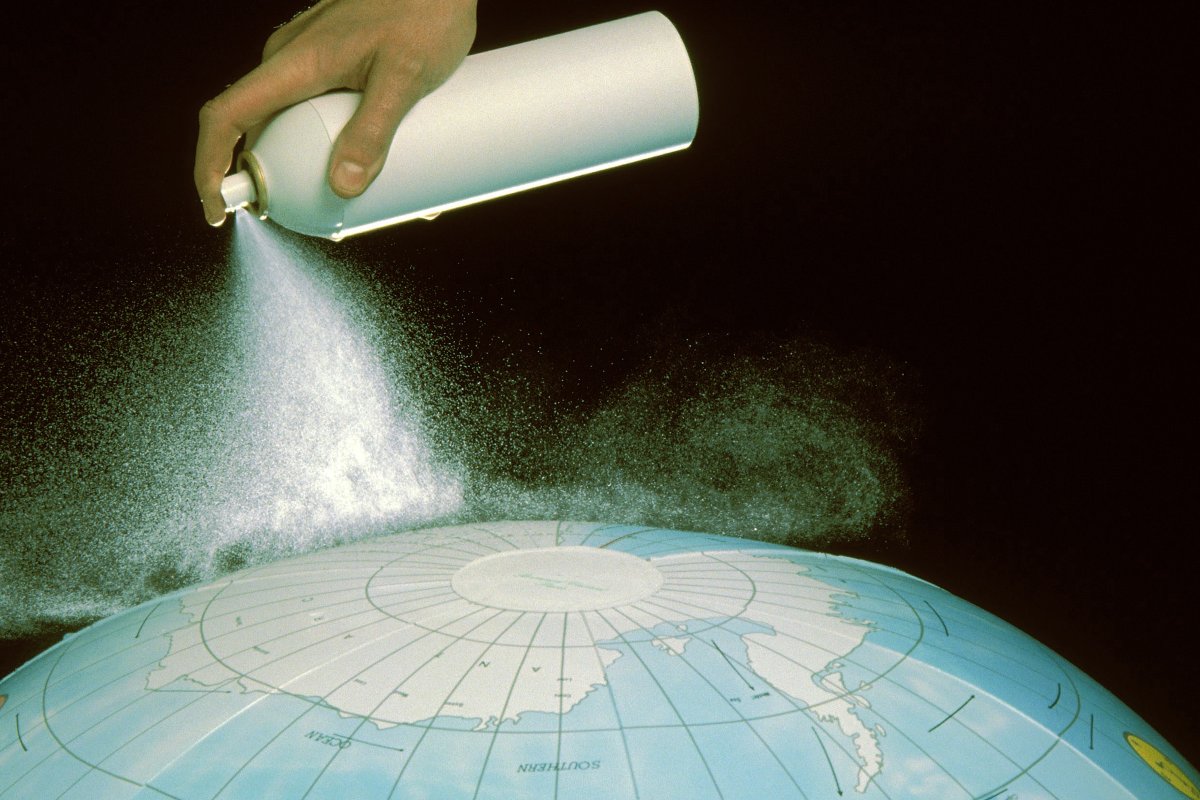
While scientists debate the risks of tampering with our climate, scientists say there's already a huge geoengineering experiment unfolding.
Incomputable Earth: Technology and the Anthropocene Hypothesis
This open access collection argues that climate breakdown represents an irreducibly incomputable problem that cannot be resolved through algorithmic optimization or cybernetic planetary management.

Ex Oil-Engineer Turned Climate Whistleblower: We Face COLLAPSE | Aaron Bastani Meets Kevin Anderson
How to solve climate change and make life more awesome
We already have all the tools we need to fix climate change. We just need to use them.

Climate doom may discourage climate action, but there’s a way to counter it
One way to guard against misinformation is to empower people to identify climate doom in the first place.

Visualising Climate 2026 — Conference
A global conference on climate data visualization, storytelling, and science. Bologna, Italy • 4–6 November 2026.

Jason Hickel on Twitter / X
The climate crisis reveals that our civilization has never really been organized around science, contrary to the usual Enlightenment narrative. It is organized around capital. Science is embraced when it serves the interests of capital, and is often ignored when it does not.— Jason Hickel (@jasonhickel) January 6, 2022
Carbon Removal Technologies | YC Request for Startups
Climate change presents an existential threat to humanity. We are already seeing the effects and they are showing up faster and stronger than anticipated. A report by United Nations' scientific panel on climate change released this month expects the atmosphere-on our current trajectory-to warm up by 1.5 degrees Celsius by 2040. Even the effects of a 0.5 degrees increase will have far-reaching consequences. This research indicates that we are already past the tipping point; even if we significantly reduced emissions, climate change would continue (Source IPCC summary C3 section). We believe there's still time to make a change if we look both to renewal energy and CO2 removal.

Home - ClimateAction.Tech
The climate crisis is happening all around us. As tech workers, we can use our skills to take and accelerate climate action.

LIMITS 2026 -- Workshop on Computing within Limits
LIMITS concerns the role of computing in human societies situated in a world of planetary boundaries and limits, such as limits of extractive logics, limits to a biosphere’s ability to recover, limits to our knowledge, or limits of technological solutions to societal issues. As an interdisciplinary group of researchers, practitioners, and scholars, we seek to reshape and orient the broader computing research agenda, grounded by an awareness that contemporary computing research is embedded in finite socio-ecological conditions and must reckon with with ecological limits in general, and climate- and climate justice-related limits in particular. LIMITS 2026 solicits submissions that move us closer towards computing that supports ecological and just futures for diverse human and non-human lifeforms and thriving biospheres.
Correcting climate ‘misperceptions’ may not boost climate action - Carbon Brief
Most people "underestimate" general support for climate change and "overestimate" actual, real-world climate action.
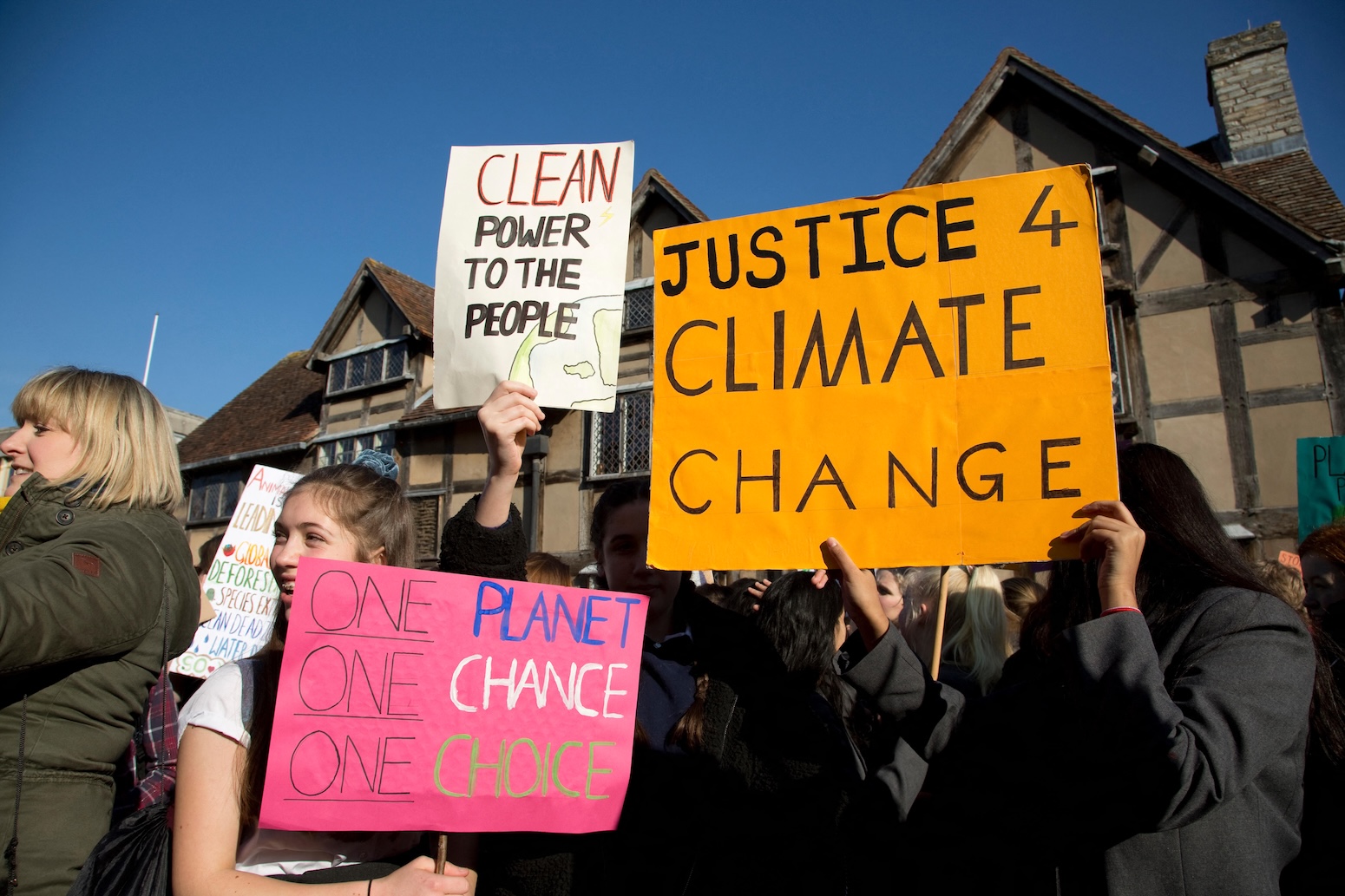
LIMITS 2025 -- Workshop on Computing within Limits
The LIMITS workshop concerns the role of computing in human societies situated in a world of limits, such as limits of extractive logics, limits to a biosphere’s ability to recover, limits to our knowledge, or limits to technological solutions to societal issues. As an interdisciplinary group of researchers, practitioners, and scholars, we seek to reshape the computing research agenda, grounded by an awareness that contemporary computing research is intertwined with ecological limits in general, and climate- and climate justice-related limits in particular. LIMITS 2025 solicits submissions that move us closer towards computing that supports diverse human and non-human lifeforms and thriving biospheres.
Google’s exponential path to climate-wrecking digital bloat
Google’s latest report reveals a completely unprecedented rise in energy consumption – more than any of us expected. Generative AI is a climate carbon bomb.

Climate solutions most likely to reach ‘positive tipping points’ revealed by scientists
Global shift towards clean electricity could trigger ‘cascade’ of progress, helping reduce air pollution, cut waste and revive oceans
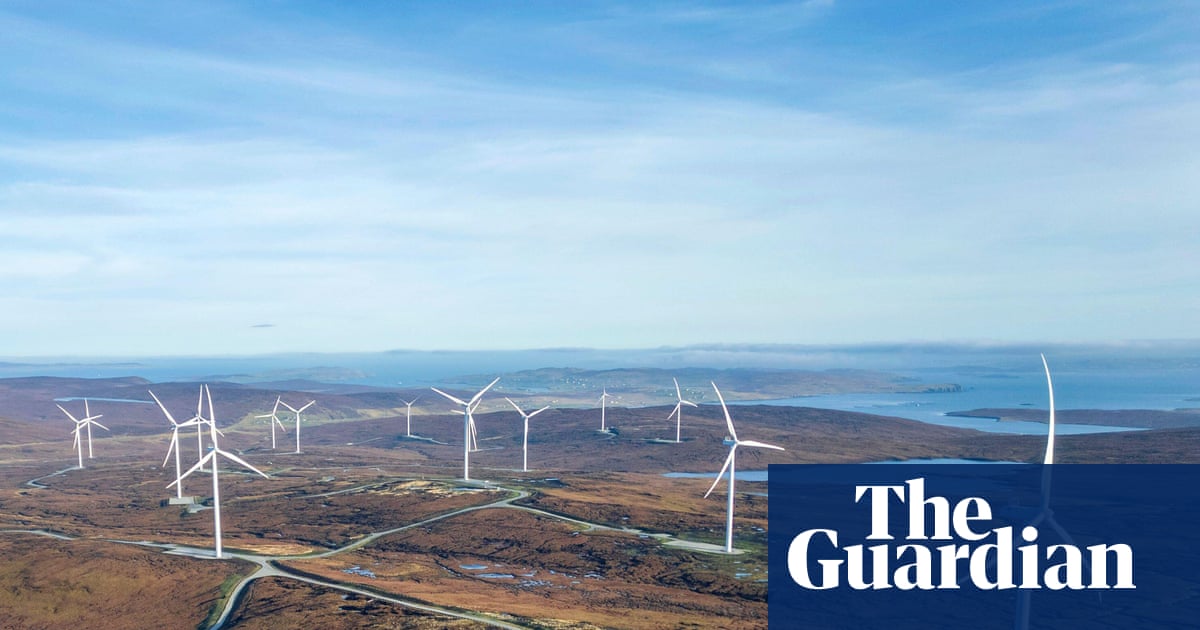
Knowledge infrastructures for the Anthropocene
The technosphere metabolizes not only energy and materials, but information and knowledge as well. This article first examines the history of knowledge about large-scale, long-term, anthropogenic environmental change. In the 19th and 20th centuries, major systems were built for monitoring both the environment and human activity of all kinds, for modeling geophysical processes such as climate change, and for preserving and refining scientific memory, i.e. data about the planetary past. Despite many failures, these knowledge infrastructures also helped achieve notable successes such as the Limited Test Ban Treaty of 1963, the ozone depletion accords of the 1980s, and the Paris Agreement on climate change of 2015. The article’s second part proposes that knowledge infrastructures for the Anthropocene might not only monitor and model the technosphere’s metabolism of energy, materials and information, but also integrate those techniques with new accounting practices aimed at sustainability. Scientific examples include remarkable recent work on long-term socio-ecological research, and the assessment reports of the Intergovernmental Panel on Climate Change. In terms of practical knowledge, one key to effective accounting may be ‘recycling’ of the vast amounts of ‘waste’ data created by virtually all online systems today. Examples include dramatic environmental efficiency gains by Ikea and United Parcel Service, through improved logistics, self-provision of renewable energy, and feedback from close monitoring of delivery trucks. Blending social ‘data exhaust’ with physical and environmental information, an environmentally focused logistics might trim away excess energy and materials in production, find new ways to re-use or recycle waste, and generate new ideas for eliminating toxic byproducts, greenhouse gas emissions and other metabolites.

Knowledge infrastructures for the Anthropocene
The technosphere metabolizes not only energy and materials, but information and knowledge as well. This article first examines the history of knowledge about large-scale, long-term, anthropogenic environmental change. In the 19th and 20th centuries, major systems were built for monitoring both the environment and human activity of all kinds, for modeling geophysical processes such as climate change, and for preserving and refining scientific memory, i.e. data about the planetary past. Despite many failures, these knowledge infrastructures also helped achieve notable successes such as the Limited Test Ban Treaty of 1963, the ozone depletion accords of the 1980s, and the Paris Agreement on climate change of 2015. The article’s second part proposes that knowledge infrastructures for the Anthropocene might not only monitor and model the technosphere’s metabolism of energy, materials and information, but also integrate those techniques with new accounting practices aimed at sustainability. Scientific examples include remarkable recent work on long-term socio-ecological research, and the assessment reports of the Intergovernmental Panel on Climate Change. In terms of practical knowledge, one key to effective accounting may be ‘recycling’ of the vast amounts of ‘waste’ data created by virtually all online systems today. Examples include dramatic environmental efficiency gains by Ikea and United Parcel Service, through improved logistics, self-provision of renewable energy, and feedback from close monitoring of delivery trucks. Blending social ‘data exhaust’ with physical and environmental information, an environmentally focused logistics might trim away excess energy and materials in production, find new ways to re-use or recycle waste, and generate new ideas for eliminating toxic byproducts, greenhouse gas emissions and other metabolites.
After the Deluge: What Future for Climate Fiction? - Public Books
Even in a world remade, the past defines the present.
