


ChatGPT "power users," or those who use it the most, are becoming dependent upon — or even addicted to — the chatbot.

Why Chatbots Are Not the Future of Interfaces
Unfortunately for the countless hapless people I've talked to in the past few months, this was inexorable. Ever since ChatGPT exploded in popularity, my inner designer has been bursting at the seams.
On-screen and now IRL: FSU researchers find evidence of ChatGPT buzzwords turning up in everyday speech
Within five days of ChatGPT’s release in 2022, the artificial intelligence chatbot gained more than a million users. Today, more than half of all adults

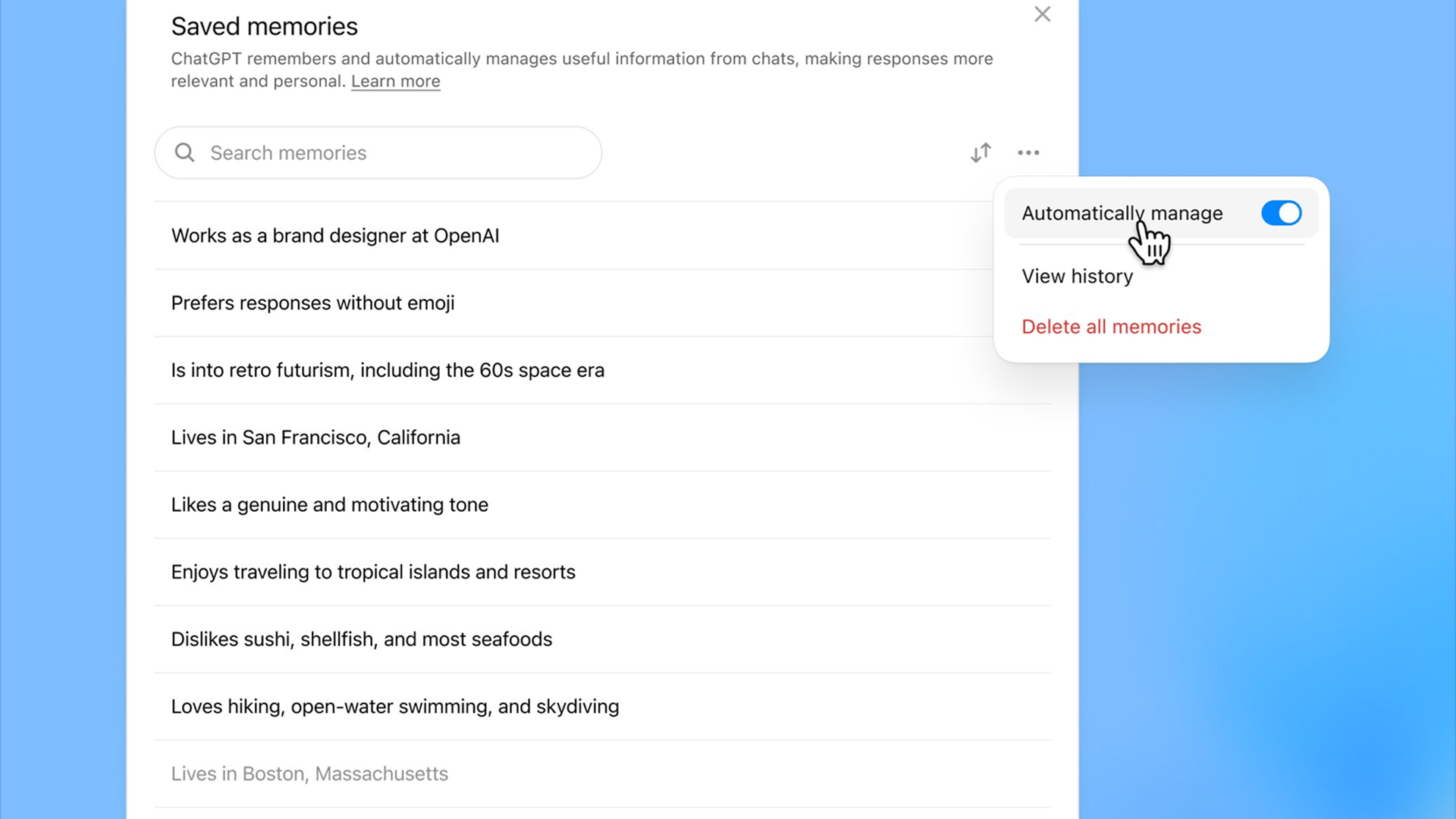
ChatGPT is smarter now that it's learned to forget - a huge memory upgrade is coming
The AI chatbot will remember what matters most and quietly let the rest fade
The ChatGPT effect: In 3 years the AI chatbot has changed the way people look things up
ChatGPT has dramatically altered how people retrieve information, muscling aside Google search as the first stop on the hunt for answers.
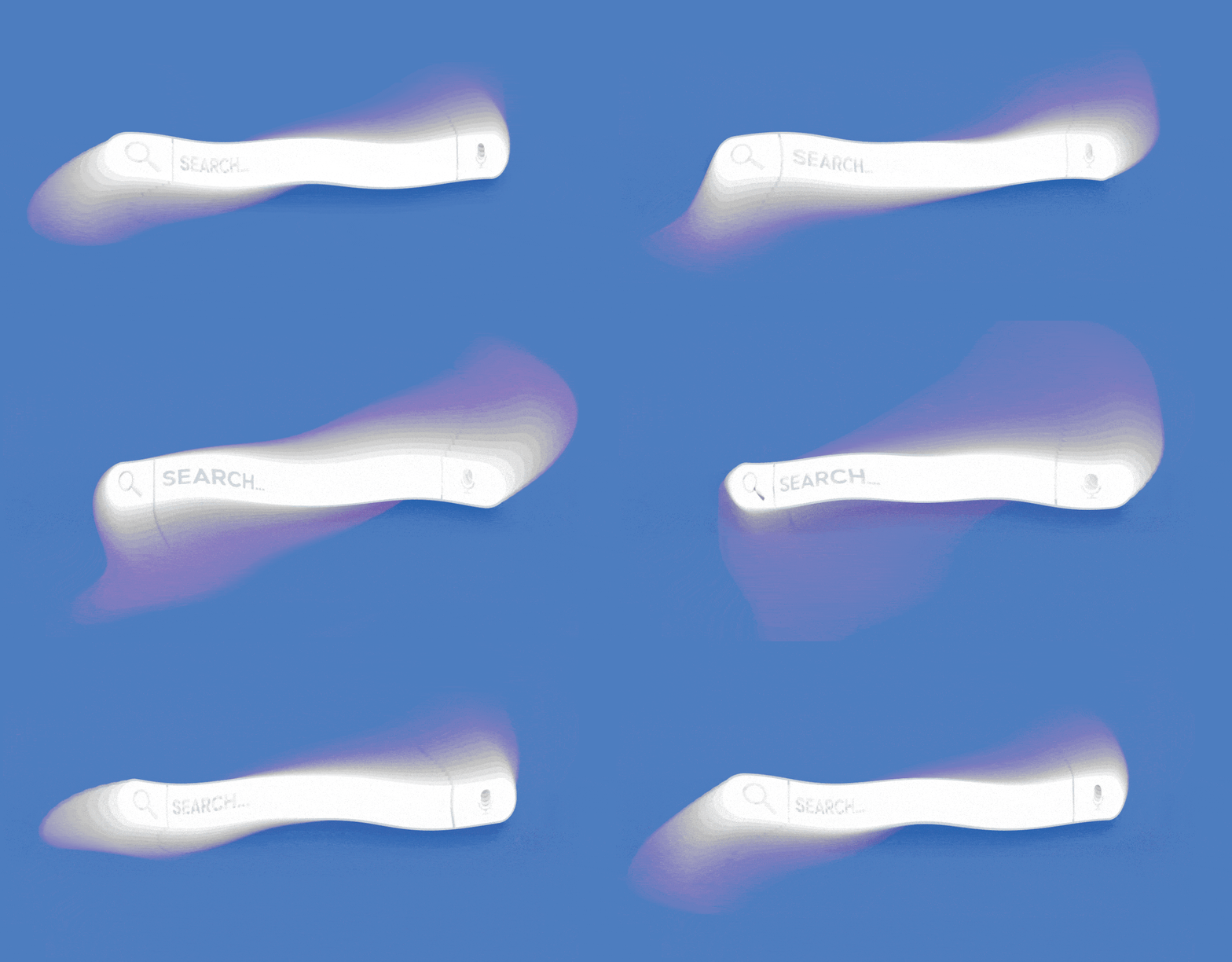
The ChatGPT effect: In 3 years the AI chatbot has changed the way people look things up
ChatGPT has dramatically altered how people retrieve information, muscling aside Google search as the first stop on the hunt for answers.
ChatGPT isn’t the only chatbot pulling answers from Elon Musk’s Grokipedia
Google’s Gemini, AI Mode, and AI Overviews, Perplexity, and Microsoft are starting to cite Musk’s Wikipedia knockoff.

They Asked an A.I. Chatbot Questions. The Answers Sent Them Spiraling.
Generative A.I. chatbots are going down conspiratorial rabbit holes and endorsing wild, mystical belief systems. For some people, conversations with the technology can deeply distort reality.

ChatGPT's free version is 26 times more likely to respond inappropriately to psychotic delusions
When users express delusions, artificial intelligence chatbots tend to validate their unusual thoughts rather than offering help. A new JAMA Psychiatry study provides evidence that these tools pose serious risks for people experiencing severe mental illness.

Can ChatGPT Be Addictive? A Call to Examine the Shift from Support to Dependence in AI Conversational Large Language Models
The rapid rise of ChatGPT has introduced a transformative tool that enhances productivity, communication, and task automation across industries. However, concerns are emerging regarding the addictive potential of AI large language models. This paper explores how ChatGPT fosters dependency through key features such as personalised responses, emotional validation, and continuous engagement. By offering instant gratification and adaptive dialogue, ChatGPT may blur the line between AI and human interaction, creating pseudosocial bonds that can replace genuine human relationships. Additionally, its ability to streamline decision-making and boost productivity may lead to over-reliance, reducing users' critical thinking skills and contributing to compulsive usage patterns. These behavioural tendencies align with known features of addiction, such as increased tolerance and conflict with daily life priorities. This viewpoint paper highlights the need for further research into the psychological and social impacts of prolonged interaction with AI tools like ChatGPT.
Platform Obscurantism
ChatGPT is a platform. The chatbot is infrastructure. Thousands of applications now build on OpenAI’s application programming interface, creating a dependent ecosystem of developers, startups, and enterprises. When OpenAI positions ChatGPT primarily as a conversational interface, it obscures this platform identity, one that extracts value not only from user data and app store partnerships, but ...

Your Search Results Are Getting Sloptimized
How companies are gaming the chatbot internet
Investigating Affective Use and Emotional Well-being on ChatGPT
As AI chatbots see increased adoption and integration into everyday life, questions have been raised about the potential impact of human-like or anthropomorphic AI on users. In this work, we investigate the extent to which interactions with ChatGPT (with a focus on Advanced Voice Mode) may impact users' emotional well-being, behaviors and experiences through two parallel studies. To study the affective use of AI chatbots, we perform large-scale automated analysis of ChatGPT platform usage in a privacy-preserving manner, analyzing over 3 million conversations for affective cues and surveying over 4,000 users on their perceptions of ChatGPT. To investigate whether there is a relationship between model usage and emotional well-being, we conduct an Institutional Review Board (IRB)-approved randomized controlled trial (RCT) on close to 1,000 participants over 28 days, examining changes in their emotional well-being as they interact with ChatGPT under different experimental settings. In both on-platform data analysis and the RCT, we observe that very high usage correlates with increased self-reported indicators of dependence. From our RCT, we find that the impact of voice-based interactions on emotional well-being to be highly nuanced, and influenced by factors such as the user's initial emotional state and total usage duration. Overall, our analysis reveals that a small number of users are responsible for a disproportionate share of the most affective cues.

ChatGPT Has ‘Goblin’ Mania in the US. In China It Will ‘Catch You Steadily’
OpenAI’s chatbot has some weird linguistic tics in Chinese that are driving users crazy.

ChatGPT's market share slips below 50% for first time | TechCrunch
The chatbot still remains the most popular AI assistant worldwide with over 1.1 billion monthly users, followed by Gemini with 662 million and Claude with 245 million.
