


An array of 16 electrodes connect directly to her nerves and muscles.
New Injectable Brain Implants Take Us One Step Closer To A Cyborg Future
Harvard scientists have developed an electrical scaffold that can be injected directly into the brain with a syringe. By using the technique to

Accessory for prosthetic limbs lets users interact directly with digital media | TechCrunch
When someone has lost a hand, particularly the dominant one, it can be a real challenge to do the simple clicks and drags that all of us take for granted on our desktops and laptops. A German design team has created a device to remedy this, detecting signals from the user's remaining muscles and translating them into common digital gestures.

Researchers Have Successfully Grown Electrodes In Living Tissue - Slashdot
Researchers at Linkoping, Lund and Gothenburg universities in Sweden have successfully grown electrodes in living tissue using the body's molecules as triggers. The result, published in the journal Science, paves the way for the formation of fully integrated electronic circuits in living organisms. ...

Doctors Remove Woman’s Brain Implant Against Her Will
A woman whose epilepsy was greatly improved by an experimental brain implant was devastated when she was forced to have it removed.

read SuperBetter? you already know this: a single nerve connects all vital organs, might be the future of medicine https://t.co/gcltv0CGbd
read SuperBetter? you already know this: a single nerve connects all vital organs, might be the future of medicine https://t.co/gcltv0CGbd— Jane IMAGINABLE McGonigal ❤️ (@avantgame) March 16, 2016
Neuralink implant enables patient to make YouTube videos with generative AI’s help
Smith is the first non-verbal individual and only the third person globally to receive a Neuralink Brain-Chip Interface (BCI) implant.
UK Patent Filed for Hair-Inclusive EEG Electrode by Synaptive | Synaptive posted on the topic | LinkedIn
Big news from us 🎉 We've just filed a United Kingdom patent application on our hair-inclusive EEG electrode, the first step in taking this from prototype to something that actually reaches the labs and people who need it. For too long, EEG hardware has quietly excluded people based on hair type. Thick, coily, tightly curled, if your hair didn't fit the mould, your signal quality suffered, or you were excluded from studies altogether. That's not a small technical footnote. That's data that shapes diagnoses, treatments, and our understanding of the brain itself, built on a foundation that didn't include everyone. We built Synaptive to fix that at the hardware level, so good signal doesn't depend on who you are or what your hair looks like. Filing the patent is a huge milestone for us, and we're only getting started. If you're a researcher, lab, or manufacturer interested in electrodes that actually work for everyone, reach out on our website (synaptiveltd.co.uk). Thank you to everyone who's backed us on this journey so far ❤️ Synaptive : ) Rishan P. Peter Bryan Michael-Merlin (Merlin) Krý
Potential analgesic function of the clitoris in pregnant women: A feasibility study
Currently, the clitoris is considered to exist solely for sexual pleasure. This prospective, single-centre pilot study focuses on and evaluates an alternative function of the clitoris; pain relief during pregnancy and childbirth. Conducted between 2020 and 2023 at Rouen University Hospital, France, this feasibility study challenges the assertion of the singular function of the clitoris. The primary aim was to assess the acceptability of an intervention focusing on the potential analgesic function of the clitoris. The secondary aim was to assess pain relief. Pregnant women were offered the option of self-external massage with a vibrating device (OVD) in the clitoral suspensory ligament area for pain relief. Data were collected via a self-schedule for precise use of the method, including pain assessment before and after the use of the OVD via a self-analytic visual scale. Acceptability was considered to have been achieved if the woman used the OVD at least twice. Comparisons before and after were performed by means of a student’s t-test. With respect to acceptability, among the 32 women included, 26 (81.25%) used an OVD at least twice. Despite concerns about sexual intimacy and the sensitive period of pregnancy, this preliminary feasibility study confirmed the suitability of this mechanical vibration for the majority of the women included. In terms of pain relief, these 26 women used the OVD to manage 304 painful episodes and the feeling of relief was reported in 86.2% of these episodes. Based on a small sample size, the numerical results are obviously highly relative to the disparity of situations and feelings. However, these few consistent reports of a positive analgesic effect encourage further studies into the potential analgesic function of the clitoris.
Neuroscientists Say They've Found An Entirely New Form of Neural Communication - Slashdot
Scientists think they've identified a previously unknown form of neural communication that self-propagates across brain tissue, and can leap wirelessly from neurons in one section of brain tissue to another -- even if they've been surgically severed. The discovery offers some radical new insights ab...

The Link Between Bioelectricity and Consciousness - Nautilus
“It’s really hard to define what’s special about neurons,” says Tufts molecular biologist Michael Levin. “Almost all cells do the things neurons do, just more slowly.”Illustration by jijomathaidesigners / Shutterstock Life seems to be tied to bioelectricity at every level. The late electrophysiologist and surgeon Robert Becker spent decades researching the role of the body’s…
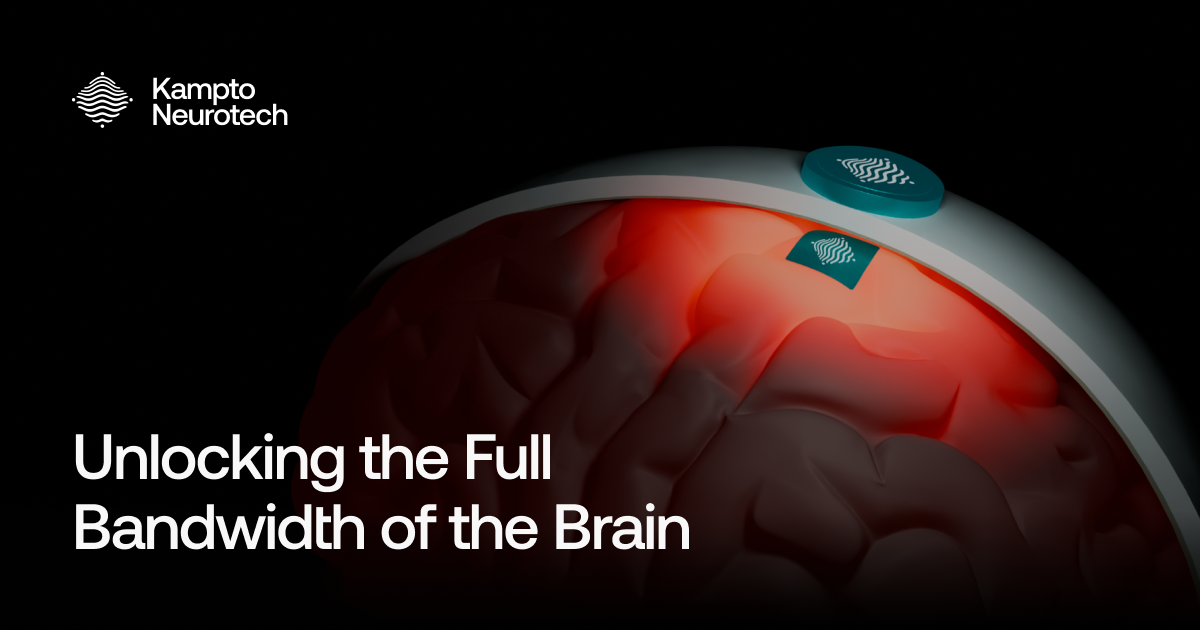
Kampto Neurotech
Revolutionary neural interface with 65,536 electrodes. 100× the data, 1/1000th the size. Ultra-thin CMOS technology for brain research and clinical applications.

Open-Source Hardware For Neuroscience - Slashdot
the_newsbeagle (2532562) writes "The equipment that neuroscientists use to record brain signals is plenty expensive, with a single system costing upward of $60,000. But it turns out that it's not too complicated to build your own, for the cost of about $3000. Two MIT grad students figured out how to...

Brain Computer Interface Company Implants New Type of Device
Synchron’s procedure will help an ALS patient text by thinking, in a major step forward in a nascent industry, with the Brooklyn-based company recently overtaking Elon Musk’s Neuralink.

Nintil - Links (51)
The return of the US Aerospace industry Simulating a biological neuron requires an entire 5-8 layer neural network (1000 artificial neurons per neuron) ARM Chin…
‘Neurograins’ Could Record Brain Activity From Thousands of Locations
Each of the tiny neurograins features electrodes to pick up electrical signals from brain tissue and circuitry to amplify the signal.
