


Fun, private, and ethical. We're changing the way social media is done around here, all without your personal data taking an unexpected trip down south.
What is Gander Social? Canada’s New Homegrown Social Media Platform
Gander Social is Canada’s answer to mainstream platforms, putting control back in users' hands with a privacy-first, local-first approach.
Gander Social — FrontFundr
The Social Network for Real People. Built for connection, not addiction. 60,000+ members. Made in Canada 🍁
Gander: The Social Media You Want, Built for Canada
427 votes, 81 comments. 372K subscribers in the BuyCanadian community. Welcome to r/BuyCanadian! Come on in and share your favorite hidden gems, major Canadian chains, and local goodies. Help fellow Canadians find Canadian alternatives to imported goods—and maybe discover something new yourself! This subreddit is about supporting Canadian businesses, not boycotting U.S. products or debating politics. We're here to highlight what Canada has to offer, not to argue about trade wars or nationalism. Check out our sidebar and guidelines to learn more.
🇨🇦 How Canadians are fighting for digital independence
Gander's CEO on decentralization, crowdsourcing, and annexation fears
Whose Global Village — Ramesh Srinivasan
In the digital age, technology has shrunk the physical world into a “global village,” where we all seem to be connected as an online community as information travels to the farthest reaches of the planet with the click of a mouse. Yet from the US election, to the growth of the alt-right movement, to the Dakota pipeline to the question of ISIS, we also have begun to recognize how incredibly disconnected we are at the same time, occupying various bubbles and self-selected communities.While we think of platforms such as Twitter and Facebook as open and accessible to all, in reality, these are commercial entities developed primarily by and for the Western world. Considering how new technologies increasingly shape labor, economics, and politics, these tools often reinforce the inequalities of globalization, rarely reflecting the perspectives of those at the bottom of the digital divide.
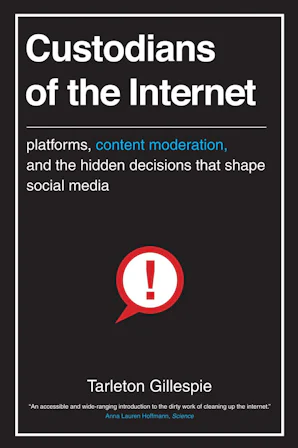
Custodians of the Internet
A revealing and gripping investigation into how social media platforms police what we post online—and the large societal impact of these decisions Most use...
Beyond Facebook Logic: Help us map alternative social media!
(By Ethan and Chand Rajendra-Nicolucci of the Knight First Amendment Institute at Columbia University)
Canadians’ rightful access to public information being blocked, experts say
Information watchdogs, researchers, media and others say government, institutions keeping citizens in the dark even as opportunities for transparency increase.
The Illusion of Protection: Why Canada’s Growing Push to Ban Social Media for Kids Won’t Work - Michael Geist
The momentum behind a social media ban for Canadian minors has been building for months. The federal Liberals voted at their April policy convention to back a minimum age of 16 for social media accounts and AI chatbots, the government’s expert panel on online safety is studying the issue, protesters have now rallied on Parliament Hill calling for it, and on Saturday night, Manitoba Premier Wab Kinew told a Winnipeg fundraiser that his government will be the first in Canada to ban social media and AI chatbots for kids. Kinew did not specify which kids, when it would happen, or how it would be enforced, none of which appeared to matter to the audience. The political appeal of a ban is obvious, since concerns about social media’s effects on young users are widely shared. Yet the policy itself is a terrible idea that will not work. This post examines at least six reasons why an outright age-based ban, particularly one that extends to AI chatbots, is the wrong response to a serious issue.
Social Media Should Be Public Infrastructure (with Ben Cerveny)
Shifts in U.S. Social Media Use, 2020–2024: Decline, Fragmentation, and Enduring Polarization
The social media ecosystem appears to be in flux. Twitter’s rebranding to X has come to symbolize a broader reorganization of online publics – political reshuffling, user attrition, and uncertainty over the role of legacy platforms. Simultaneously, the shift from text-based, networked feeds toward algorithmically curated, short-form video has accelerated, with TikTok setting the pace for the wider ecosystem [18, 14, 16]. At the same time, everyday communication increasingly migrates from large, open networks to semi-private spaces such as group chats and messaging apps. Commentators describe a digital public sphere in transition: smaller, more fragmented, less dominated by traditional social networking sites, and rise of more broadcast-oriented forms of media – with some even suggesting that we are seeing the beginning of the end of the social media era.
Decentralized Social Media Is the Only Alternative to the Tech Oligarchy
The TikTok ban and Donald Trump's rise to power show how fragile our social media accounts are. We must normalize and invest in decentralized social media.
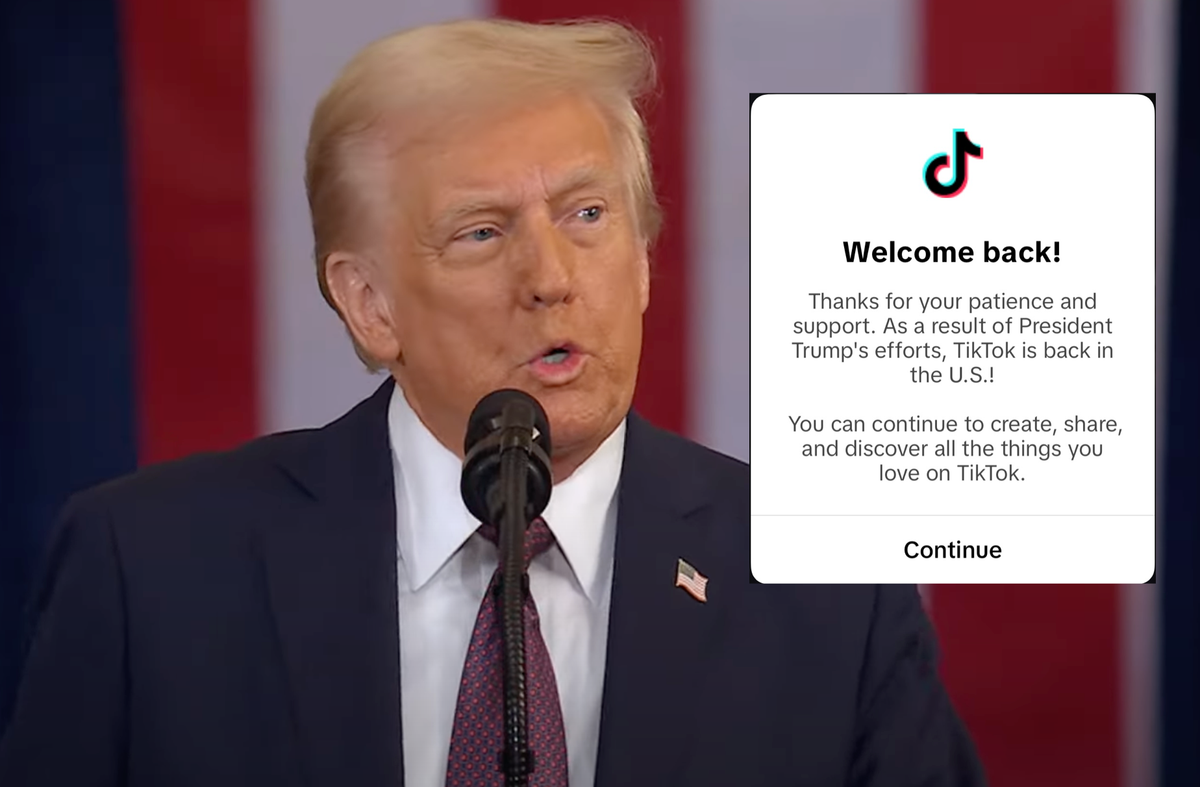
Social Media Is Now Parasocial Media
When practitioners used the term “social media” to describe the internet tools that emerged in the mid-aughts, they were giving a name to the kinds of platforms and protocols that allowed people to socialize with friends and communities of interest by using digital technologies. Twenty years later, users of social media are far more likely to scroll than post – and the content that they consume is often strategically produced and algorithmically curated. In this essay, I argue that the very essence of social media has changed. To more effectively interrogate what we are witnessing, we need to stop presuming that these tools are “social media” and begin recognizing that they are now “parasocial media.” Doing so raises new questions about digitally mediated sociality, not to mention the politics and governance of these platforms.

Traditional Social Media as a Prison · What’s Happening on My Feed?
Social media apps have become a vehicle for community building, world news, and political campaigns. As app owners have enmeshed themselves more with the state, the carceral logics that haunt marginalized communities offline, became a part of their digital realities online.
Can Canada find digital sovereignty in the Fediverse? | BetaKit
At FediMTL, advocates say growing the social web is vital to combating Big Tech.
