


I honestly believe that an improvisation class should be mandatory for all aspiring leaders. Not for the performance aspect, but for the philosophical and experiential foundation it would provide. …
Teaching Improvisation in Choir: Moving from “Recreative” to “Creative” Choral Artistry
This article describes a research study in which a collegiate choral ensemble learned vocal improvisation techniques as part of their regular rehearsals. While learning to improvise, singers had the opportunity to provide real-time feedback of their perceptions and experiences learning a new skill in a traditional choral setting. In this article, we share what we learned, including the rewards and challenges of teaching improvisation, our reflections as instructors, and perspectives from some of the singers. We also describe the activities we tried and offer strategies for other choir teachers who want to bring improvisation into their own classrooms.

Improvisation in Ensembles: Conduction - #ImaginingPossibilities
How might we support creativity in large ensembles? What if students could co-create music with a conductor without staff notation or written music altogether? Perhaps novel in K-12 settings, ensemble-based improvisation exists in diverse musical cultures. What might we learn from conduction, a sophisticated gestural system that Butch Morris developed to facilitate improvisation and creation […]

Improv Is The Best Conditioning For Startup Life | TechCrunch
Four years ago, I participated in my first improv comedy class. In 2013, Mahmoud Arram and I co-founded Bluecore, a marketing technology company whereevery single employee is required to complete an improv 101 class within the first four months on the job. In terms of importance, this ranks right up there with required reading and sales training. But why?

No title
How much better at explaining your research would you be after learning improv from Alan Alda? The New York Timeshas a profile of one of the classes at

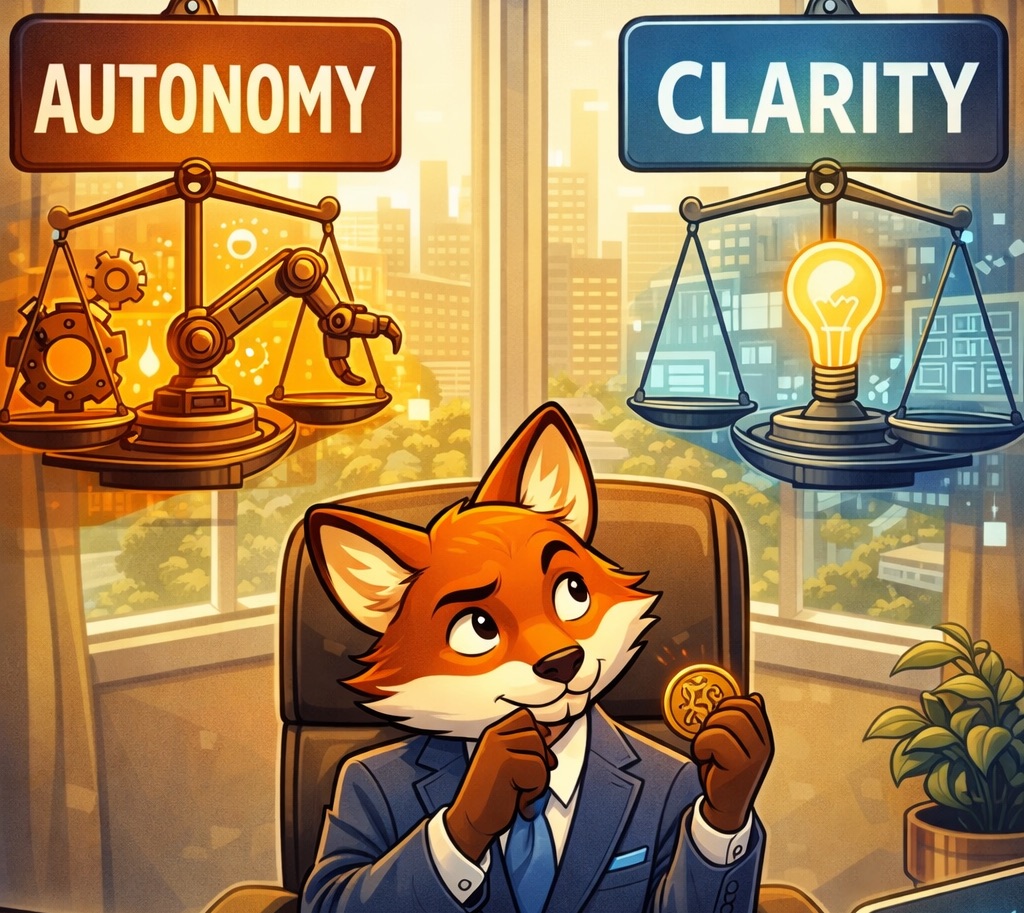
Autonomy and Clarity in Leadership Styles
There’s no one right style of leadership. Use the right style of at the right time.
Fostering Twenty-First-Century Competencies Through Collective Free Music Improvisation
This article proposes collective free music improvisation (CFMI) pedagogical strategies that support the development of twenty-first-century competencies (21CCs) among young, diverse learners. It highlights the educational benefits of integrating CFMI into music learning and outlines three key pedagogical dimensions that facilitate CFMI: socio-musical interaction, personal musical vocabulary, and shared understanding. Drawing on authentic classroom examples, the article illustrates how these dimensions can be developed to meaningfully engage learners in CFMI and foster core 21CCs—particularly communication, collaboration, and inventive thinking. These insights offer practical guidance for educators aiming to implement CFMI with similarly profiled student populations.
Want to Instantly Become a Better Leader? Science Says 3 Simple Habits Will Make You More Influential and Charismatic
Simple things you can immediately start doing, without changing your leadership style. (Or yourself.)

Develop Strategic Thinkers Throughout Your Organization
It’s the single most important skill a leader needs.

The surprising traits of good remote leaders
Strong in-person leadership skills don’t necessarily translate to being a good virtual leader. Instead, organisation and competency reign supreme.

Leaders are responsible for culture and strategy. Everything else is secondary.
Are you focused on serving a need or building a product? The difference matters more than you think.
The 4 essential questions to ask yourself as a leader
Instead of seeking answers, becoming a better leader starts with asking ourselves the right questions. You want the answer. The silver bullet, the trick, the hack, the leadership best practice, the…

The Rage to Master: The One Unusual Thing All Entrepreneurs Must Have to Win
Insight into how Unusual Academy leverages the principles of deep practice and master coaching to grow the best entrepreneurs.

Simon Sinek: Why Leaders Eat Last
In this in-depth talk, ethnographer and leadership expert Simon Sinek reveals the hidden dynamics that inspire leadership and trust. In biological terms, leaders get the first pick of food and other spoils, but at a cost. When danger is present, the group expects the leader to mitigate all threats even at the expense of their personal well-being. Understanding this deep-seated expectation is the key difference between someone who is just an “authority” versus a true “leader.” For more on this topic, check out Sinek’s latest book Leaders Eat Last: Why Some Teams Pull Together and Others Don’t now available for pre-order. About Simon Sinek A trained ethnographer and the author of Start With Why: How Great Leaders Inspire Everyone to Take Action, Simon Sinek has held a life-long curiosity for why people and organizations do the things they do. Studying the leaders and companies that make the greatest impact in the world and achieve a more lasting success than others, he discovered the formula that explains how they do it. Sinek’s amazingly simple idea, The Golden Circle, is grounded in the biology of human decision-making and is changing how leaders and companies think and act. His innovative views on business and leadership have earned him invitations to meet with an array of leaders and organizations, including Microsoft, Dell, SAP, Intel, Chanel, Members of the United States Congress, and the Ambassadors of Bahrain and Iraq. Sinek recently became an adjunct staff member of the RAND Corporation, one of the most highly regarded think tanks in the world. He also works with the non-profit Education for Employment Foundation to help create opportunities for young men and women in the Middle East region. He lives in New York, where he teaches graduate level strategic communications at Columbia University.

Improvising in Ensembles

Scholarship, resources, and ideas to support improvising in ensembles.
Teaching Improvisation in Choir: Moving from “Recreative” to “Creative” Choral Artistry
Improvisation in Ensembles: Conduction - #ImaginingPossibilities
Fostering Twenty-First-Century Competencies Through Collective Free Music Improvisation
