

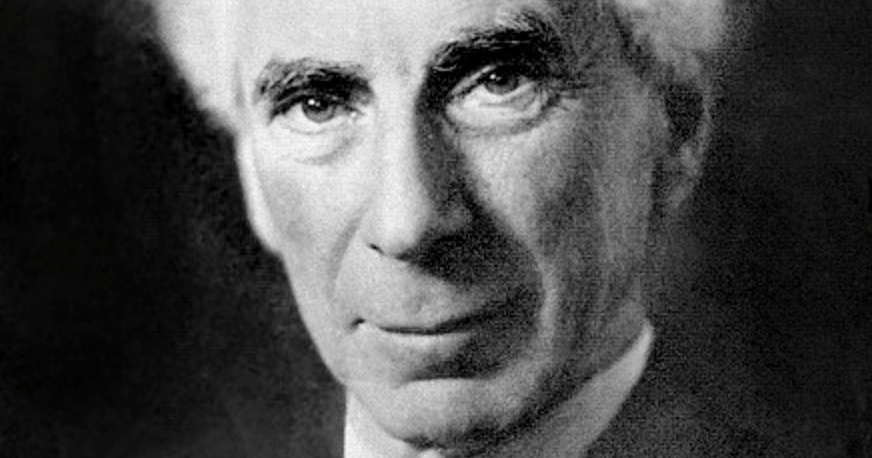
“Make your interests gradually wider and more impersonal, until bit by bit the walls of the ego recede, and your life becomes increasingly merged in the universal life.”
Learning From Older Adults: An Intergoal Compatibility Account for Successful Happiness Pursuit
Academic Abstract People want to pursue happiness but often fail, a phenomenon known as the paradox of pursuing happiness. The mechanisms underlying this paradox remain elusive. Age differences in happiness—specifically that older adults appear more successful in pursuing happiness (the emotion paradox of aging)—provide valuable insights into effective happiness pursuit. Drawing on this literature, we propose an intergoal compatibility account to interpret both paradoxes through the lens of intergoal interactions, an intuitively critical yet underexplored factor in existing interpretations. This account asserts that greater compatibility (fewer conflicts and greater facilitation) between happiness pursuit and other important personal goals enhances the effectiveness of happiness pursuit, and such compatibility can be enhanced through contextual influences (e.g., age-graded developmental tasks) and strategic self-regulation (e.g., goal adjustments). This account generates testable predictions and practical implications for enhancing happiness pursuit across the lifespan. Public Abstract Why do people often struggle to achieve happiness? And why are older adults happier than younger adults, even though they face more losses in life? While these questions have drawn extensive attention, they remain puzzling. A crucial yet insufficiently explored factor in successful happiness pursuit is intergoal compatibility —the extent to which the pursuit of happiness aligns or conflicts with other important personal goals. For younger adults, the demands of age-related developmental tasks (e.g., educational and career aspirations) often create conflicts with the pursuit of happiness, diminishing its effectiveness. Conversely, in older adults, happiness becomes more prioritized and compatible with other important personal goals, thereby enhancing the effectiveness of pursuing happiness. A lesson we can learn from older adults is to pursue happiness in ways compatible with other important personal goals.

A psychologically rich life: Beyond happiness and meaning.
Open source confronts its midlife crisis | The Observation Deck
Midlife is tough: the idealism of youth has faded, as has inevitably some of its fitness and vigor. At the same time, the responsibilities of adulthood have grown: the kids that were such a fresh adventure when they were infants and toddlers are now grappling with their own transition into adulthood – and you try to remind yourself that the kids that you have sacrificed so much for probably don’t actually hate your guts, regardless of that post they just liked on the ‘gram. Making things more challenging, while you are navigating the turbulence of teenagers, your own parents are likely entering life’s twilight, needing help in new ways from their adult children. By midlife, in addition to the singular joys of life, you have also likely experienced its terrible sorrows: death, heartbreak, betrayal. Taken together, the fading of youth, the growth in responsibility and the endurance of misfortune can lead to cynicism or (worse) drastic and poorly thought-out choices. Add in a little fear of mortality and some existential dread, and you have the stuff of which midlife crises are made…
Chasing life goals is a recipe for disaster – so try these tiny experiments instead
Whether its our careers, health or relationships, we often set the bar too high and end up feeling disappointed when it doesn’t work out. Try this new way of thinking … and you may just see some real results

Having a Growth Mindset Makes It Easier to Develop New Interests
Much innovation happens when people combine knowledge from different disciplines. But some people are more likely to reach outside of their areas of interest and expertise than others. Researchers investigated why by studying people’s “mindsets” about interest and their impact. They found people vary — some people lean more toward the view that interests are inherent in a person, simply waiting to be awakened or found (a fixed mindset of interest). Others lean more toward the view that interests can be developed and that, with commitment and investment, they can grow over time (a growth mindset of interest). They reasoned that these mindsets might affect how open people are to new or different interests, whether they be in arts, science, business, athletics, or other areas. In studies, they found that students with a stronger growth mindset reported being more open to areas outside of their interests than those with a stronger fixed mindset. Their research also suggests that a growth mindset may promote resilience in maintaining interest when a subject becomes challenging and that a growth mindset may be cultivated.

Why older people are happier and what we can learn from them | Psyche Ideas
Around the world, happiness tends to peak later in life. It has more to do with balancing priorities than elderly wisdom

The secret to living a meaningful life
Your ambitions to improve your life do not need to be confined by your personality.

The Inner Life of Liberalism - Aaron Ross Powell’s Blog
The practices that make your life better are the same ones that sustain a free society. It's time liberalism took that seriously.
Works in Progress: The Long Journey to Doing Good Better
The more I learn, the more I realize how much I don’t know. — Albert Einstein

Over nearly 80 years, Harvard study has been showing how to live a healthy and happy life
For nearly 80 years, the Harvard Study of Adult Development has been producing data and lessons on how to live longer, happier, and healthier lives.

36 important life and work lessons a top tech executive learned before turning 30
The days are long but the decades are short.
Why Everyone Should Have Their Own Business (and How to Guarantee Success)
If you focus on the right things and start your business in the correct way, you're guaranteed to improve you life both before and after early retirement!
The Toolbox Strategy: How To Become Uniquely Valuable
After having just dropped out of university, at 19-years-old; I received a line of advice that changed how I made every decision in my career…

A compass for a Life-Affirming Economy
This is an invitation to stand at the intersection of Self, Culture, and Science and imagine what flourishing in a life-affirming economy…

Eradicating Unhappiness
Is there a manual for living well? Where modern science, society, and psychology underserves, a philosophy nearly as old as time emerges. “Take a simple idea, and take it seriously.”—Charlie Munger…

Moral Ambition: Stop Wasting Your Talent and Start Making a Difference
THE INSTANT SUNDAY TIMES BESTSELLER - FROM THE 2025 BBC REITH LECTURER A GUARDIAN BOOK OF THE SUMMER 2025 'Gives us hope, humour and guidance at a time when all are in short supply' TIMOTHY SNYDER 'The rare read that might actually help you become a better person' ADAM GRANT THE ANTIDOTE TO APATHY FROM THE INTERNATIONALLY BESTSELLING AUTHOR RUTGER BREGMAN Every day we're bombarded with methods, mantras and life hacks that promise us wellness and prosperity - while time and talent remain some of our most squandered resources. The average full-time worker will spend 80,000 hours at their job: are you making the most of them? Do you truly believe in what you do, day in, day out? What if you want to do something more with your limited time on the planet? Internationally bestselling author Rutger Bregman shows us that with moral ambition - the will to make the world a wildly better place - we can be both idealistic and successful, and change the world along the way. Uncovering the qualities that made the great change-makers of history so effective, he shows how we too can lend our talents to the biggest challenges of our time, from climate change to inequality to the next pandemic. With moral ambition, we can do more than be on the right side of history: we can make history itself. This book won't make your life easier, but it should make it more meaningful. The question is: what will you do with it? As the 2025 BBC Reith Lecturer, Rutger Bregman will present 'Moral Revolution', a four part series: -A Time of Monsters -How To Start a Moral Revolution -A Realist's Utopia -Zoom Out Available to listen on BBC Four