

Carcinogens seem to be everywhere, but how much do we really have to worry about them? Read on.
California: Here’s how to handle unfounded fears of cell phone cancer
There’s still no solid evidence that cell phones pose any risk.

Things that Apparently Cause Cancer
What does this methodology measure anyway?

Helpless to Prevent Cancer? Actually, Quite a Bit Is in Your Control (Published 2016)
Many cases of cancer are preventable, studies show, but this research has inflamed as much as it has assuaged people’s fears.

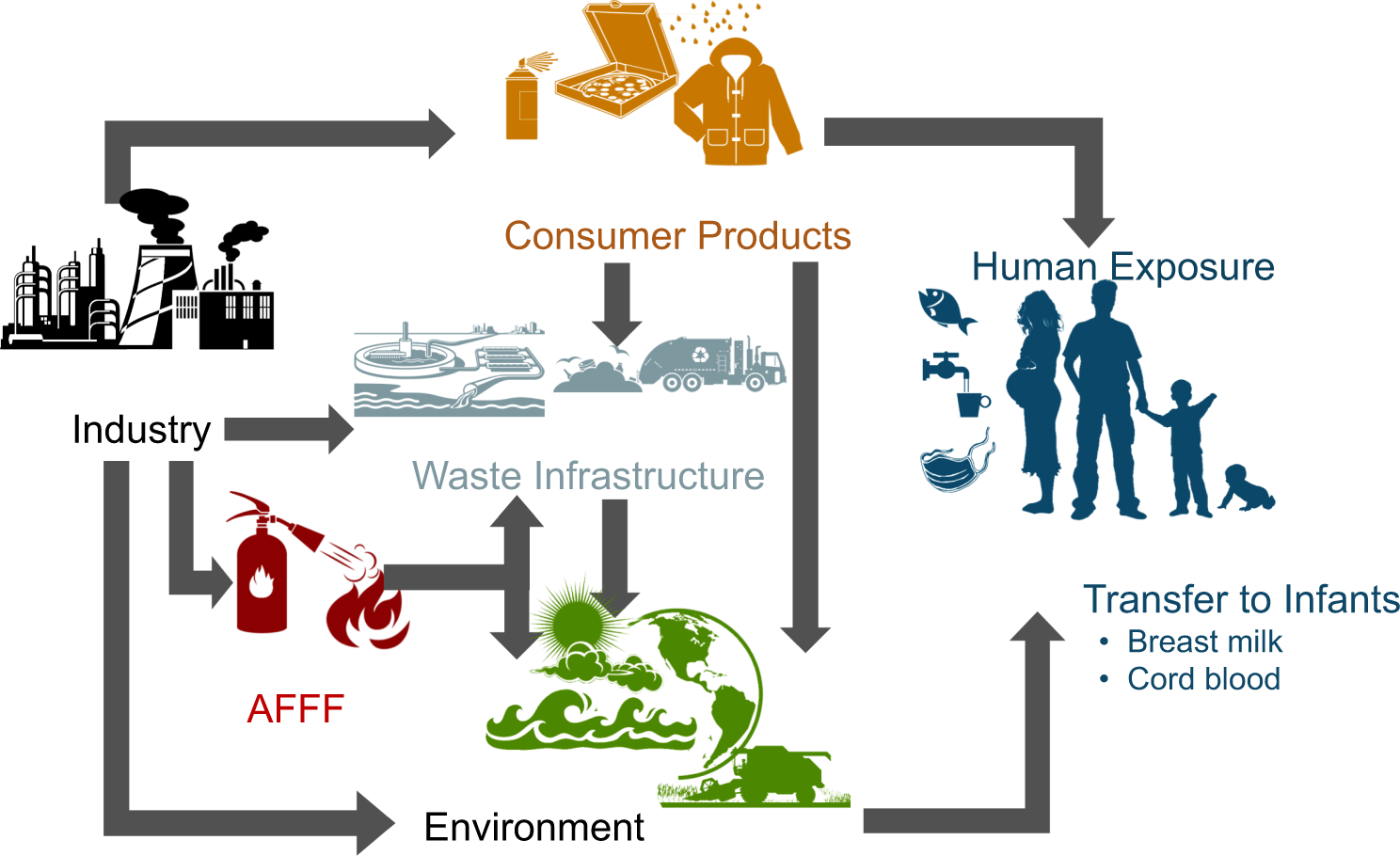
A review of the pathways of human exposure to poly- and perfluoroalkyl substances (PFASs) and present understanding of health effects
Here, we review present understanding of sources and trends in human exposure to poly- and perfluoroalkyl substances (PFASs) and epidemiologic evidence for impacts on cancer, immune function, metabolic outcomes, and neurodevelopment. More than 4000 PFASs have been manufactured by humans and hundreds have been detected in environmental samples. Direct exposures due to use in products can be quickly phased out by shifts in chemical production but exposures driven by PFAS accumulation in the ocean and marine food chains and contamination of groundwater persist over long timescales. Serum concentrations of legacy PFASs in humans are declining globally but total exposures to newer PFASs and precursor compounds have not been well characterized. Human exposures to legacy PFASs from seafood and drinking water are stable or increasing in many regions, suggesting observed declines reflect phase-outs in legacy PFAS use in consumer products. Many regions globally are continuing to discover PFAS contaminated sites from aqueous film forming foam (AFFF) use, particularly next to airports and military bases. Exposures from food packaging and indoor environments are uncertain due to a rapidly changing chemical landscape where legacy PFASs have been replaced by diverse precursors and custom molecules that are difficult to detect. Multiple studies find significant associations between PFAS exposure and adverse immune outcomes in children. Dyslipidemia is the strongest metabolic outcome associated with PFAS exposure. Evidence for cancer is limited to manufacturing locations with extremely high exposures and insufficient data are available to characterize impacts of PFAS exposures on neurodevelopment. Preliminary evidence suggests significant health effects associated with exposures to emerging PFASs. Lessons learned from legacy PFASs indicate that limited data should not be used as a justification to delay risk mitigation actions for replacement PFASs.
Coffee no longer comes with cancer warning—it may actually prevent it
World Health Organization reviews the data and reverses an old warning.

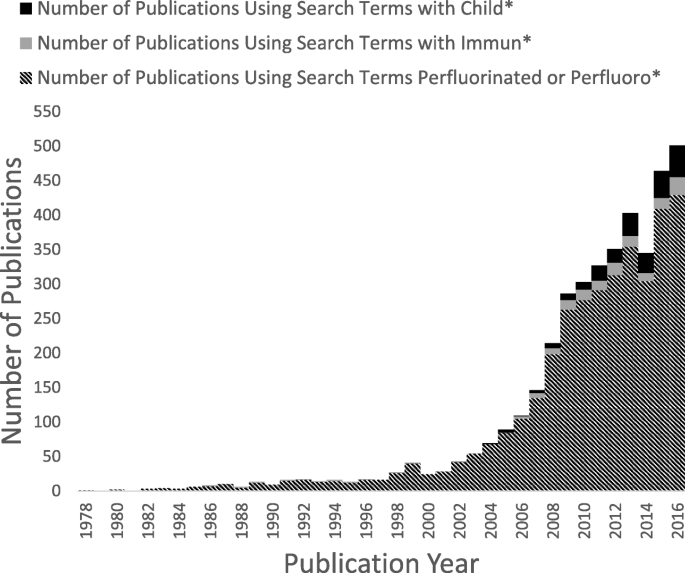
Delayed discovery, dissemination, and decisions on intervention in environmental health: a case study on immunotoxicity of perfluorinated alkylate substances
Identification and characterization of environmental hazards that impact human health must rely on the best possible science to inform and inspire appropriate public health intervention. The perfluorinated alkylate substances (PFASs) are persistent emerging pollutants that are now being recognized as important human health hazards. Although the PFASs have been produced for over 60 years, academic research on environmental health aspects has appeared only in the most recent 10 years or so. In the meantime, these persistent chemicals accumulated in the global environment. Some early studies e.g., on population exposures and toxicity, were not released to the public until after year 2000. Still, the first PFAS risk assessments ignored these reports and relied on scant journal publications. The first guidelines and legal limits for PFAS exposure, e.g., from drinking water, were proposed 10 years ago. They have decreased substantially since then, but remain higher than suggested by data on human adverse effects, especially on the immune system, that occur at background exposure levels. By now, the best-known PFASs are being phased out, and related PFASs are being introduced as substitutes. Given the substantial delays in discovery of PFAS toxicity, in dissemination of findings, and in regulatory decisions, PFAS substitutes and other persistent industrial chemicals should be subjected to prior scrutiny before widespread usage.
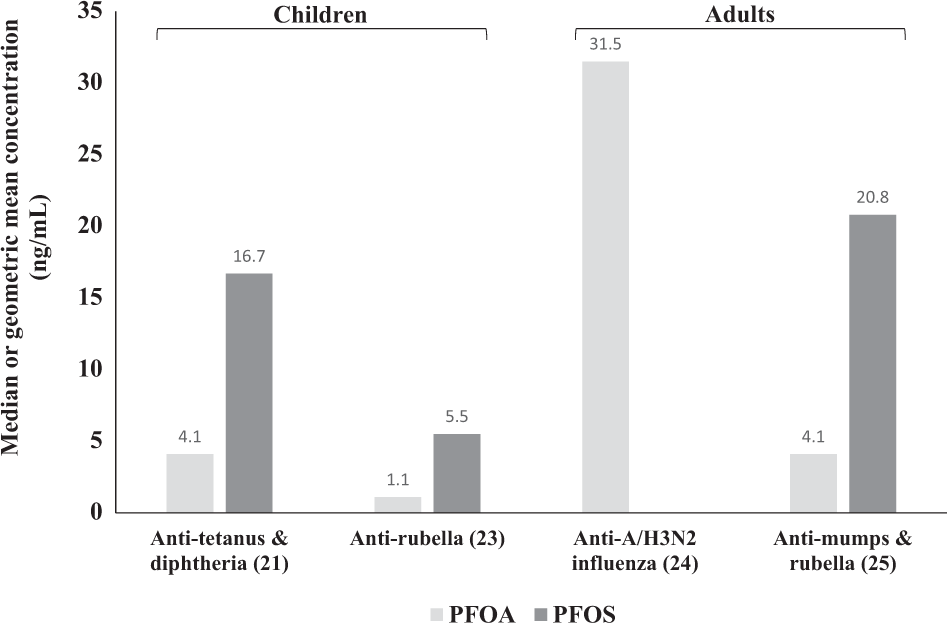
Exposure to per-fluoroalkyl and polyfluoroalkyl substances leads to immunotoxicity: epidemiological and toxicological evidence
In this perspective, we evaluate key and emerging epidemiological and toxicological data concerning immunotoxicity of perfluorooctanoic acid (PFOA) and perfluorooctane sulfonate (PFOS) and seek to reconcile conflicting conclusions from two reviews published in 2016. We summarize ways that immunosuppression and immunoenhancement are defined and explain how specific outcomes are used to evaluate immunotoxicity in humans and experimental animals. We observe that different approaches to defining immunotoxicological outcomes, particularly those that do not produce clinical disease, may lead to different conclusions from epidemiological and toxicological studies. The fundamental point that we make is that aspects of epidemiological studies considered as limitations can be minimized when data from toxicological studies support epidemiological findings. Taken together, we find that results of epidemiological studies, supported by findings from toxicological studies, provide strong evidence that humans exposed to PFOA and PFOS are at risk for immunosuppression.
How Do We Measure Poly- and Perfluoroalkyl Substances (PFASs) at the Surface of Consumer Products?
Abstract. Exposures to poly- and perfluoroalkyl substances (PFASs) have been linked to metabolic disruption, immunotoxicity, and cancer in humans. PFASs ar

Emerging contaminants: A One Health perspective
Environmental pollution is escalating due to rapid global development that often prioritizes human needs over planetary health. Despite global efforts to mitigate legacy pollutants, the continuous introduction of new substances remains a major threat to both people and the planet. In response, global initiatives are focusing on risk assessment and regulation of emerging contaminants, as demonstrated by the ongoing efforts to establish the UN’s Intergovernmental Science-Policy Panel on Chemicals, Waste, and Pollution Prevention.

Environmental epidemiology in a crossfire
Two tendencies have emerged in environmental epidemiology that hamper the translation of research findings into prevention of environmental hazards. One is the increased focus on highlighting weaknesses of epidemiology research that is clearly meant to explain away the research conclusions and weaken their possible implications for interventions to control environmental hazards. Another is the voluminous amount of information sharing that involves a substantial amount of misinformation, as part of the ongoing infodemic. In this light, the appearance of the catalogue of doubt-raising strategies, indeed the worst practices of scientific inference, is good news. Collected under the auspices of the International Network for Epidemiology in Policy, it serves to illustrate the range of possible (and impossible) forms of critique that may be raised on behalf of vested interests or other groups who for some reason disagree with the epidemiological conclusions. We believe that this systematic list will be useful in our field and help to identify critiques of policy options that are hidden and sometimes suppressed in weighing the epidemiological evidence.
THE AIR OF UNCERTAINTY Experts weigh health risks of twin towers fires & dust
Some people living or working near Ground Zero may have faced serious health risks since Sept. 11, but environmental experts say they don’t know enough to be certain about long-term harm. For months, toxic contamination in the…

Allergens in Cosmetics
This page provides information about common allergens found in cosmetic products, possible symptoms of allergic reactions, testing for allergens and FDA’s activities on allergens in cosmetics.

The Shady Link Between Sunscreen and Your Health
Current guidelines for sun exposure are unhealthy and unscientific, controversial new research suggests—and quite possibly even racist. How did we get it so wrong?

Poor sleeping patterns link to cancer
Irregular sleeping patterns are "unequivocally" shown to lead to cancer in tests on mice, a study suggests.

Smoking’s Toll on Health Is Even Worse Than Previously Thought, a Study Finds (Published 2015)
A new analysis suggests that an additional 60,000 deaths a year in the United States are linked to smoking.

Arsenic exposure at birth, socioeconomic status, and epigenetic aging among adults in northern Chile
Background Arsenic exposure remains a major global health concern, and early-life exposure has been linked to cancer, cardiovascular disease, and diabetes. Epigenetic biomarkers of aging may capture long-term effects of arsenic, yet whether exposure during sensitive developmental windows leaves detectable epigenetic signatures decades later remains unclear. Socioeconomic status (SES) may modify these relationships, yet its role as a modifier has not been examined. Methods We leveraged a natural experiment in northern Chile, where municipal drinking-water arsenic concentrations were extremely high from 1958 to 1972. Decades later, leukocyte DNA methylation was measured among 358 adults (mean age = 65.7 years) using the Illumina EPIC v2 array. Arsenic concentration at birth (0-860 μg/L) was assigned from historical water records. Current exposure was measured in urine (2-646 μg/g creatinine). We evaluated associations of birth and current arsenic exposure with epigenome-wide methylation and epigenetic aging, incorporating multiplicative interaction and stratification by SES. Results No CpGs were linked to birth arsenic exposure, whereas nine CpGs passed the Bonferroni threshold for current urinary arsenic (pBonferroni