
Brain changes, visible on scans, are also associated with Alzheimer’s precursors
What stress does to the brain - Neuroscience News
A new study sheds light on how the brain changes as a result of chronic stress. Selective noradrenaline release rewires connectivity patterns between different brain regions. Activity in the amygdala and networks that process sensory stimuli increased.

Learning What Substance Is Suspected of Causing Alzheimer’s May Throw You Into an Existential Crisis
A surprisingly common substance was found to have a causal relationship with the kind of brain damage associated with Alzheimer's disease.

Study Reveals a Surprising Cause of Cognitive Decline—and the Key to Reversing It
Researchers pinpoint a lone protein that speeds up the dysfunction of an aging brain. Eliminating it, they claim, can reverse the damage. But there are big hurdles before a treatment is approved.

Social isolation linked to changes in brain structure and lower cognition ability
This showed that socially isolated people had poorer cognition, including in memory and reaction time, and lower volume of grey matter in many parts of the brain. These areas included the temporal region (which processes sounds and helps encode memory), the frontal lobe (which is involved in attention, planning and complex cognitive tasks) and the hippocampus – a key area involved in learning and memory, which is typically disrupted early in Alzheimer’s disease.

Drug reverses age-related cognitive decline within days
Just a few doses of an experimental drug can reverse age-related declines in memory and mental flexibility in mice, according to a new study by UC San Francisco scientists. The drug, called ISRIB, has ...

Drug Reverses Age-Related Mental Decline Within Days In Mice
In the new study, UCSF researchers showed rapid restoration of youthful cognitive abilities in aged mice, accompanied by a rejuvenation of brain and immune cells that could help explain improvements in brain function.

Do cognitive deficits persist after COVID-19 and, if so, what is their biological basis? Our NEW pre-print under review in @NaturePortfolio https://t.co/4JPGfeaSiB We report one-year cognitive, serum biomarker, and neuroimaging findings in 351 patients A thread 1/n
Do cognitive deficits persist after COVID-19 and, if so, what is their biological basis?Our NEW pre-print under review in @NaturePortfolio https://t.co/4JPGfeaSiBWe report one-year cognitive, serum biomarker, and neuroimaging findings in 351 patients A thread 1/n pic.twitter.com/W8MXV3qkVt— Greta Karen Wood (@gkwood3) January 9, 2024

How Exercise Might "Clean" the Alzheimer's Brain
Hints at potential treatments for age-related dementia and memory loss

Could your thoughts make you age faster?
Researchers are finding that your mental patterns could be harming your telomeres — essential parts of the cell’s DNA — and affecting your life and health. Nobel Prize-winning scientist…

Sex Hormones as Cognitive Enhancers?
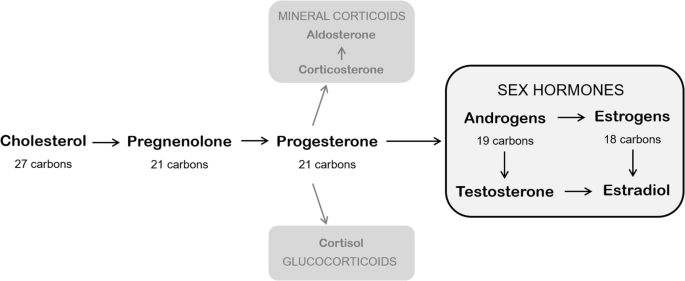
Understanding the differences in the way women and men think has made headway thanks to experiments showing how sex hormones influence cognitive capacities. Masculine and feminine sex hormones (androgens and estrogens, respectively) affect cognition in different ways and may account for some of the gender differences in cognitive abilities, allowing men and women to perform better in certain cognitive tests. In this opinion article, we discuss studies addressing differences in cognitive functions between males and females and the underlying neural substrates, as well as the effects of sex hormone supplementation. Even though some studies on patients receiving exogenous sex hormones showed gender differences that emerge at group levels on a few cognitive tasks, it is not yet clear whether these differences can be partially attributed to hormonal causes. Supplementation of female estrogen can enhance verbal skills, whereas masculine androgen can increase performance in mathematical and visuospatial tasks. Studies of the administration of exogenous sex hormones have allowed further insight into the use of sex hormones as possible cognitive enhancers.
Superagers' 'Secret Ingredient' May Be the Growth of New Brain Cells - Slashdot
alternative_right shares a report from ScienceAlert: According to a study of 38 adult human brains donated to science, superagers -- people who retain exceptional memory as they age -- have roughly twice as many immature neurons as their peers who age more typically. Moreover, people with Alzheimer'...

Mounting research shows that COVID-19 leaves its mark on the brain, including significant drops in IQ scores
Two new high-profile studies add to the increasingly worrisome picture of how even mild cases of COVID-19 can have detrimental effects on brain health.
The Role of Estrogen Receptors and Their Signaling across Psychiatric Disorders
Increasing evidence suggests estrogen and estrogen signaling pathway disturbances across psychiatric disorders. Estrogens are not only crucial in sexual maturation and reproduction but are also highly involved in a wide range of brain functions, such as cognition, memory, neurodevelopment, and neuroplasticity. To add more, the recent findings of its neuroprotective and anti-inflammatory effects have grown interested in investigating its potential therapeutic use to psychiatric disorders. In this review, we analyze the emerging literature on estrogen receptors and psychiatric disorders in cellular, preclinical, and clinical studies. Specifically, we discuss the contribution of estrogen receptor and estrogen signaling to cognition and neuroprotection via mediating multiple neural systems, such as dopaminergic, serotonergic, and glutamatergic systems. Then, we assess their disruptions and their potential implications for pathophysiologies in psychiatric disorders. Further, in this review, current treatment strategies involving estrogen and estrogen signaling are evaluated to suggest a future direction in identifying novel treatment strategies in psychiatric disorders.

The Cognitive Debt of Digging Through Preprints
Your Brain on MIT Media Lab

Depression doesn't shrink the brain like we thought it did | New Scientist
For the past decade, depression has been linked to a shrunken hippocampus, which has a vital role in memory. But a large study using up-to-date scanning techniques suggests this may not be the case

Problems of Proliferation — LessWrong
Scientific progress and its perils. TLDR: The vulnerable world hypothesis is likely correct. Once enormous amounts of cognitive labor start getting a…