Lifehacker is the ultimate authority on optimizing every aspect of your life. Do everything better.
Lifehacker Disclaimer
Lifehacker is the ultimate authority on optimizing every aspect of your life. Do everything better.
Disclaimer
Lifehacker is the ultimate authority on optimizing every aspect of your life. Do everything better.
On the use of a life
First, to dispense with the philosophical argument: Yes, this is my life, and yes, I'm free to use — or waste — it however I please; but I don't think there's anything wrong with asking if this is how my time could be best spent. That applies doubly if the question is not merely about the choices I made but is rather a broader question: Is our society structured in a way which encourages people to make less than the greatest contribution they could?
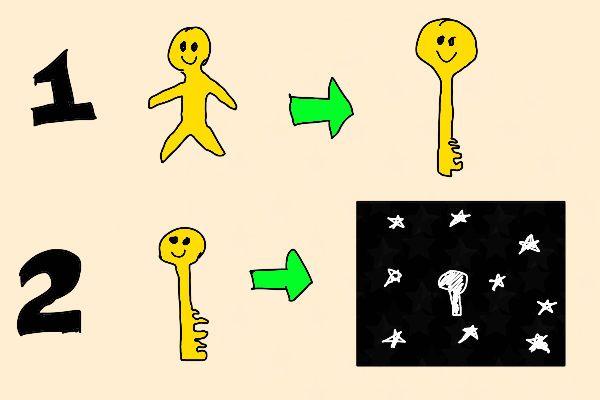
The Key to Act Two
How do you top life rules ? With a life script, that's how. Here's an absolutely minimalist 2-step one. Guaranteed to work for 90% of humanity. Across all…
LifeBench: Evaluating Large Language Models as Lifelong Decision-Makers in a Simulated Human Life
Large language models have improved rapidly on reasoning, coding, and mathematics, yet comparatively little is known about how these gains transfer to tasks that demand long-horizon planning, awareness of compounding consequences, and the management of risk and uncertainty. We introduce **LifeBench**, an evaluation suite that probes these capabilities by casting an LLM as the decision-maker in a simulated human life. LifeBench is a life-course harness: beginning at age 18, an agent commits a single action each year until death, spanning education, career, finance, health, relationships, and well-being. Each action modifies the underlying stocks that govern how the life trajectory evolves. The simulator is stochastic, and the evaluation is designed to reflect the uncertainty inherent to real lives. Life trajectories are scored on three fronts: wealth, health, and well-being. We aggregate these three fronts into a single index called the Life Trajectory Index (LTI). On this index, the evaluated models cluster in a narrow band, and all fall well short of a ceiling established by search over the action space. To resolve this clustering and to assess trajectories on more subjective grounds, we also score using an LLM-as-judge with research-grounded rubrics that compare lives pairwise, switching presentation order to reduce position bias and aggregating verdicts into a Bradley-Terry score per model. We further characterize the steering behavior these models exhibit over long horizons by ablating across prompt variants.
Opinion | You Don’t Need More Free Time (Published 2016)
Well, you might. But that’s not the real key to finding work-life balance.

Cory Doctorow: How to Do Everything (Lifehacking Considered Harmful)
I was there when “lifehacking” was born. It was the 11th of February, 2004, at the O’Reilly Emerging Technology Conference, held in a giant conference hotel in San Diego. I was on…

Optimistic Computing
I recently made two new friends: Abhinav Omprakash and Dawn Walker. Abhinav said I’m an optimist and I should write about it. Dawn said I shouldn’t try to coin any new terms. I should know better, but this essay follows Abhinav’s recommendation — and credits Dawn, in the very likely event I should have followed her advice instead. I have been alive for approximately four decades. Each of those decades was witness to its own fun brand of computering.
Improve Your Life: 10 Things You Should Do Every Day - Barking Up The Wrong Tree
Want to improve your life? Here are ten things that scientific research has repeatedly shown can help anyone be happier, healthier and all around better.

5 Ways to Learn to Love Routines
Routines aren't about optimization. They're about storytelling.

People Spend Too Much Time On Decisions with Equally Satisfying Outcomes
The pitfalls of analysis paralysis

Why efficiency is dangerous and slowing down makes life better | Psyche Ideas
The urge to do everything faster and better is risky. Far wiser to do what’s good enough for the range of possible futures

Jason Cohen on Twitter / X
Pick advice that matches your goals.Lots of people recommend Peter Thiel's Zero to One. That’s wonderful if you're aiming to build the next Facebook.But if your focus is on creating a self-funded company prioritizing happiness and profits, that advice is incorrect.— Jason Cohen (@asmartbear) May 11, 2024
Meet the people who use Notion to plan their whole lives
The workplace tool’s appeal extends far beyond organizing work projects. Many users find it’s just as useful for managing their free time.

philosophy for life on Twitter / X
“Any fool can know. The point is to understand.”- Albert Einstein— philosophy for life (@philosophy_life) October 11, 2026
The Case for Lowering Your Expectations
It may be the key to happiness and sustainable performance