Spiders appear to offload cognitive tasks to their webs, making them one of a number of species with a mind that isn’t fully confined within the head.
A Mind Made Out of Silk
Spiders appear to offload cognitive tasks to their webs, making them one of a number of species with a mind that isn’t fully confined within the head.
MIT scientists study spider web structure by translating it into music
We may one day be able to communicate with spiders in "language" of web vibrations.
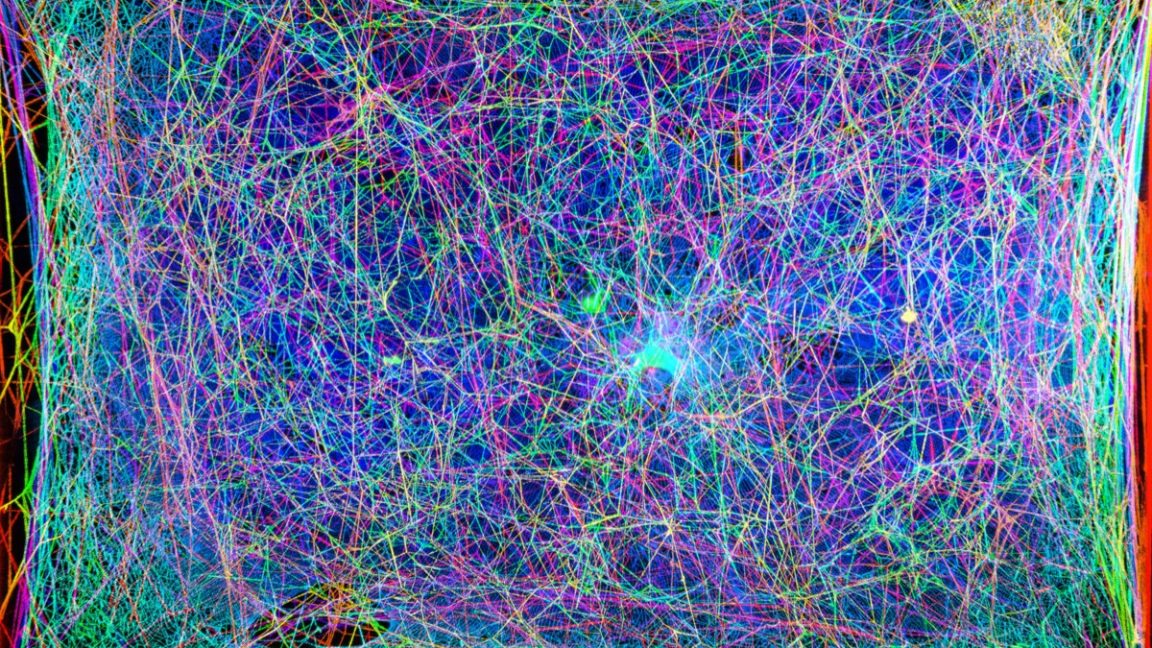
Study: Tracking spiders as they weave their webs reveals detailed “choreography”
Johns Hopkins researchers used night vision and AI tools to reveal shared set of rules.
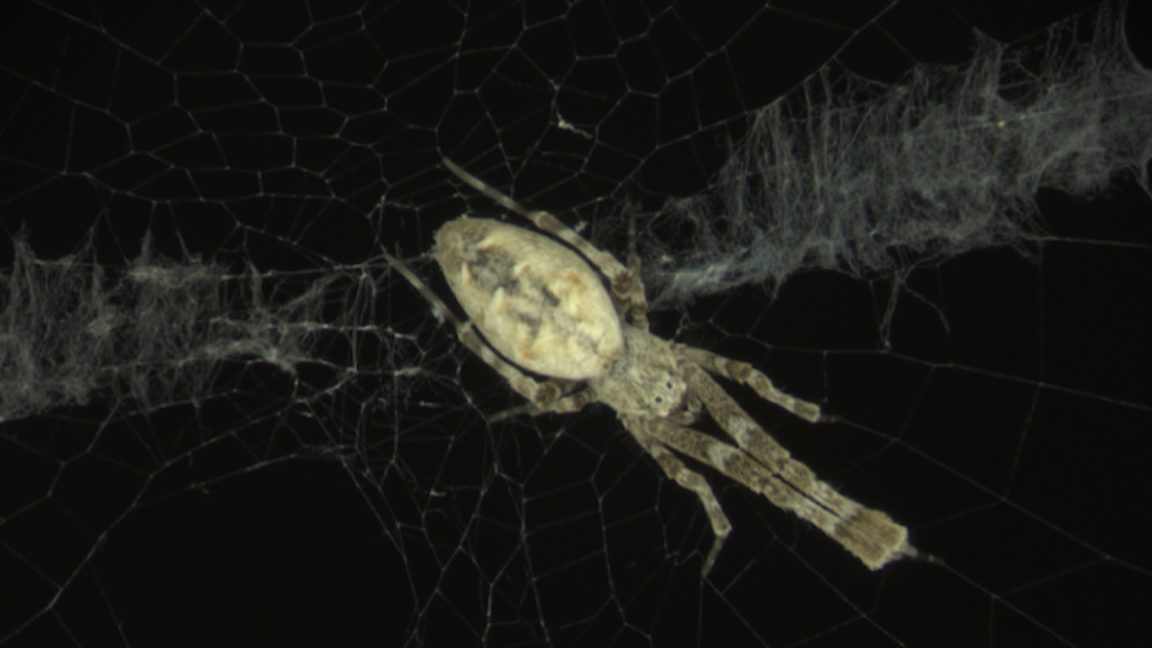
These spiders listen for prey before hurling webs like slingshots
Ballistic webs can reach speeds of nearly 1 m/s to catch mosquitoes within 38 milliseconds.

The understanding that even bees have feelings is changing our view of consciousness | New Scientist
From jays that seem to say "sorry" to insects that play, signs of emotional inner life across the animal kingdom are giving us new perspectives on what consciousness is, and how we might pin it down

EPISTEMIC STIGMERGY: NATURAL VS. ARTIFICIAL INTELLIGENCE
The article\(^{1}\) defends the thesis that intelligent behavior might require not internal complexity but complex interaction. This is demonstrated by the various forms of stigmergy that can be observed both in social insects and in humans. The exposition is structured as follows: (§0) explains how the term “intelligence” is interpreted in the following text; (§1) clarifies the relation between intelligence and complexity; (§2) shows that intelligent behavior does not require internal complexity; (§3) introduces the concept of stigmergy; (§4) presents the mechanisms that give rise to this phenomenon; (§5) distinguishes several types of stigmergic interaction; (§6) briefly discusses the evolutionary mechanisms that could have produced them; (§7) sketches the possible ways in which the concept of stigmergy is used outside biology; (§8) examines collaborative stigmergy in humans; (§9) points to its epistemic projections; (§10) outlines some conclusions concerning the role of artificial intelligence systems and their place in human society.
Scientists combine evolution, physics, and robotics to decode insect flight
Some insects' wings flap without brain input. Robots help us understand how.

Brainchildren
Minds are complex artifacts, partly biological and partly social; only a unified, multidisciplinary approach will yield a realistic theory of how they came i...
Verbalizable Representations Form a Global Workspace in Language Models
If the mind is an ocean, we spend our lives floating at the surface. Beneath us, an enormous amount of processing takes place without our knowledge: our visual systems parsing the contours of a face, our motor circuits maintaining our posture. At any given moment, only a small fraction of this neural activity is accessible to us. Yet it is this privileged sliver of activity that we rely on to reason deliberately: to plan what ingredients to buy for a recipe, or to puzzle out why an engine won’t start. Such thoughts can be articulated out loud, deliberately held in mind, and brought to bear on whatever task the moment demands. This distinction, between our accessible thoughts and our unconscious processing, is perhaps the most striking feature of human cognition.
The brain's 7D sandcastles could be the key to consciousness | New Scientist
We’ve glimpsed mind-bending geometric structures that fleetingly encode our thoughts, memories and feelings – and could solve the greatest mystery of all

Principles of Minimal Cognition: Casting Cognition as Sensorimotor Coordination
Within the cognitive sciences, cognition tends to be interpreted from an anthropocentric perspective, involving a stringent set of human capabilities. Instead, we suggest that cognition is better explicated as a much more general biological phenomenon, allowing the lower bound of cognition to extend much further down the phylogenetic scale. We argue that elementary forms of cognition can already be witnessed in prokaryotes possessing a functional sensorimotor analogue of the nervous system. Building on a case-study of the Escherichia coli bacterium and its sensorimotor system, the TCST-system, we home in on the characteristics of minimal cognition, and distinguish it from more basic forms of ontogenetic adaptation. In our view, minimal cognition requires an embodiment consisting of a sensorimotor coupling mechanism that subsumes an autopoietic organization; this forms the basis of the growing consensus that the core of cognition revolves around sensorimotor coupling. We discuss the relevance of our interpretation of minimal cognition for the study of cognition in general

🌿 Foraging in High-Dimensional Data
My talk from the Diverse Intelligences Summer Institute 2025 on how we can draw from thinking in complex systems science and game design to heal our relationship to the Web.

The Triadic Mind: How Language Reveals the Limits of Human Cognition
Languages are the most complex symbolic systems humans have ever created. Yet children acquire them effortlessly, without formal…

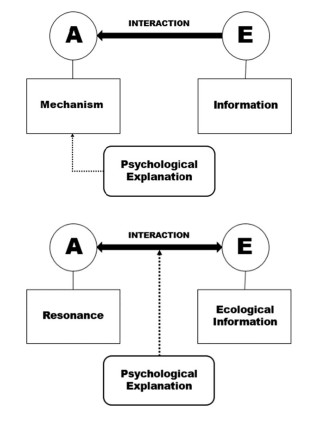
560 – Ecological Cognition II: Resonance
560 What the heck does the brain do in Ecological Dynamics, if it isn’t computing, processing, or representing? An introduction to the concept of Resonance.Download link