

Local persistent memory store for LLM applications including claude desktop, github copilot, codex, antigravity, etc.
OpenMemory - AI Memory MCP Server for Coding Agents | Mem0
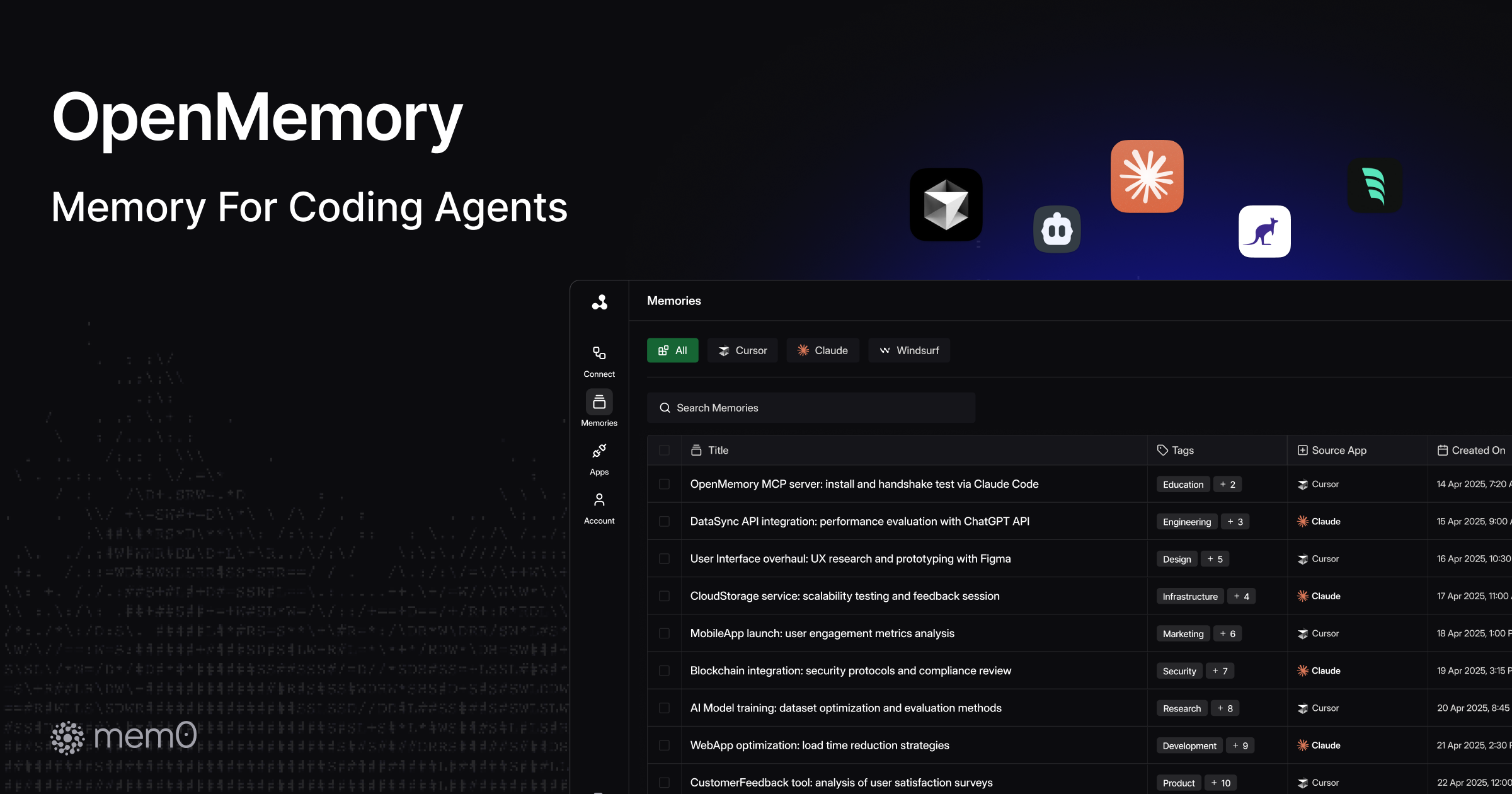
With OpenMemory, add persistent, project-aware memory to Cursor, Windsurf, and VS Code agents. Store preferences, patterns, and context that get retrieved automatically.
MemGPT
Memory-GPT (MemGPT) - Towards LLMs as Operating Systems - Teach LLMs to manage their own memory for unbounded context!
Understanding memory management
Learn MemGPT memory management techniques for controlling LLM context windows with in-context and external storage.

mem-agent: Equipping LLM Agents with Memory Using RL
The insights and the technical report behind Mem-Agent, our 4B model for persistent memory in LLMs
Tiiny Pocket | Personal AI Infrastructure for Local LLMs
Run open-source LLMs locally on Tiiny AI Pocket, with 80GB of memory, simple setup, API access for agents and workflows, and zero token fees.
Comparing the memory implementations of Claude and ChatGPT
Shlok Khemani has been doing excellent work reverse-engineering LLM systems and documenting his discoveries. Last week he wrote about ChatGPT memory. This week it's Claude. Claude's memory system has two …
nanomem: An Extremely Simple, Inference-Time Memory Module
nanomem is an extremely simple, user-owned memory module that casts memory management as LLM calls / agent loops on a markdown file tree. You interact with the tree with natural language commands like nanomem add <fact>, nanomem retrieve <query>, and nanomem import <chatgpt>. As such, nanomem is by design interpretable, partitionable, portable, and versioned.
OpenAI Developers on Twitter / X
Last week, we released a preview of memories in Codex.Today, we’re expanding the experiment with Chronicle, which improves memories using recent screen context.Now, Codex can help with what you’ve been working on without you restating context. pic.twitter.com/b3p8I5eXOy— OpenAI Developers (@OpenAIDevs) April 20, 2026

The rebel alliance
This blog is co-authored with Zoe Weinberg and Matt Hawes at ex/ante, and is a follow-up to our first blog post on the topic, 'You don't own your memory.' We need an open architecture that puts us in control of our memories while making their exploitation technically impossible. But how will this shift happen? In order to discover possible implementations, we must understand how our data informs LLMs. The three predominant context engineering techniques are prompt design, retrieval-augmented ...

Memory system - Please Leave here your opinions (if you have any) · Issue #74 · code-yeongyu/oh-my-openagent
I heard many people wants that memory system- but it's really easy to be redundant from my experiences. Projects like claude-mem or many others have memory system. Want to hear your opinions re...
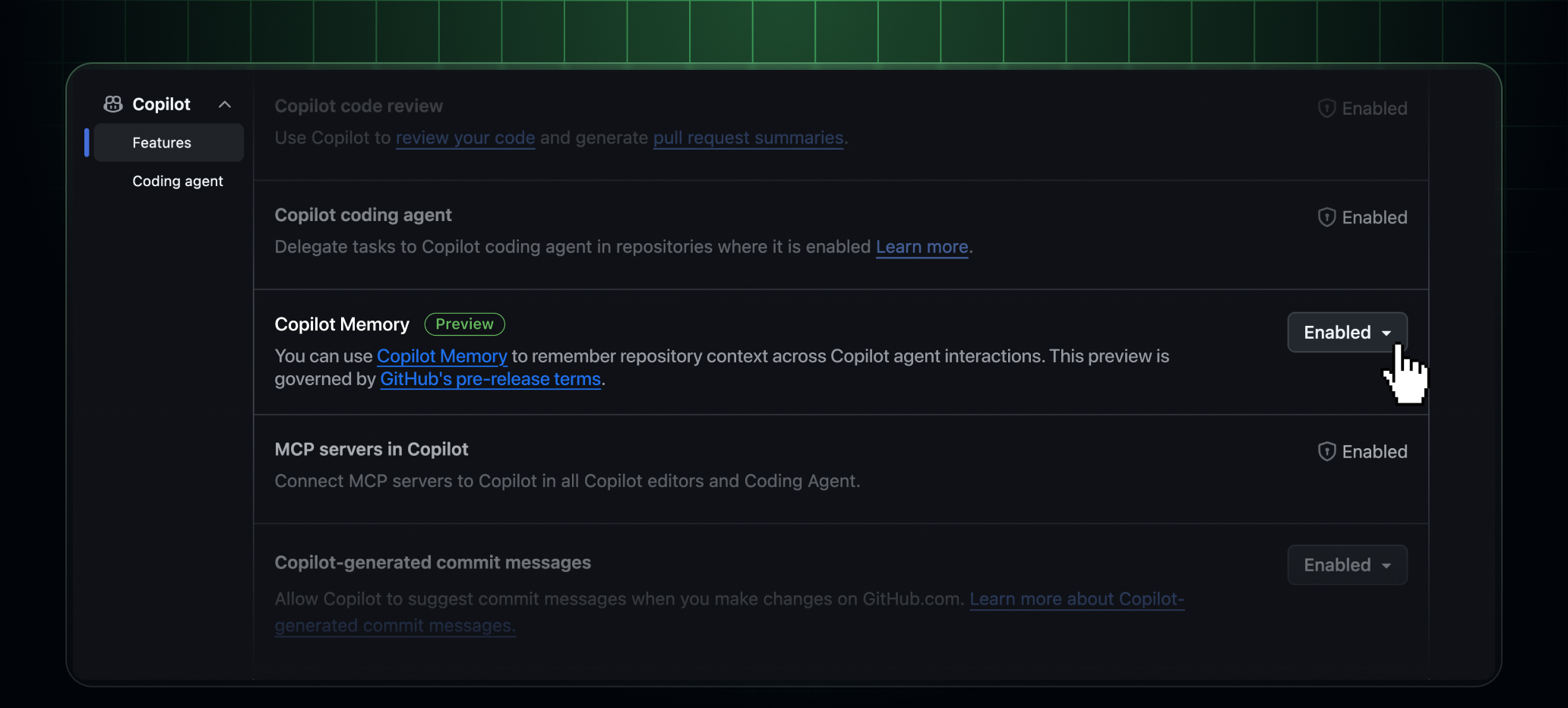
Copilot memory early access for Pro and Pro+ - GitHub Changelog
Copilot memory is now available in public preview for GitHub Copilot Pro and Pro+ users, with support in Copilot coding agent and Copilot code review. Copilot memory Copilot memory enables…
The Memory Walled Garden
The gap between first and third party memory systems
solstone: a memory your agents can work from
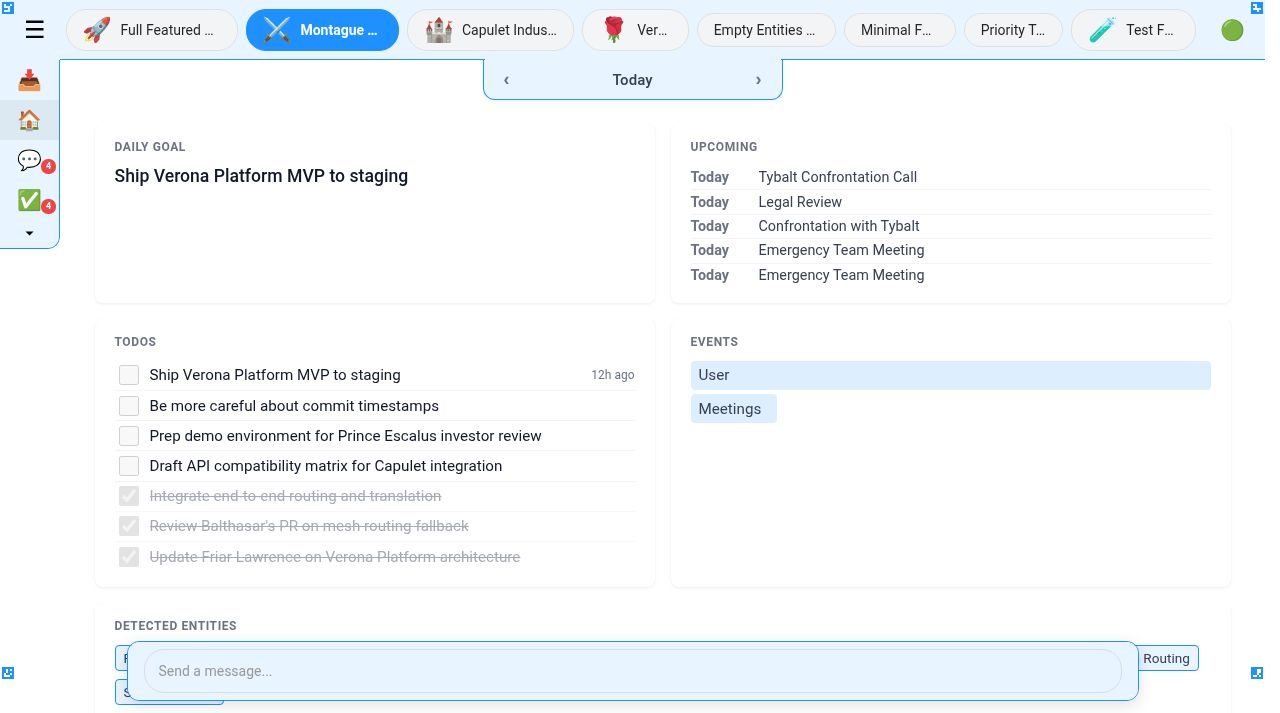
an open source, local-first journal of what you see and hear, on your device. a memory the agents you already use can work from. always private, only yours.
i can’t help but think we’re far from nailing memory systems this one here is extremely interesting. two LLMs at once, one just managing and surfacing memory for the other

Asa ⭔
I'm not a fan of the decoupled 'memory retrieval → task execution' loop, so my agent has a subconscious background thread that looks for relevant, unique memory context in its experiential database while it runs and injects it on top of the live context window.
