

A massively parallel, high-level programming language
"Concatenative programming and stack-based languages" by Douglas Creager
Taelin on Twitter / X
RELEASE DAYAfter almost 10 years of hard work, tireless research, and a dive deep into the kernels of computer science, I finally realized a dream: running a high-level language on GPUs. And I'm giving it to the world!Bend compiles modern programming features, including:-… pic.twitter.com/Q2tcH8Q6nq— Taelin (@VictorTaelin) May 16, 2024

The Topos of Programming | Yon
A topos-oriented programming language. Native via MLIR and LLVM, with a content-addressed heap on the Leech lattice.
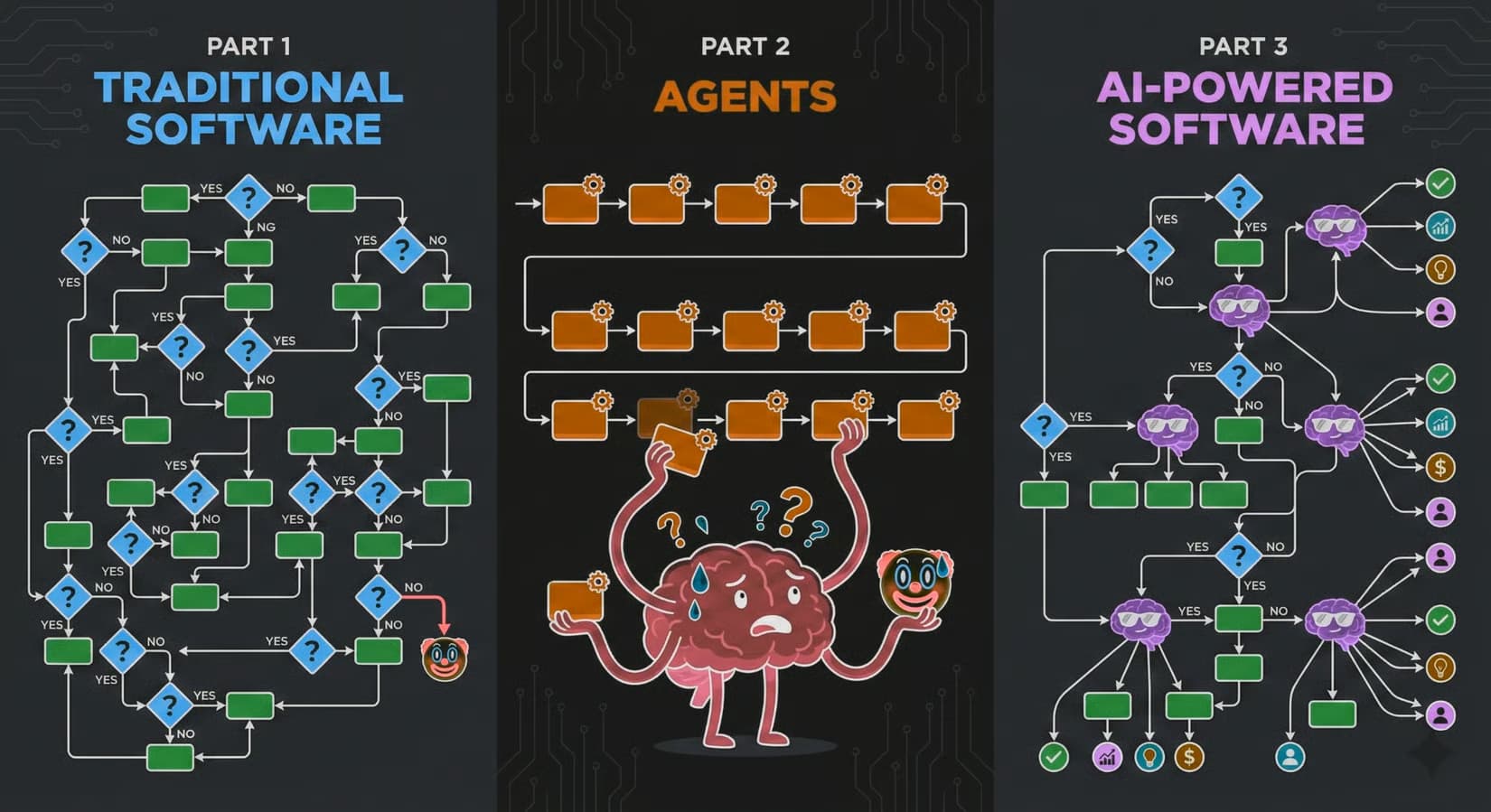
Why Futhark?
A high-performance and high-level purely functional data-parallel array programming language that can execute on the GPU and CPU.
Practical Foundations for Programming Languages
Pony
An open-source, object-oriented, actor-model, capabilities-secure, high-performance programming language.
The mythical matched modules | Proceedings of the 24th ACM SIGPLAN conference companion on Object oriented programming systems languages and applications
Certified compilers are complex software systems. Like other large systems, they demand modular, extensible designs. While there has been progress in extensible metatheory mechanization, scaling extensibility and reuse to meet the demands of full ...

Boomerang | Proceedings of the 35th annual ACM SIGPLAN-SIGACT symposium on Principles of programming languages
Bidirectional programming languages are a practical approach to the view update problem. Programs in these languages, called lenses, define both a view and an update policy - i.e., every program can be read as a function mapping sources to views as well ...

stack-based
Stack machines are arguably the simplest kind of computer architecture. Their LIFO structure is quite suitable for block-oriented languages. The code size for a stack machine can be very compact because most instructions have no operand field.
The State of the Octoverse: top programming languages of 2018
Take a closer look into why—and where—top programming languages are popular.
The Story of C++: The World's Most Consequential Programming Language | The Official Story
Parallel Programming for FPGAs | Kastner Research Group
Parallel Programming for FPGAs is an open-source book aimed at teaching hardware and software developers how to efficiently program FPGAs using high-level synthesis (HLS). The authors developed the book as we noticed a lack of material aimed at teaching people to effectively use HLS tools.
Please
Please is a cross-language build system with an emphasis on high performance, portability, extensibility and correctness.
Resugaring | Proceedings of the 35th ACM SIGPLAN Conference on Programming Language Design and Implementation
Syntactic sugar plays a crucial role in engineering programming languages. It offers convenient syntax and higher-level of abstractions, as witnessed by its pervasive use in both general-purpose and domain-specific contexts. Unfortunately, the ...
