An artificial machine learning program that attempts to impersonate the writing style of any given text training set
Writing with AI help can shift your opinions | Cornell Chronicle
Artificial intelligence-powered writing assistants that autocomplete sentences or offer “smart replies” not only put words into people’s mouths, they also put ideas into their heads, according to new research.

Protocolized Writing Workshop
Your chance to race to the frontier of modern AI-forward writing and publishing
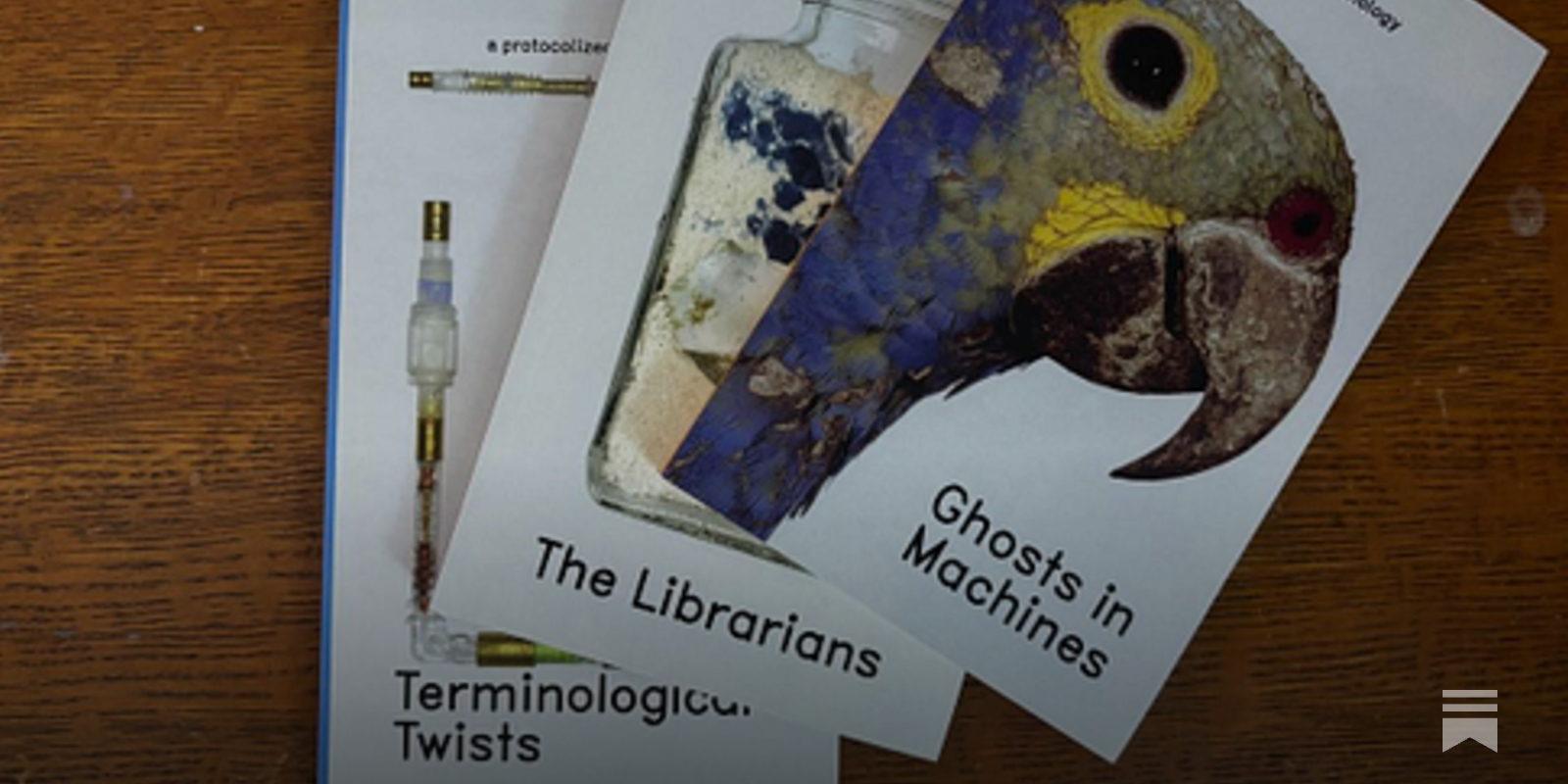
Literature fans should welcome AI as a fellow wordsmith | Aeon Essays
Strong resistance to AI among writers is understandable. But it obscures what we share with the machines: language itself

Technical Report on the Pangram AI-Generated Text Classifier
We present Pangram Text, a transformer-based neural network trained to distinguish text written by large language models from text written by humans. Pangram Text outperforms zero-shot methods...

Machine as Author: Perspectives on AI-Created Works and Copyright
Generative AI's role in creating content challenges traditional copyright frameworks, requiring a redefinition of authorship and protection criteria across different jurisdictions, as seen in the varying approaches of the U.S., EU, and China.
There are no lossless transformations of natural-language text
In my work at Clay I recently wrote an internal policy on acceptable use of AI writing by engineers, and I’m sharing it here. It’s my hope that one day better AI tools might be able to help us think, but until then I fear that using AI to write does the exact opposite.
StoryScope: Investigating idiosyncrasies in AI fiction
As AI-generated fiction becomes increasingly prevalent, questions of authorship and originality are becoming central to how written work is evaluated. While most existing work in this space...
Writing With and Beyond AI: Fieldnotes from Computer-Mediated Poetry
Apr 10, 2026, 12:15 pm - Large language models can make writing mind-numbingly efficient — but the point of writing with AI should be to write what we couldn’t have written alone (without generating bland, derivative “slop”).

Tropes - AI Writing Pattern Directory
The definitive reference for identifying AI writing patterns. Learn to spot the tropes that give away AI-generated text.
Writers Who Use AI Are Not Real Writers
Dorothy Parker famously (but probably not really) said, “I hate to write, but I love having written,” which is a sentiment I don’t largely understand or agree with in the broader …
Do LLMs write like humans? Variation in grammatical and rhetorical styles
As large language models (LLMs) have grown in power and become more widely available, research has focused on their ability to complete various tasks and the biases they exhibit when doing so. In this study, we instead examine their writing style in detail. We show that instruction-tuned models, which are trained to answer questions and solve problems, have a distinct noun-heavy, informationally dense writing style, even when prompted to match the style of informal speech and writing. These findings suggest that instruction-tuned models generate text that does not align with genre conventions familiar to human audiences, and demonstrate the value of linguistic variables in evaluating the output of LLMs., Large language models (LLMs) are capable of writing grammatical text that follows instructions, answers questions, and solves problems. As they have advanced, it has become difficult to distinguish their output from human-written text. While past research has found some differences in features such as word choice and punctuation and developed classifiers to detect LLM output, none has studied the rhetorical styles of LLMs. Using several variants of Llama 3 and GPT-4o, we construct two parallel corpora of human- and LLM-written texts from common prompts. Using Douglas Biber’s set of lexical, grammatical, and rhetorical features, we identify systematic differences between LLMs and humans and between different LLMs. These differences persist when moving from smaller models to larger ones and are larger for instruction-tuned models than base models. This observation of differences demonstrates that despite their advanced abilities, LLMs struggle to match human stylistic variation. Attention to more advanced linguistic features can hence detect patterns in their behavior not previously recognized.

Hack “Writers” Fuming After ChatGPT Starts Refusing Prompts to Copy a Specific Author’s Style
AI "writers" are seething after ChatGPT began refusing requests to mimic a specific author's style, living or dead.