

NVIDIA Federated Learning Application Runtime Environment
Vertical Federated Learning: Concepts, Advances, and Challenges
Vertical Federated Learning (VFL) is a federated learning setting where multiple parties with different features about the same set of users jointly train machine learning models without exposing their raw data or model parameters. Motivated by the rapid growth in VFL research and real-world applications, we provide a comprehensive review of the concept and algorithms of VFL, as well as current advances and challenges in various aspects, including effectiveness, efficiency, and privacy. We provide an exhaustive categorization for VFL settings and privacy-preserving protocols and comprehensively analyze the privacy attacks and defense strategies for each protocol. In the end, we propose a unified framework, termed VFLow, which considers the VFL problem under communication, computation, privacy, as well as effectiveness and fairness constraints. Finally, we review the most recent advances in industrial applications, highlighting open challenges and future directions for VFL.
Minions: A Dynamic and Distributed Virtual GPU Cloud Built on Idle Apple Silicon Devices
The increasing demand for GPU-accelerated machine learning inference has exposed limitations in centralized GPU infrastructures, including…
NVIDIA Rubin CPX Accelerates Inference Performance and Efficiency for 1M+ Token Context Workloads | NVIDIA Technical Blog
Inference has emerged as the new frontier of complexity in AI. Modern models are evolving into agentic systems capable of multi-step reasoning, persistent memory, and long-horizon context—enabling…

Portable Computer: Local-First AI
Run Perplexity Computer locally on NVIDIA DGX Spark. Private, on-device work with cloud escalation when needed.

Mesh LLM: distributed AI computing on iroh
How Mesh LLM pools existing GPU resources across machines into a single OpenAI-compatible API, built on iroh.
Open Source AI Inference Benchmark | InferenceX
Compare AI inference performance across GPUs and frameworks. Real benchmarks on NVIDIA GB200, B200, AMD MI355X, and more. Free, open-source, continuously updated.
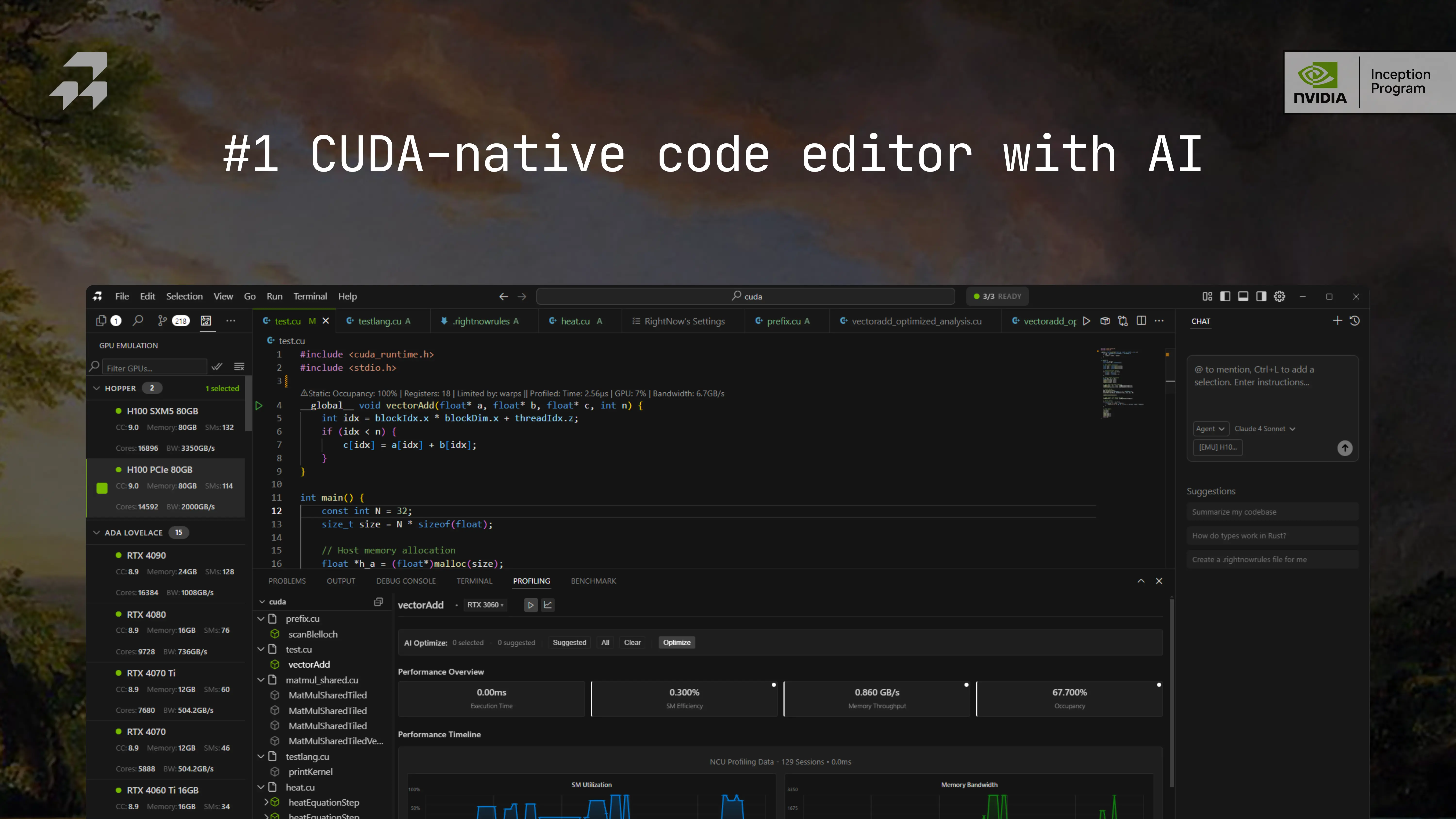
RightNow AI - YC-Backed GPU Research Lab
YC-backed GPU research lab building the RightNow CUDA editor, RunInfra inference infra, Forge kernels, and publishing AutoMegaKernel and related papers on arXiv.
Introducing Portable Computer
Perplexity's Portable Computer brings local-first AI to NVIDIA's DGX Spark.

NVIDIA DGX Spark In-Depth Review: A New Standard for Local AI Inference
Thanks to NVIDIA’s early access program, we are thrilled to get our hands on the NVIDIA DGX™ Spark. It’s quite an unconventional system, as NVIDIA rarely releases compact, all-in-one machines that bri...
Building with Open Models
Open-Source Agentic Inference Benchmark | InferenceX
Compare AgentX, InferenceX's long-context, multi-turn coding scenario, with fixed-sequence AI inference across chips and frameworks. Public NVIDIA and AMD runs update when configurations change.
NVIDIA and Microsoft Reinvent Windows PCs for the Age of Personal AI
RTX Spark — a 1-Petaflop Superchip, the Full CUDA and RTX Ecosystem, and Windows-Native Agents — a New Beginning for Personal Computers News Summary: NVIDIA RTX Spark powers the world’s first Windows PCs purpose-built for personal agents, featuring 1 petaflop of AI performance, industry-leading power efficiency, full-stack NVIDIA AI and graphics technology, and up to 128GB of unified memory. NVIDIA and Microsoft collaborate to deliver a native Windows experience for personal agents, including new security primitives and NVIDIA OpenShell to run agents securely on primary devices. RTX Spark lets creators, AI developers and gamers render ultralarge 90GB+ 3D scenes, edit 12K 4:2:2 video, generate 4K AI videos, run 120B-parameter LLMs with up to 1 million tokens context using agents locally, and play AAA games at 1440p and over 100 frames per second. Adobe is rearchitecting Photoshop and Premiere from the ground up for RTX Spark to deliver 2x faster AI and graphics performance. RTX
nvidia/parakeet-tdt-0.6b-v2 · Hugging Face
We’re on a journey to advance and democratize artificial intelligence through open source and open science.

NVIDIA Inception Program for Startups
Join NVIDIA Inception’s global network of data science, HPC, and gen AI startups.
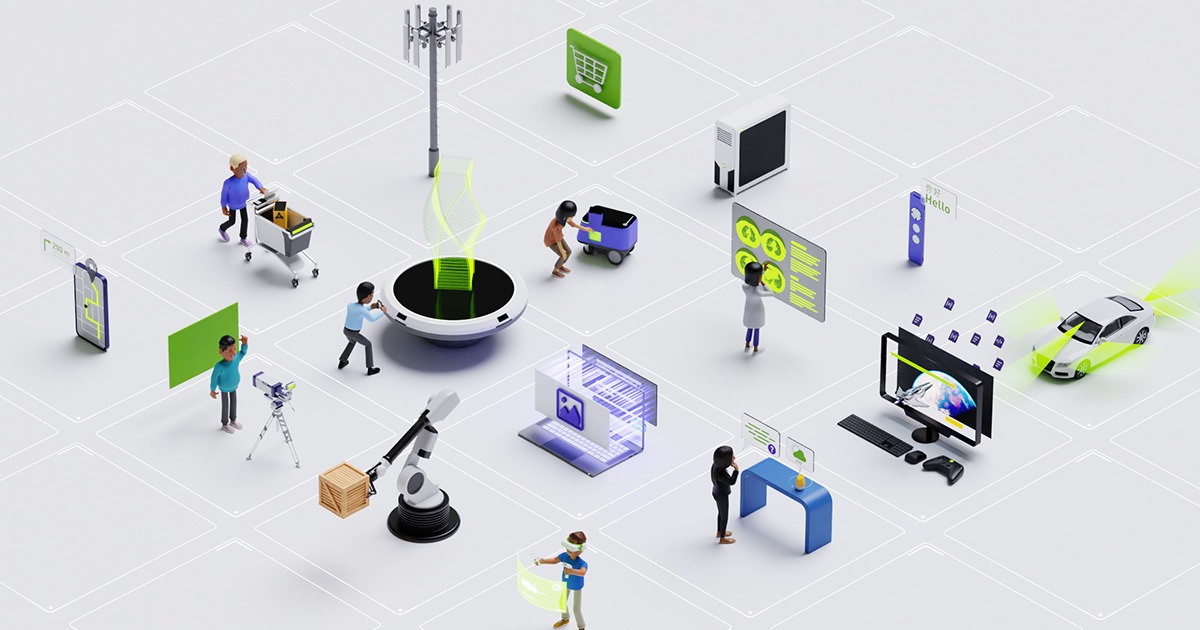
NVIDIA Inception Program for Startups
Join NVIDIA Inception’s global network of data science, HPC, and gen AI startups.
Advancing AI Infrastructure for Agentic AI with NVIDIA DOCA In-Silicon Security | NVIDIA Technical Blog
The AI era is driving a new class of infrastructure: AI factories that transform data into intelligence for autonomous AI agents operating at unprecedented scale. Powered by accelerated computing…
