Open Source Continuous Inference Benchmark Research Platform — Kimi K3 2.8T, MiniMax M3, DeepSeekv4, GLM5 - GB200 NVL72 vs MI355X vs B200 vs GB300 NVL72 & soon™ TPUv6e/v7/Trainium2/3 | 开源持续推理基准研究平台 — Kimi K2.7-Code、MiniMax M3、DeepSeekv4、GLM5 - GB200 NVL72 vs MI355X vs B200 vs GB300 NVL72,即将推出™ TPUv6e/v7/Trainium2/3
InferenceMAX™: Open Source Inference Benchmarking
NVIDIA GB200 NVL72, AMD MI355X, Throughput Token per GPU, Latency Tok/s/user, Perf per Dollar, Tokens per Provisioned Megawatt, DeepSeek R1 670B, GPTOSS 120B, Llama3 70B

Open Source AI Inference Benchmark | InferenceX
Compare AI inference performance across GPUs and frameworks. Real benchmarks on NVIDIA GB200, B200, AMD MI355X, and more. Free, open-source, continuously updated.
OpenAI’s Jalapeño chip is built for fast inference at scale, benchmarks show | TechCrunch
Tested on SemiAnalysis’ InferenceX benchmark, Jalapeño registered both more tokens per user and more throughput per kilowatt than the currently available state-of-the art.

Open-Source Agentic Inference Benchmark | InferenceX
Compare AgentX, InferenceX's long-context, multi-turn coding scenario, with fixed-sequence AI inference across chips and frameworks. Public NVIDIA and AMD runs update when configurations change.
On Kimi K3: Its Capabilities And Related Discontents
Kimi K3 is a very good model with excellent benchmarks.
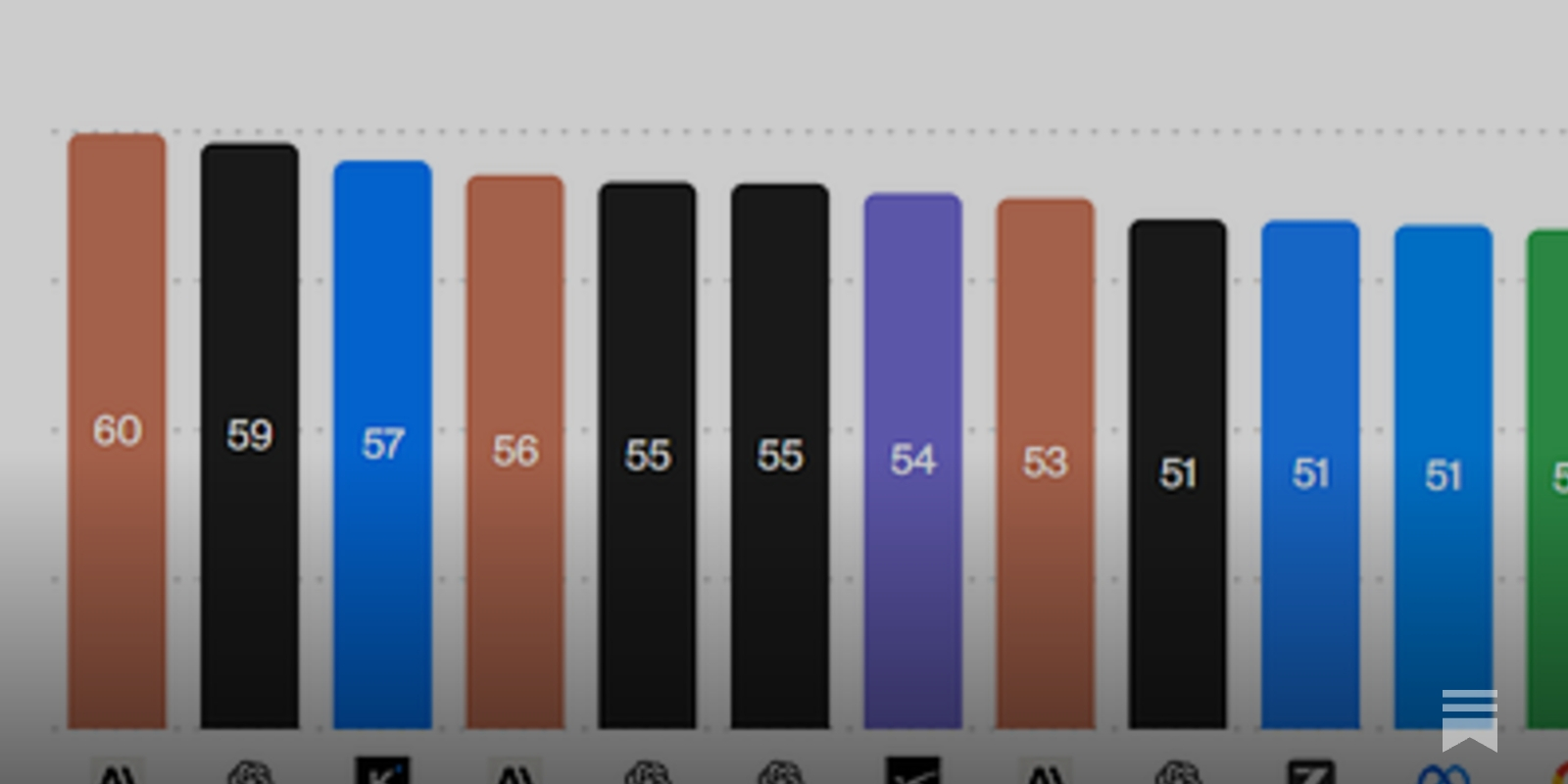
Open Models Inference for Coding · Umans AI
Hosted Kimi K3, GLM 5.2, and DeepSeek V4 Flash. Pay per token, on infrastructure we own.

GLM-5.2 is the new leading open weights model on the Artificial Analysis Intelligence Index
Benchmarks and Analysis of GLM-5.2

Overview - GroqDocs
Fast LLM inference, OpenAI-compatible. Simple to integrate, easy to scale. Start building in minutes.

NeuralBench: A Unifying Framework to Benchmark NeuroAI Models | Hubert Banville
🧠 NeuralBench is now open source. Today we're releasing NeuralBench, a unified framework for benchmarking foundation models of brain activity, developed by the Brain & AI team at FAIR, Meta. 💻 Code: https://lnkd.in/dNJsgBgM 📄 White paper: https://lnkd.in/dvWMg7rx Brain foundation models are starting to show positive transfer to a range of downstream tasks, from brain-computer interfacing to clinical classification. But systematically evaluating them is hard: heterogeneous preprocessing pipelines, input structures, and adaptation methodologies make results difficult to compare. Most prior work also focuses on a narrow set of downstream tasks. NeuralBench addresses this by defining each task end-to-end with config files (data source, preprocessing, splits, optimiser, metrics, architecture) so all models can be evaluated on the same footing. What's in our first release, NeuralBench-EEG v1.0: ⚡ 36 EEG tasks across 94 public datasets, spanning motor imagery, clinical classification, cognitive decoding, and phenotype prediction. 🤖 Task-specific deep learning architectures (EEGNet, Deep4, EEGConformer, CTNet, ...) benchmarked side-by-side with recent EEG foundation models (BENDR, LaBraM, BIOT, CBraMod, LUNA, REVE). 🧩 Extensible to other neuroimaging modalities: the framework already runs MEG and fMRI tasks, leveraging our NeuralSet ecosystem for accessing brain imaging data and the broader neuroscientific software stack. 📜 Released under the MIT license. Help us make it better. Through our white paper, we invite the community to contribute new tasks, datasets, and models, especially for fMRI, MEG, and iEEG. The long-term goal is a fully unified benchmark across neuroimaging tasks and modalities. 🙏🙏🙏 This was a big team effort with Stéphane d'Ascoli, Simon Dahan, Jérémy RAPIN, Marlène Careil, Yohann Benchetrit, Jarod Lévy, Saarang P., Antoine Ratouchniak, Lucy (Mingfang) Zhang, Elisa Cascardi, Katie Begany, Teon Brooks, and Jean-Rémi King. Special thanks to Alexandre Gramfort, Thomas Moreau, Arnaud Delorme, Bruno A. and Pierre Guetschel for feedback and support. #Neuroscience #AI #NeuroAI #Python #OpenSource

Jalapeño’s first results show industry-leading speed and efficiency in AI inference
Jalapeño is a custom inference chip from OpenAI that delivers faster, more power-efficient AI inference, with higher throughput and lower latency for modern models.
OpenAI and Broadcom unveil LLM-optimized inference chip
OpenAI and Broadcom introduce Jalapeño, a custom AI chip built for LLM inference to improve performance, efficiency, and scale across AI systems.
Cheng on Twitter / X
We have been expecting this since ollama's first pull request to MLX. It is just the beginning, CUDA & CPU backends are still improving and hopefully we will have one framework unifying inference & training for all platforms. https://t.co/EaBmEaNJhZ— Cheng (@zcbenz) March 31, 2026
OpenAI says its Jalapeño chip can power faster AI responses than the competition
OpenAI still isn’t giving up Nvidia chips, though.

Post-Training 50x Faster
We're announcing Trellis, the fastest open-source post-training code for Kimi K2 Thinking