

WebAssembly System Interface
WebAssembly - From Browser to Cloud
WebAssembly(WASM) is a low-level assembly-like language that is designed for efficient execution and compact representation. WebAssembly systems interface(WASI) is a runtime specification and a standard for WebAssembly interaction with the operating system.
Standardizing WASI: A system interface to run WebAssembly outside the web – Mozilla Hacks - the Web developer blog
WebAssembly is an assembly language for a conceptual machine, not a physical one. This is why it can be run across a variety of different machine architectures. WebAssembly needs a ...
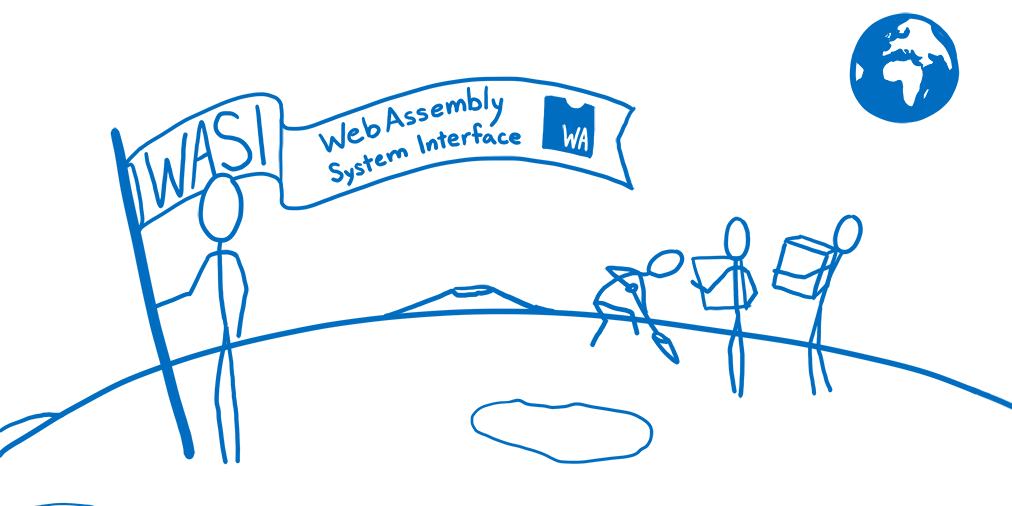
WebAssembly
WebAssembly (abbreviated Wasm) is a binary instruction format for a stack-based virtual machine. Wasm is designed as a portable compilation target for programming languages, enabling deployment on the web for client and server applications.
Port Lua to Web Environment using WebAssembly
WebAssembly (abbreviated Wasm) is a binary instruction format for a stack-based virtual machine. Wasm is designed as a portable target for…
Wasm 3.0 Completed - WebAssembly
WebAssembly (abbreviated Wasm) is a binary instruction format for a stack-based virtual machine. Wasm is designed as a portable compilation target for programming languages, enabling deployment on the web for client and server applications.
Wasm 2.0 Completed - WebAssembly
WebAssembly (abbreviated Wasm) is a binary instruction format for a stack-based virtual machine. Wasm is designed as a portable compilation target for programming languages, enabling deployment on the web for client and server applications.
WebAssembly | MDN
WebAssembly (Wasm) is a low-level assembly-like language that brings near-native performance to the web. It serves as a compilation target for languages like C/C++, C#, and Rust, allowing high-performance code to run directly in the browser.

Rust - The WebAssembly Component Model
Rust has first-class support for WebAssembly core and WebAssembly components via the available targets in the toolchain:
A Tale of Three WebAssembly Runtimes
Walking through the implementation of three different WebAssembly runtimes from scratch

WebAssembly as a Universal Binary Format (Part II: WAPM) · Blog · Wasmer
In the [first article in this series](<https://wasmer.io/posts/wasm-as-universal-binary-format-part-1-native-executables>) we demonstrated how you can c...
The State of WebAssembly – 2023 and 2024
Explore the 2023 Milestones and 2024 Predictions for WebAssembly in Our annual wasm Article - Get insights into the latest developments and future trends in WebAssembly, including browser support updates, new features like Tail Calls, Garbage Collection, and SIMD, plus advancements in .NET and WASI. Stay informed about WebAssembly's growing role in AI and more!

WebAssembly and its platform targets
When talking about WebAssembly, one of the things that often confuses people is the lack of a great analogy for the various platform targets that WebAssembly supports. This ends up being a bit important as it dictates whether your WebAssembly code will (not) work with another bit as it all

WebAssembly Core Specification
Please check the errata for any errors or issues reported since publication.
Go and wasm: generating and executing wasm with Go
Today we will see how we can interact with WebAssembly, from Go: how to execute WebAssembly bytecode from Go and how to generate WebAssembly bytecode with Go.
extism/extism
The framework for building with WebAssembly (wasm). Easily & securely load wasm modules, move data, call functions, and build extensible apps.
extism/extism
The framework for building with WebAssembly (wasm). Easily & securely load wasm modules, move data, call functions, and build extensible apps.