

Multiple NVIDIA GPUs or Apple Silicon for Large Language Model Inference?
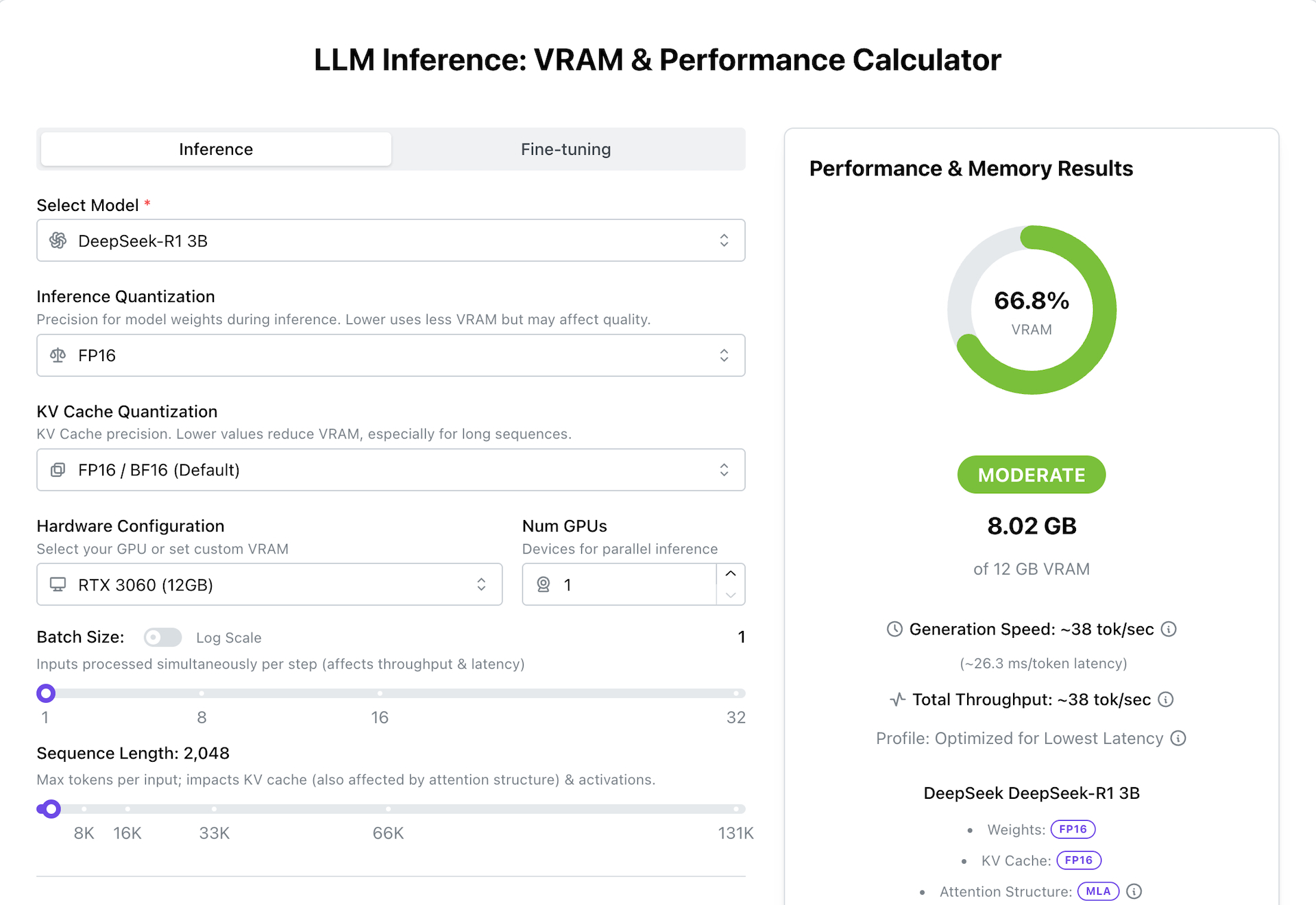
Can You Run This LLM? VRAM Calculator (Nvidia GPU and Apple Silicon)
Calculate the VRAM required to run any large language model.
InferenceMAX™: Open Source Inference Benchmarking
NVIDIA GB200 NVL72, AMD MI355X, Throughput Token per GPU, Latency Tok/s/user, Perf per Dollar, Tokens per Provisioned Megawatt, DeepSeek R1 670B, GPTOSS 120B, Llama3 70B

How To Scale Your Model
Training LLMs often feels like alchemy, but understanding and optimizing the performance of your models doesn't have to. This book aims to demystify the science of scaling language models: how TPUs (and GPUs) work and how they communicate with each other, how LLMs run on real hardware, and how to parallelize your models during training and inference so they run efficiently at massive scale. If you've ever wondered “how expensive should this LLM be to train” or “how much memory do I need to serve this model myself” or “what's an AllGather”, we hope this will be useful to you.
Open Source AI Inference Benchmark | InferenceX
Compare AI inference performance across GPUs and frameworks. Real benchmarks on NVIDIA GB200, B200, AMD MI355X, and more. Free, open-source, continuously updated.
Exploring LLMs with MLX and the Neural Accelerators in the M5 GPU
Mac with Apple silicon is increasingly popular among AI developers and researchers interested in using their Mac to experiment with the…

apple-silicon-llm-bench/results/complete_results.html at main · AlexHiesch/apple-silicon-llm-bench
Systematic LLM inference benchmark for Apple Silicon: 8 backends, 7 models, 791 measurements - AlexHiesch/apple-silicon-llm-bench
LLMs Can Now Write GPU Kernels That Beat torch.compile - Break AI Scaling Limits in 7 Days
We're now seeing multi-agent systems that take your PyTorch code and produce CUDA or Triton kernels with 2x to 14x speedups over torch.compile(mode='max-autotune-no-cudagraphs'). Not on toy benchmarks. On real models like Llama-3.1-8B, Whisper, and Stable Diffusion. Learn proven techniques to shift the scaling law intercept and achieve 10-50% performance gains.
Benchmarks | EXO
Transparent benchmarks for LLMs tested on real hardware. Coming soon.
Ivan Fioravanti ᯅ on Twitter / X
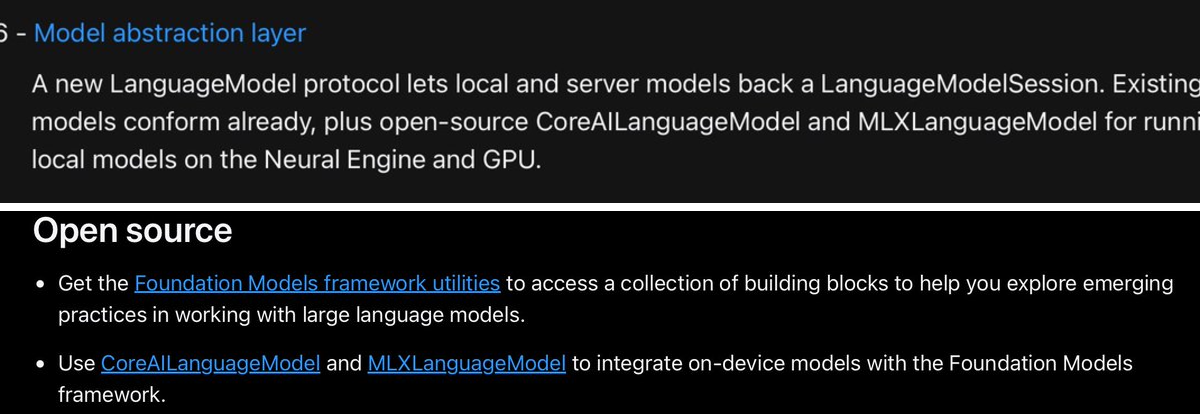
"We are releasing Open Source implementations for CoreAILanguageModel and MLXLanguageModel for running a myriad of local models on the Apple Neural Engine or your Mac's GPU" 👀 From #WWDC26: What’s new in the Foundation Models framework video: https://t.co/1NtKWYhNRs pic.twitter.com/HVtBsr3tjL— Ivan Fioravanti ᯅ (@ivanfioravanti) June 9, 2026
Local and Distributed Large LLM Inference with MLX and RDMA on Mac Studio
MLX on Mac with Apple silicon lets AI researchers and developers experiment locally with the latest models and methods in a private…

LLM in a flash: Efficient Large Language Model Inference with Limited Memory
Large language models (LLMs) are central to modern natural language processing, delivering exceptional performance in various tasks. However, their substantial computational and memory requirements present challenges, especially for devices with limited DRAM capacity. This paper tackles the challenge of efficiently running LLMs that exceed the available DRAM capacity by storing the model parameters in flash memory, but bringing them on demand to DRAM. Our method involves constructing an inference cost model that takes into account the characteristics of flash memory, guiding us to optimize in two critical areas: reducing the volume of data transferred from flash and reading data in larger, more contiguous chunks. Within this hardware-informed framework, we introduce two principal techniques. First, "windowing" strategically reduces data transfer by reusing previously activated neurons, and second, "row-column bundling", tailored to the sequential data access strengths of flash memory, increases the size of data chunks read from flash memory. These methods collectively enable running models up to twice the size of the available DRAM, with a 4-5x and 20-25x increase in inference speed compared to naive loading approaches in CPU and GPU, respectively. Our integration of sparsity awareness, context-adaptive loading, and a hardware-oriented design paves the way for effective inference of LLMs on devices with limited memory.

ModelScope on Twitter / X
🤯 400 Token/S on a MacBook? Yes, you read that right!Shaohong Chen just fine-tuned the Qwen3-0.6B LLM in under 2 minutes using Apple's MLX framework. This is how you turn your MacBook into a serious LLM development rig. A step-by-step guide and performance metrics inside! 🧵… pic.twitter.com/31Cmycy8Mh— ModelScope (@ModelScope2022) October 13, 2025
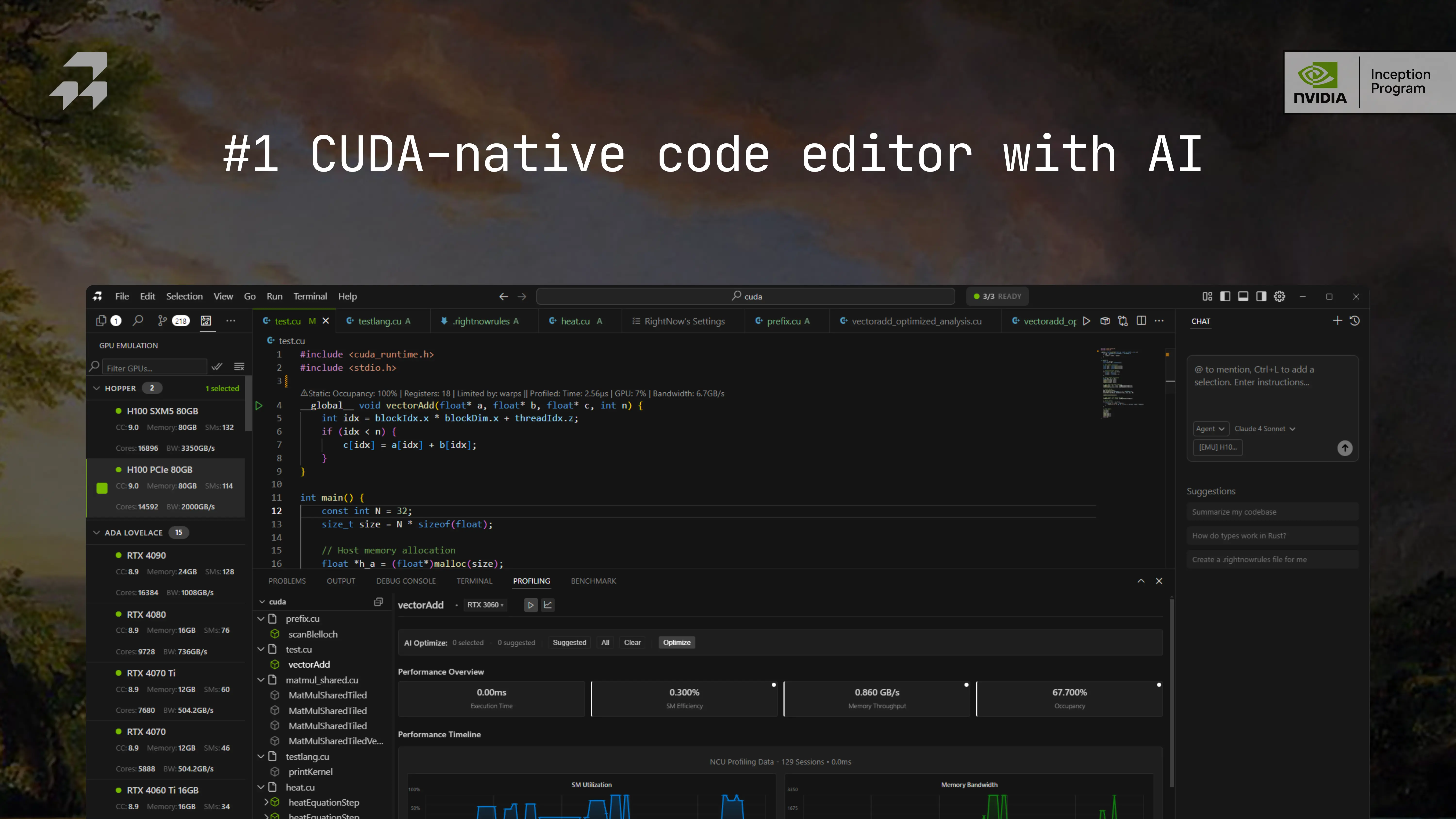
RightNow AI - YC-Backed GPU Research Lab
YC-backed GPU research lab building the RightNow CUDA editor, RunInfra inference infra, Forge kernels, and publishing AutoMegaKernel and related papers on arXiv.
H100 PCIe vs SXM vs NVL: Which H100 GPU Is Fastest and Most Cost-Effective for Fine-Tuning LLMs?
Benchmarking all three H100 variants for full, LoRA, and QLoRA fine-tuning

Mesh LLM: distributed AI computing on iroh
How Mesh LLM pools existing GPU resources across machines into a single OpenAI-compatible API, built on iroh.