

Standard Operating Procedures for Don Green's Lab at Columbia
Dispatch
An occasional update on the lab’s latest findings, appearances, and happenings.

Learnings from a week in the wet lab — LessWrong
I work on biosafety evals for LLMs, but have never set foot in a wet lab. This seems kind of silly, so this week I decided to change that. …

PRISM: Capturing the Invisible Art of Scientific Practice
A New Tool for Recording and Scaling Laboratory Expertise

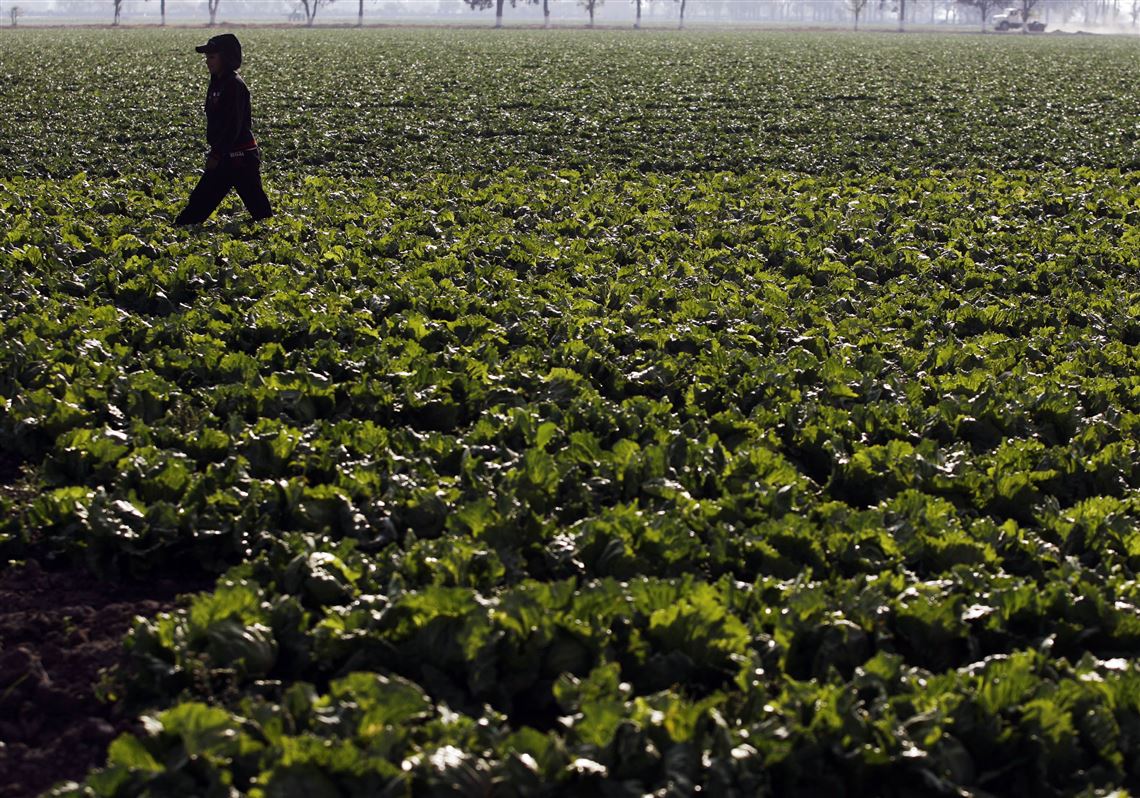
FDA retracts test result but still links Taylor Farms lettuce to cyclosporiasis
The Food and Drug Administration said Sunday that a laboratory finding showing cyclospora contamination in a sample of shredded iceberg lettuce supplied...
kandake.africa/atmosphereinabox
All in one local private environment for operating PLC, PDS, and whatever you need for ATprotocol development
kandake.africa/atmosphereinabox
All in one local private environment for operating PLC, PDS, and whatever you need for ATprotocol development
kandake.africa/atmosphereinabox
All in one local private environment for operating PLC, PDS, and whatever you need for ATprotocol development
Elphinstone Farm (and regenerative solarpunk lab)
An aspiring small-scale agritech solarpunk venture on the Sunshine Coast, BC — building syntropic agroforestry labs, a native plant nursery, and a collaborative workspace.

adammaj on Twitter / X
from the outside, it is very reasonable to interpret the past 2 weeks as an orchestrated industry-wide regulatory capture strategy.I realize that no one has properly explained yet what all the lab employees have seen that scared them so suddenly.I will try to explain -…— adammaj (@MajmudarAdam) September 12, 2026
Edison Scientific Assembles Millennium Problems for Biology | Samuel G. Rodriques posted on the topic | LinkedIn
In light of the progress in mathematics, we at Edison Scientific and FutureHouse have assembled a set of Millennium Problems for Biology. They are chosen to be very hard to solve but very easy to validate in a simple laboratory environment. Any of these, if solved, would mark a major advance in biotechnology, and most of them would contribute materially towards curing disease. These are, in some sense, the “last reasonable eval” for AI in biology. This was work primarily by Michaela Hinks and myself, with contributions from many others. Short descriptions below. The full descriptions of the problems with acceptance criteria are at millenniumproblems.bio. Share more if you have ideas. If they meet our criteria, we’ll add them to our list (with attribution and permission). A few notes on exclusion/inclusion criteria: -We placed a major emphasis on ease of validation, so challenges like “solve aging” are omitted. These should all be validatable in a standard wet lab in a short period of time (days, maybe a week or two.) -We placed a major emphasis on ensuring grading would be as objective as possible, so many great basic science mysteries are also omitted, because it would be very challenging to tell when the mystery was “solved.” (E.g., “uncover the function of the Vault protein,” or “explain how the Oxytricha genome works.”) -We placed a major emphasis on ensuring the problems would be understandable to anyone with a basic biology background, so some highly technical but very important challenges were also omitted. Finally, we anticipate that some problems may require edits in response to community feedback. If you think we got them wrong, please send the feedback, and we will collate and update. Thanks to Adam Marblestone, Michael Baym, Erika DeBenedictis, and Tony Kulesa for reviews. | 52 comments on LinkedIn

So I'm going to miss @atproto.nyc community day but I've been playing with a new testing tool that I'd love you all to check-out tangled.org/chris.pardy.family/vivarium Vivarium is an Atmosphere in a box. Literally PDS+Relay+PLC+Microcosm+Auto complete all in one executable. Still very experimental.

chris.pardy.family/vivarium
tangled.org