

A tiny (118 bytes), secure, URL-friendly, unique string ID generator for JavaScript
Port amazing nope-id optimizations by ai · Pull Request #602 · ai/nanoid
A tiny (118 bytes), secure, URL-friendly, unique string ID generator for JavaScript - Port amazing nope-id optimizations by ai · Pull Request #602 · ai/nanoid
Random Hash Generator - BenNadel.com
The following hashes are generated from 300-bytes of random input using the "sha1prng" algorithm.
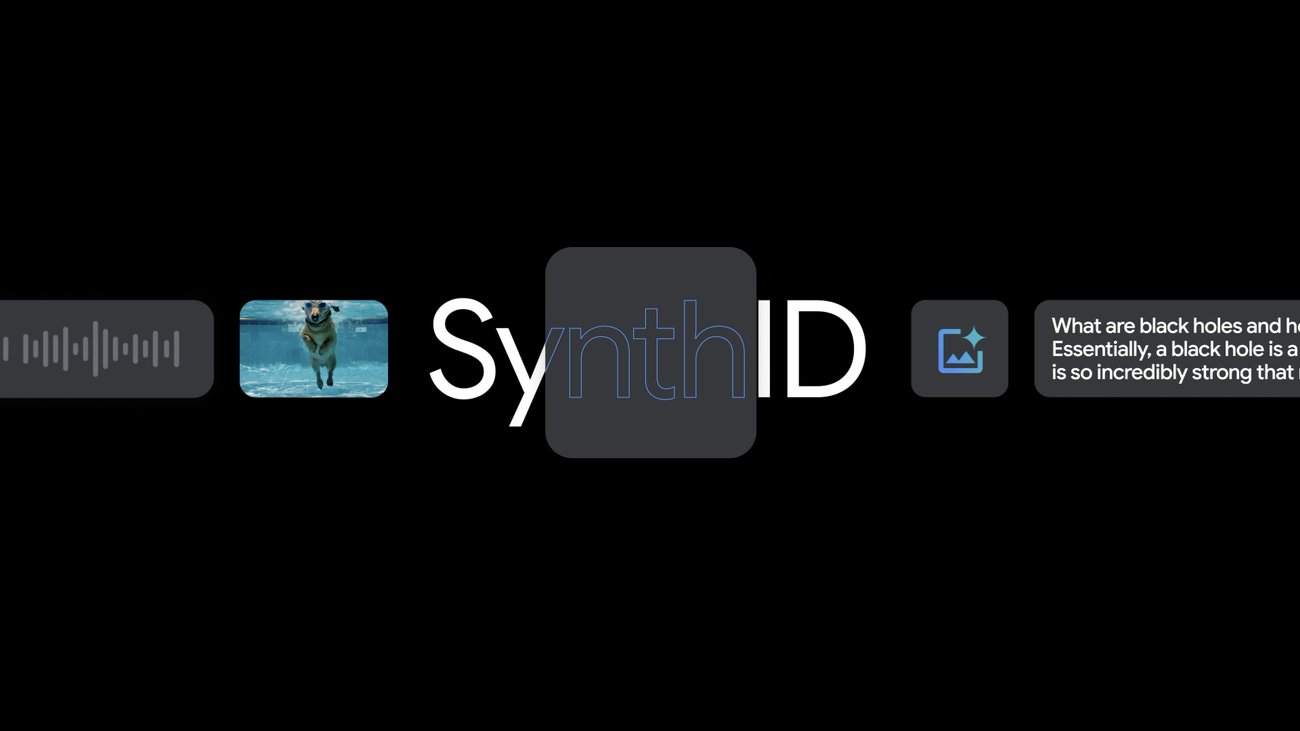
Identifying AI-generated images with SynthID
Today, in partnership with Google Cloud, we’re beta launching SynthID, a new tool for watermarking and identifying AI-generated images. It’s being released to a limited number of Vertex AI customers using Imagen, one of our latest text-to-image models that uses input text to create photorealistic images. This technology embeds a digital watermark directly into the pixels of an image, making it imperceptible to the human eye, but detectable for identification. While generative AI can unlock huge creative potential, it also presents new risks, like creators spreading false information — both intentionally or unintentionally. Being able to identify AI-generated content is critical to empowering people with knowledge of when they’re interacting with generated media, and for helping prevent the spread of misinformation.

BrowserOS - Open-Source AI Browser
The open-source browser with AI superpowers. Privacy-first Chrome alternative backed by Y Combinator.

SynthID Detector — a new portal to help identify AI-generated content
Learn about the new SynthID Detector portal we announced at I/O to help people understand how the content they see online was generated.
chrome.identity | API | Chrome for Developers
A unique identifier for the account. This ID will not change for the lifetime of the account.
chrome.identity | API | Chrome for Developers
A unique identifier for the account. This ID will not change for the lifetime of the account.
Browser AI API for Utilizing On-Device Models · Issue #178 · WICG/proposals
Introduction The Browser AI API is a proposal for a new browser feature that makes AI models accessible directly on users' devices through the browser. By offering a simple API available on the...
hexmani.ac/atproto-migrator
ai-generated junk tool for migrating atproto identities in-browser
Browser Use - The way AI uses the internet
78,000+ GitHub stars. Trusted by Fortune 500. The #1 open-source browser automation platform.

Anubis: Web AI Firewall Utility | Anubis
Weigh the soul of incoming HTTP requests to protect your website!

Lessons from National Digital ID Systems for Privacy, Security, and Trust in the AI Age
CJ Larkin and Renée DiResta surface lessons from existing national ID schemes relevant to the evolution of digital identity in the age of AI.

README
This is a browser extension that provides “wormhole” navigation between different AT Protocol/Bluesky services inspired by Dame’s Shortcut. The extension transforms URLs and identifiers from one service to equivalent URLs on other services.

ExploitGym: Can AI Agents Turn Security Vulnerabilities into Real Attacks?
AI agents are rapidly gaining capabilities that could significantly reshape cybersecurity, making rigorous evaluation urgent. A critical capability is exploitation: turning a vulnerability, which is not yet an attack, into a concrete security impact, such as unauthorized file access or code execution. Exploitation is a particularly challenging task because it requires low-level program reasoning (e.g., about memory layout), runtime adaptation, and sustained progress over long horizons. Meanwhile, it is inherently dual-use, supporting defensive workflows while lowering the barrier for offense. Despite its importance and diagnostic value, exploitation remains under-evaluated. To address this gap, we introduce ExploitGym, a large-scale, diverse, realistic benchmark on the exploitation capabilities of AI agents. Given a program input that triggers a vulnerability, ExploitGym tasks agents with progressively extending it into a working exploit. The benchmark comprises 898 instances sourced from real-world vulnerabilities across three domains, including userspace programs, Google's V8 JavaScript engine, and the Linux kernel. We vary the security protections applied to each instance, isolating their impact on agent performance. All configurations are packaged in reproducible containerized environments. Our evaluation shows that while exploitation remains challenging, frontier models can successfully exploit a non-trivial fraction of vulnerabilities. For example, the strongest configurations are Anthropic's latest model Claude Mythos Preview and OpenAI's GPT-5.5, which produce working exploits for 157 and 120 instances, respectively. Notably, even with widely used defenses enabled, models retain non-trivial success rates. These results establish ExploitGym as an effective testbed for exploitation and highlight the growing cybersecurity risks posed by increasingly capable AI agents.
