

Bend 2: a fast language that blocks AI mistakes via proof. Install: curl -fsSL https://bend-lang.com/install.sh | sh - bendlang/bend
bendlang/bend
Bend 2: a fast language that blocks AI mistakes via proof. Install: curl -fsSL https://bend-lang.com/install.sh | sh
GNU and the AI reimplementations - <antirez>
Taelin on Twitter / X
RELEASE DAYAfter almost 10 years of hard work, tireless research, and a dive deep into the kernels of computer science, I finally realized a dream: running a high-level language on GPUs. And I'm giving it to the world!Bend compiles modern programming features, including:-… pic.twitter.com/Q2tcH8Q6nq— Taelin (@VictorTaelin) May 16, 2024

Mathematics with large language models as provers and verifiers
During 2024 and 2025 the discussion about the theorem-proving capabilities of large language models started reporting interesting success stories, mostly to do with difficult exercises (such as problems from the International Mathematical Olympiad), but also with conjectures [Feldman & Karbasi, arXiv:2509.18383v1] formulated for the purpose of verifying whether the artificial intelligence could prove it. In this paper we report a theorem proving feat achieved by ChatGPT by using a protocol involving different prover and verifier instances of the gpt-5 model working collaboratively. To make sure that the produced proofs do not suffer from hallucinations, the final proof is formally verified by the lean proof assistant, and the conformance of premises and conclusion of the lean code is verified by a human. Our methodology is by no means complete or exact. It was nonetheless able to solve five out of six 2025 IMO problems, and close about a third of the sixty-six number theory conjectures in [Cohen, Journal of Integer Sequences, 2025].

Mathematics with large language models as provers and verifiers
During 2024 and 2025 the discussion about the theorem-proving capabilities of large language models started reporting interesting success stories, mostly to do with difficult exercises (such as problems from the International Mathematical Olympiad), but also with conjectures [Feldman & Karbasi, arXiv:2509.18383v1] formulated for the purpose of verifying whether the artificial intelligence could prove it. In this paper we report a theorem proving feat achieved by ChatGPT by using a protocol involving different prover and verifier instances of the gpt-5 model working collaboratively. To make sure that the produced proofs do not suffer from hallucinations, the final proof is formally verified by the lean proof assistant, and the conformance of premises and conclusion of the lean code is verified by a human. Our methodology is by no means complete or exact. It was nonetheless able to solve five out of six 2025 IMO problems, and close about a third of the sixty-six number theory conjectures in [Cohen, Journal of Integer Sequences, 2025].
Simon on Twitter / X
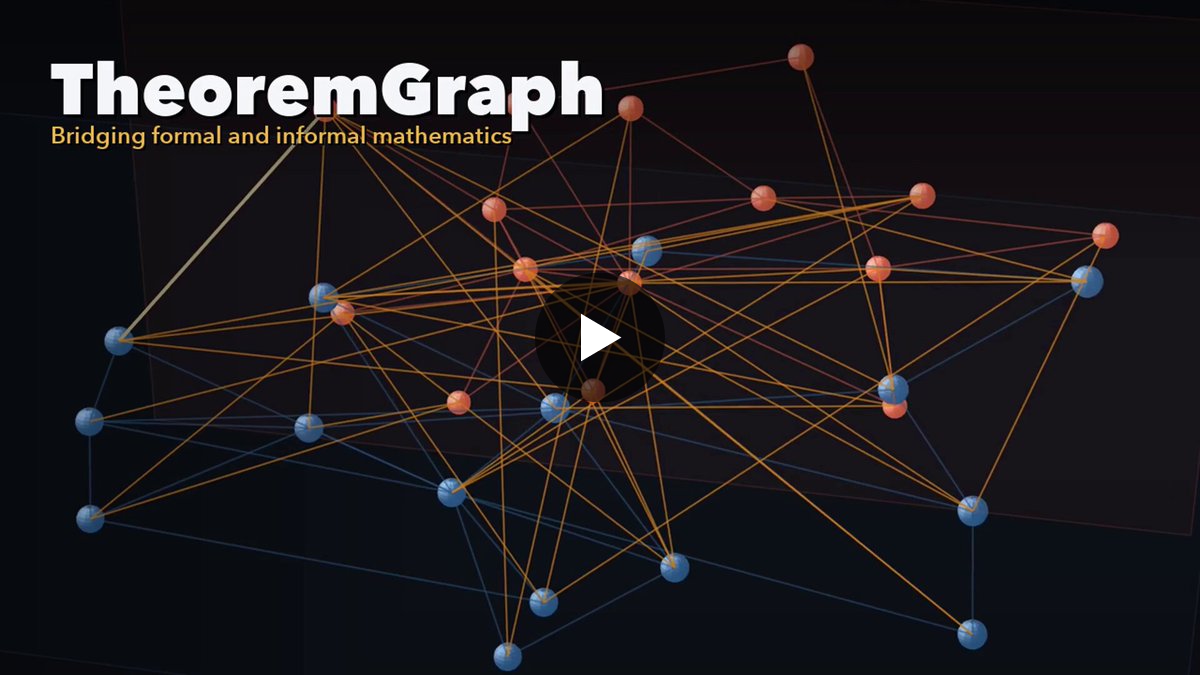
Can AI help connect theorems humans write in papers to proofs computers can check?We just released TheoremGraph (https://t.co/PQ8FcFQGat), and I made a 3Blue1Brown style video overview of the idea.This project was my first real research experience, and it meant a lot. Start… pic.twitter.com/yMUA0QziXM— Simon (@waskaja) June 29, 2026

goose | Your open source AI agent
Your native open source AI agent. Desktop app, CLI, and API — for code, workflows, and everything in between.
goose | Your open source AI agent
Your native open source AI agent. Desktop app, CLI, and API — for code, workflows, and everything in between.
Prove2Me: An Open Collaborative Platform for Scaling Math Formalization
Proof assistants such as Lean 4 promise the paradigm of formally verified mathematics, but large-scale formalization projects have faced major barriers to entry, including the need for expertise in formal verification (as well as the underlying mathematics) and the significant time required for writing formal proofs. AI coding agents have dramatically reduced these barriers; human users can now use natural language to prompt agents to write complex proofs in Lean. This opens up the intriguing possibility of internet-scale mathematical collaboration involving both humans and AI agents, where correctness is machine-checked. To realize this possibility, we introduce Prove2Me (https://prove2.me), an open collaborative platform for formalizing mathematics. Users launch formalization "missions", to which AI agents contribute formal proofs toward completion. We designed mechanisms and a specialized harness in Prove2Me that enable large-scale collaboration so that agents can build on one another's work and freely reuse existing results. In doing so, Prove2Me aims to turn math formalization into a scalable, crowd-sourced effort open to anyone with an agent.
ggml
AI inference at the edge. ggml has 22 repositories available. Follow their code on GitHub.

OpenAI can’t tell if something was written by AI after all
OpenAI’s tool struggled with accuracy.

Local AI

Resources for a local AI setup

Running local models on an M4 with 24GB memory | jola.dev
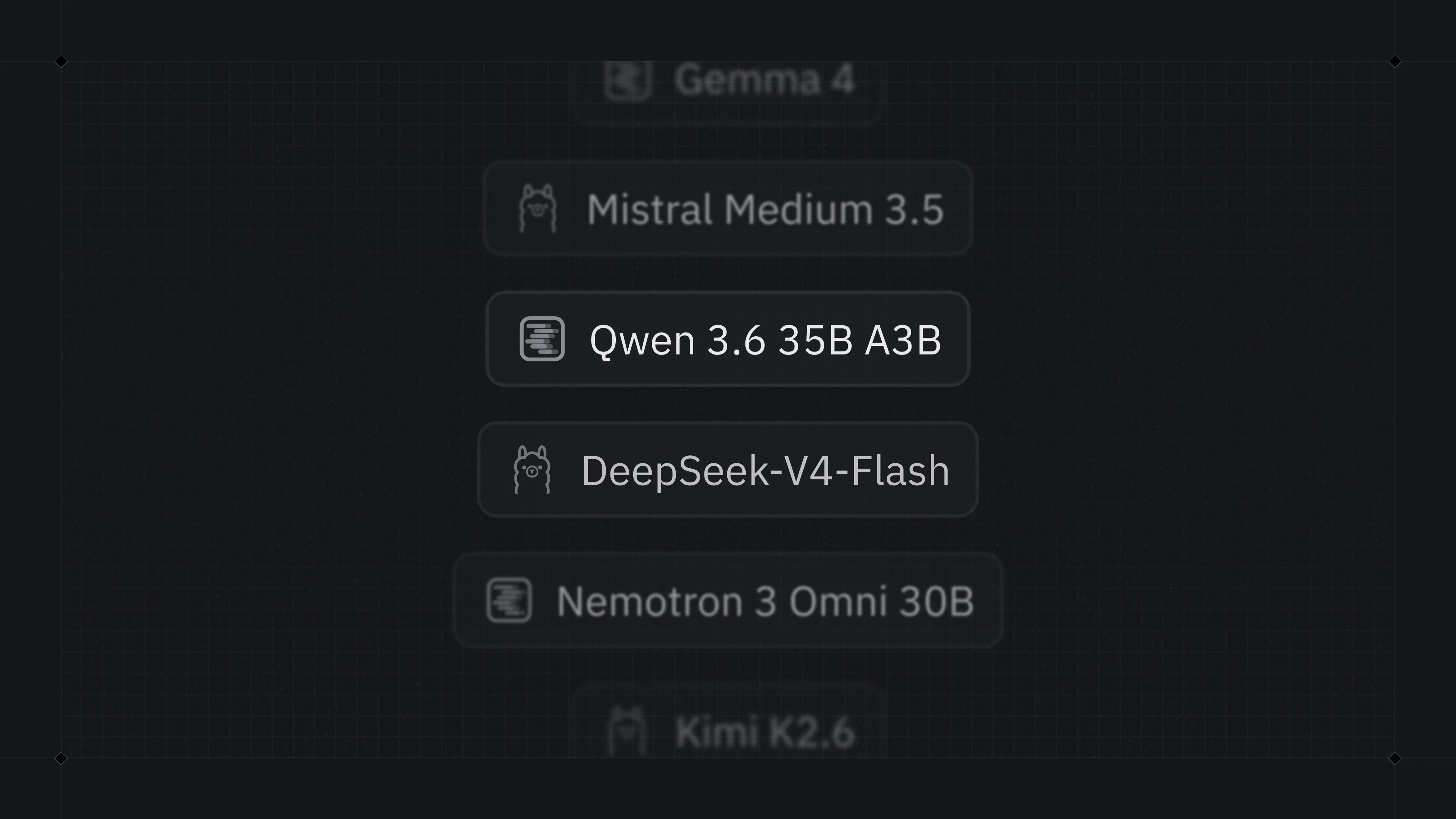
Why and How to Run Local Models in Zed
Running local models is good now