What problem does this solve or what need does it fill? A common complaint from Bevy users is the relatively high iteration time. Hotpatching is a nice solution for this, as it allows code changes ...
Bevy 0.19
Thanks to 261 contributors, 1185 pull requests, community reviewers, and our generous donors, we're happy to announce the Bevy 0.19 release on crates.…

Serpentine software
I don’t usually write hot takes. But StrongDM’s Software Factory post is worth it, so here goes. Their post is elegant, short, and well-written, so I’m going to just go through a bunch of pull quotes. Compounding correctness long-horizon agentic coding workflows [now] compound correctness rather than error This is a big, empirical claim. I’m already convinced by my own experiences that agents, suitably scaffolded, can form a Brownian ratchet, such that pouring on more compute helps, on balance.
Prompt Caching In Agents | EARENDIL
How prompt caching shapes the cost, latency, tools, and architecture of coding agents, and what Pi does to keep cache behavior visible.

Data-Oriented Design (Or Why You Might Be Shooting Yourself in The Foot With OOP)
Picture this: Toward the end of the development cycle, your game crawls, but you don’t see any obvious hotspots in the profiler. The culprit? Random memory access patterns and constant cache misses. In an attempt to improve performance, you try to parallelize parts of the code, but it takes heroic efforts, and, in the end, you barely get much of a speed-up due to all the synchronization you had to add. To top it off, the code is so complex that fixing bugs creates more problems, and the thought of adding new features is discarded right away. Sound familiar?
Saturation: How Your Software Will Fail at Scale - Lorin Hochstein | SSW 2026
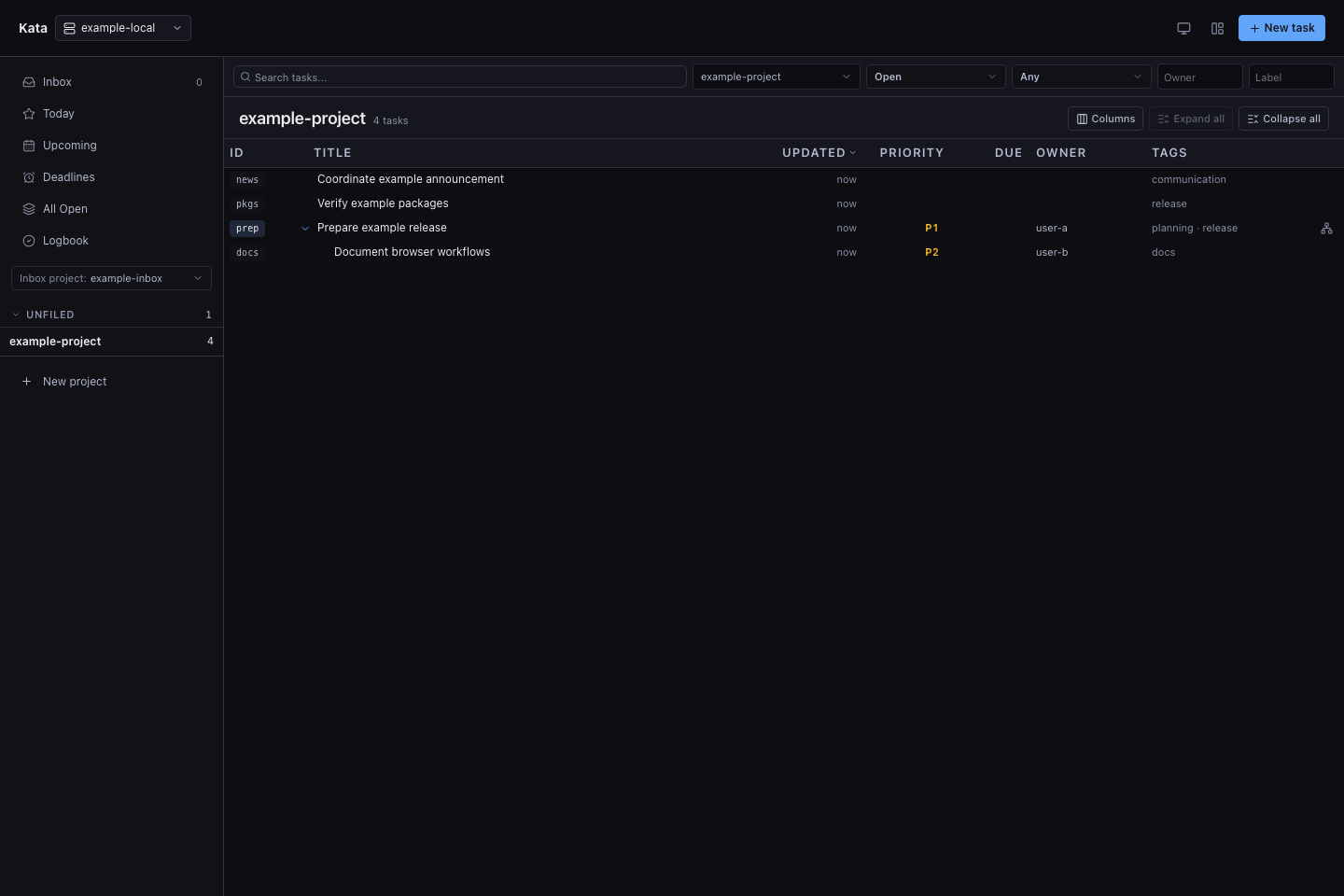
The issue tracker that runs inside the loop.
A local-first issue tracker for coding agents and the humans steering them. Queries in 4ms, on your own machine.
Bluvy — A suite of free and open applications for the AT Protocol ecosystem
Discover Bluvy, an ecosystem of modern, private, and open-source applications built around the AT Protocol (Bluvy Messenger, Bluvy Dex, Bluvy Tube).

Brandon on Twitter / X
Wasn't fast enough, needed to use shared array buffer, web workers, and better GPU upload batching pic.twitter.com/o6BfVetKY1— Brandon (@brandon_xyzw) March 26, 2025

Fragile narrow laggy asynchronous mismatched pipes kill productivity - Tristan Hume
Something I’ve been thinking about recently is how when I’ve worked on any kind of distributed system, including systems as simple as a web app with frontend and backend code, probably upwards of 80% of my time is spent on things I wouldn’t need to do if it weren’t distributed. I came up with the following description of why I think this kind of programming requires so much effort: Everything is fragile narrow laggy asynchronous mismatched untrusted pipes. I think every programmer who’s worked on a networked system has encountered each of these issues, this is just my effort to coherently describe all of them in one place. I hope to prompt you to consider all the different hassles at once and think about how much harder/easier your job would be if you did/didn’t have to deal with these things. I think this is part of why web companies like Twitter seem to have so much lower impressiveness per engineer productivity than other places like game companies or SpaceX, although there’s other pieces to that puzzle. While part of the difficulty of distributed systems is inherent in physics, I think there’s lots of ideas for making each part of the problem easier, many already in common use, and I’ll try to mention lots of them. I hope that we as programmers continually develop more of these techniques and especially general implementations that simplify a problem. Like serialization libraries reducing the need for hand-written parsers/writers, I think there’s a lot of developer time out there to save by implementing generalized solutions where we currently painstakingly reimplement common patterns. I also think all these costs mean you should try really hard to avoid making your system distributed if you don’t have to.
Cloud Rats and Software Roaches (Idle Words)
We are entering an epoch where it may become easy for small pieces of self-replicating code to permanently infest Internet-connected devices in a way that is hard to undo. Such a world would be annoying to live in and we should take steps to forestall it.
Backstitch
Backstitch: A Godot plugin that enables fast collaboration for dev teams, game jams, and classrooms.
Launching QuickDID - Fast, Open Handle Resolution for the AT Protocol - Nick's Blog
QuickDID is a high-performance, open source handle resolution service for the ATmosphere that serves as both public infrastructure at https://quickdid.smokesignal.tools and deployable software under MIT license. It offers flexible caching strategies (memory/Redis/SQLite), scales from single-instance to distributed deployments, and includes production features like rate limiting and proactive cache refresh. Currently a release candidate, it provides a drop-in alternative to Bluesky's resolver while giving developers full control over their handle resolution infrastructure.
Making tools for game developers — Codecks
Rather than use a tool that assumes order and fails when faced with the reality of game development, we're building a tool that assumes chaos and, in spite of that, reduces the stress that comes with it.

Pi, Minimal and Performant | EARENDIL
How Pi's minimal harness improves coding-agent cost and performance, with examples from Databricks and Shopify's pi-autoresearch extension.