

Claude Code skill that removes signs of AI-generated writing from text
How Claude's text watermarking works
Future Claude models will generate text that contains a watermark. This is a way of determining the likelihood that Claude was involved in writing the text, and we, along with several other major AI providers, are implementing this change to comply with the EU AI Act. In this article, we share answers to some of the questions we’ve received about how our chosen watermarking method works, whether it affects Claude’s outputs, and why we’re making this change.
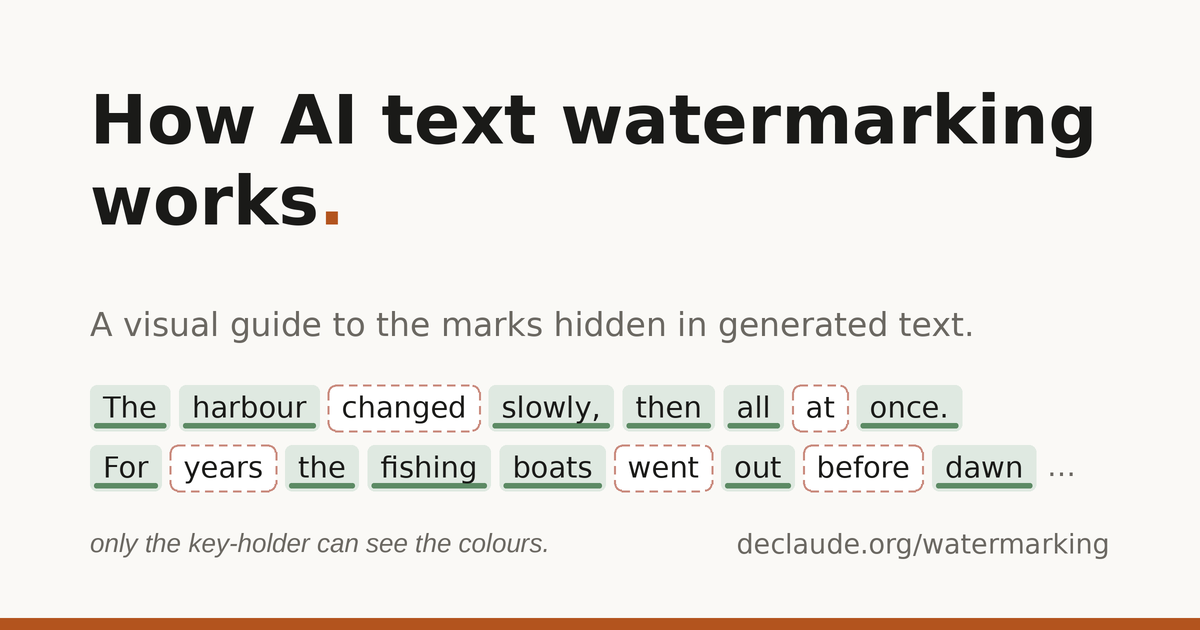
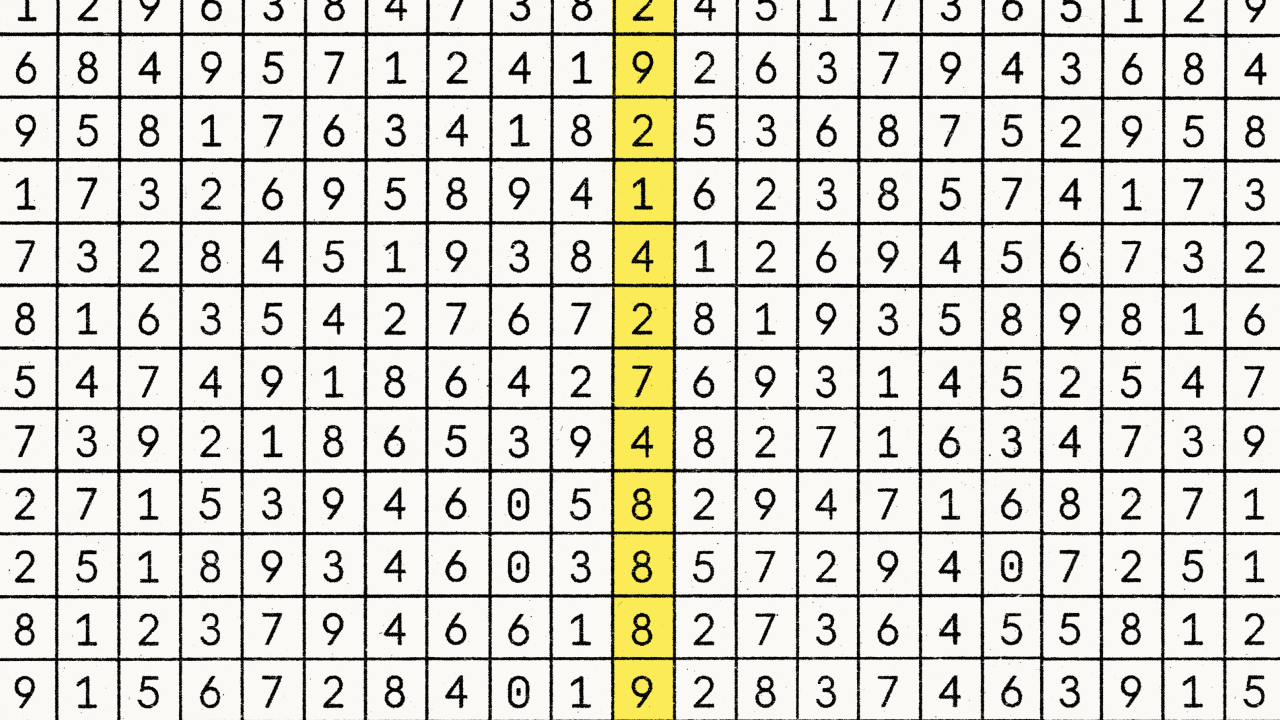
How AI text watermarking works
A gentle visual guide to how a statistical mark hides inside generated text, and what erases it.
The Consent Layer: Using ligatures to make web text expensive to scrape without asking
ShieldFont is an open-source creative technology project that offers a practical opt-out from unauthorized AI training and disrupts what is collected when that choice is ignored. It swaps 45.8% of content words (around 24.4% of all words) in a page's source code for other (partially) random words, while the font restores the original text on screen. Readers see the work as intended; mass scrapers collect an altered version. In testing, shielding caused over 90% of pages that would otherwise pass the quality filter to be rejected, keeping them out of the training pipeline. Of those that still passed, 19.4% of all words conveyed false meaning, adding noise to unauthorized AI training datasets. This paper's goal is to walk newcomers through the whole process, in plain language and in order: the project's rationale, how it was built, the results, how to deploy it, and where to contribute.
DrCatHicks/learning-opportunities
A Claude or Codex skill for deliberate skill development during AI-assisted coding
How Claude marks AI-generated content | Claude Help Center
Anthropic has signed the EU AI Act's Article 50(2) Code of Practice on Transparency of AI-Generated Content, as a provider of both generative AI models and generative AI systems. This article describes how we’re planning to put those commitments into practice, how marking works, and what its limitations are. We’ll update this article and publish more detailed technical guidance as it becomes available.

In defense of not reading the code | Ben Shoemaker
Last week, I wrote an article whose purpose was to discuss where I saw AI-assisted coding going. That's not what generated 200 comments worth of passionate...
How easy is it to spot AI writing?
With AI writing becoming increasingly commonplace, how can we spot it and what difference does it make?

The artificial intelligence disclosure penalty: Humans persistently devalue AI-generated creative writing.
There are no lossless transformations of natural-language text
In my work at Clay I recently wrote an internal policy on acceptable use of AI writing by engineers, and I’m sharing it here. It’s my hope that one day better AI tools might be able to help us think, but until then I fear that using AI to write does the exact opposite.
AI-text detection tools are really easy to fool
A recent crop of AI systems claiming to detect AI-generated text perform poorly—and it doesn’t take much to get past them.

Who cleans up after the vibe-coding party?
Our obsession with AI code-writing tools is overwhelming the web’s unsung human caretakers

Writing With and Beyond AI: Fieldnotes from Computer-Mediated Poetry
Apr 10, 2026, 12:15 pm - Large language models can make writing mind-numbingly efficient — but the point of writing with AI should be to write what we couldn’t have written alone (without generating bland, derivative “slop”).

