

An open source constitution for responsive organizations. Inspired by Sociocracy, Holacracy, Self-Management, Reinventing Organizations, etc.

An Introduction to Self-Organization - Interaction Institute for Social Change
“The ideas of self-organization are very important to understand the autonomy, the authenticity and basic humanity of people.” -Fritjof Capra One principle of “thinking like a network” that I like to highlight is the notion of moving from permission and perfection (looking for the one right answer) to self-organization and emergence. Self-organization is a defining... Read More

Self-organizing systems: what, how, and why?
I present a personal account of self-organizing systems, framing relevant questions to better understand self-organization, information, complexity, and emergence. With this aim, I start with a notion and examples of self-organizing systems (what?), continue with their properties and related concepts (how?), and close with applications (why?) in physics, chemistry, biology, collective behavior, ecology, communication networks, robotics, artificial intelligence, linguistics, social science, urbanism, philosophy, and engineering.
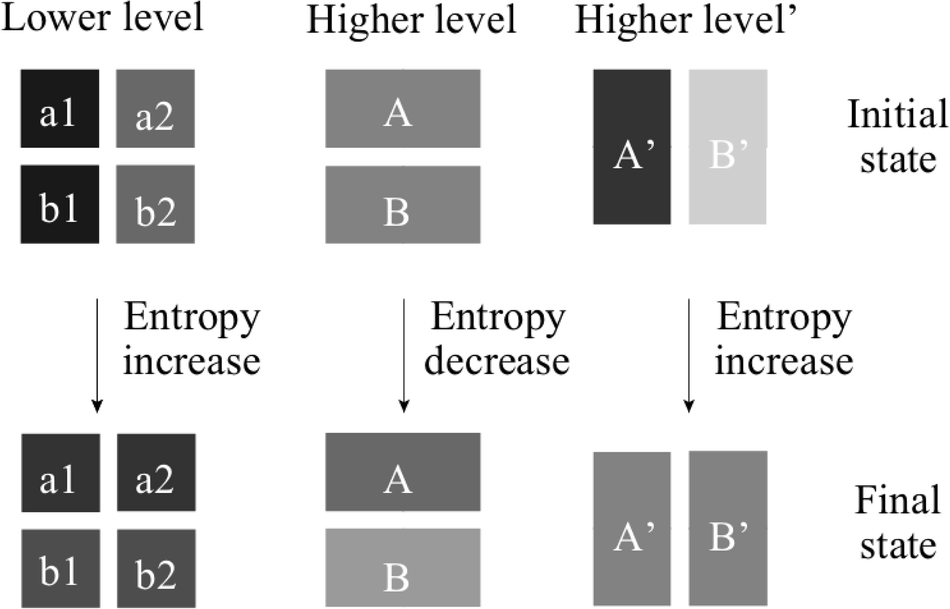
Self-Organization is Self-Management | New Technology Solutions
This means the reverse is true: “self management is self organization.”
Designing a Constitution for a Community (Camille Canon) : Metagovernance Seminar
This is a talk exploring Apiary's work on the purpose/constitutional design of Radicle. We have been supporting the founders and community in drafting a...

Decentralization: Worth The Wait — Open Tech Strategies | Blog
Ethan Zuckerman has a piece in Wired that says building decentralization tools is a sucker's bet. He and his coauthors, Chelsea Barabas and Neha Narula, mention the FreedomBox, which I helped lead, as an example of how difficult this stuff is. They point to a list of things that make decentralized efforts prone to failure and conclude:
Self-host an Organization | Bitwarden
This article will walk you through starting an organization on your self-hosted server.

Constitutional agents for online governance – Writings and rehearsals by Nathan Schneider
In this reflection, I want to share an about-face I’ve been having in the strategy for defeating “implicit feudalism” with “governable stacks.” Both of these concepts are described in depth in my book Governable Spaces. Implicit feudalism is the widespread tolerance of highly centralized, low-accountability forms of governance in online communities, from big platforms to little group chats. Governable stacks are efforts to build socio-technical systems that can be co-governed by their participants in diverse and accountable ways.

How’s That Open Source Governance Working for You? | HackerNoon
Isn’t it weird that the radically democratic miracle of open-source collaboration is so full of monarchical dictatorships?

Decentralisation as a shifting mental framework
Programming note: every week I send out an email newsletter. It contains all the articles I published that week, as well as an additional essay that has been not been published elsewhere yet. This is a republication of last week’s essay I send out. If you’re interested, subscribe below to get all the updates directly […]

Identosphere 80 • Bluesky's Self-Authenticating Social Protocol • Ceramic's capability-based data security • Affinidi's Decentralised Identity Landscape
A weekly publication following the leading news in decentralized identity standardization, governance, education and development.

Decentralized Systems Aren't
Below the fold is the text of a talk I gave to Berkeley's Information Systems Seminar exploring the history of attempts to build decentrali...

LaSuite.coop
La boite à outils libres, open source et modulable pour les organisations collaboratives !
a practical guide to decentralization (for my friends) - tim's tinkerings
Organizing

Governance, collaboration, how to work together without being awful.
Conflict Systems
Spaces as Layers - Nick's Blog
web.archive.org
Axioms for Organizers by Fred Ross, Sr. | Fred Ross, Sr.
The Tyranny of Stuctureless
cdn.fastly.steamstatic.com