

First requirement for an issuer is that we have consistent URLs for our assertions. badges.codeforboston.(org|com) seems like a sensible place for something, though it's not clear if that's...
Badges/Onboarding-Issuer - MozillaWiki
If you or your organization has the technical resources, you can host Mozilla BadgeKit on your servers by downloading the code from Github - a tutorial for this process can be found here.
BadgeKit: The Why || Erin Knight
Just back from MozFest, where we announced BadgeKit, an Open Badges tool stack that will support the key pieces of the badging experience. This includes defining/designing, assessing, issuing, collecting/managing, sharing and using. BadgeKit will consist of open, lightweight tools that can snap together or be used alongside or within other sites or systems. Sunny and Jess both respectively wrote about it in more detail, but I wanted to dig into the “why”.


BadgeKit is coming!
This past summer, the Open Badges team had the great opportunity of introducing digital badges at a citywide scale through the Chicago Summer of Learning (CSOL). We worked in collaboration with the city and on the ground organizations like Hive Chicago and Digital Youth Network with the support of the MacArthur foundation to reach out to more than 100 Chicago-based organizations to create an end-to-end badging system.As mentioned in my previous blogpost, to support this initiative, we created a set of tools and services to help the 100+ Chicago based organizations to design, define, assess, and issue badges and for participating learners to collect, manage, share and discover badges. Following a successful summer of learning, we’ve been getting increased interest from other cities and organizations who would like to replicate the badging model initiated in Chicago. We’re thrilled about this interest and would like to facilitate the adoption of other CSOL like initiatives in a scalable way. This would entail us going back to the tools and services we built for CSOL and for the ecosystem, modularizing them, and making them readily implementable for organizations in a light-weight, open-source way. The idea is to make it as simple as possible for organizations to pick up the specific tool they need for their badge system development and implement it into their environments. Time and time again, we’ve heard that the barrier to entry is still too high. We want to lower that barrier. With that in mind, we started writing down the requirements and goals for what this collection of tools might be. The key verbs that we kept using over and over again when trying to get crisp about this tool collection were as follows:
I ♥ RSS
A directory for people who love RSS. Add the badge, submit your site, get listed in a public OPML subscription list.

A New Form of Verification on Bluesky - Bluesky
We’re introducing a new layer of verification — a user-friendly, easily recognizable badge. Additionally, independent organizations can verify accounts directly through our Trusted Verifiers feature.

The Participatory Design Culture and Terms of Badges
As we all know, t he Badges project seeks to provide users with a mechanism to shape their online identities: showcasing the skills that ...
badges.community
Open Recognition is for Everybody! A place for people interested in Open Badges and Verifiable Credentials to come together in a Community of Practice.
What Are Open Badges 3.0? A Simple Guide | Certifier
Learn what Open Badges 3.0 is, how it works, what’s new in this version and how Certifier helps you issue standard-compliant credentials.
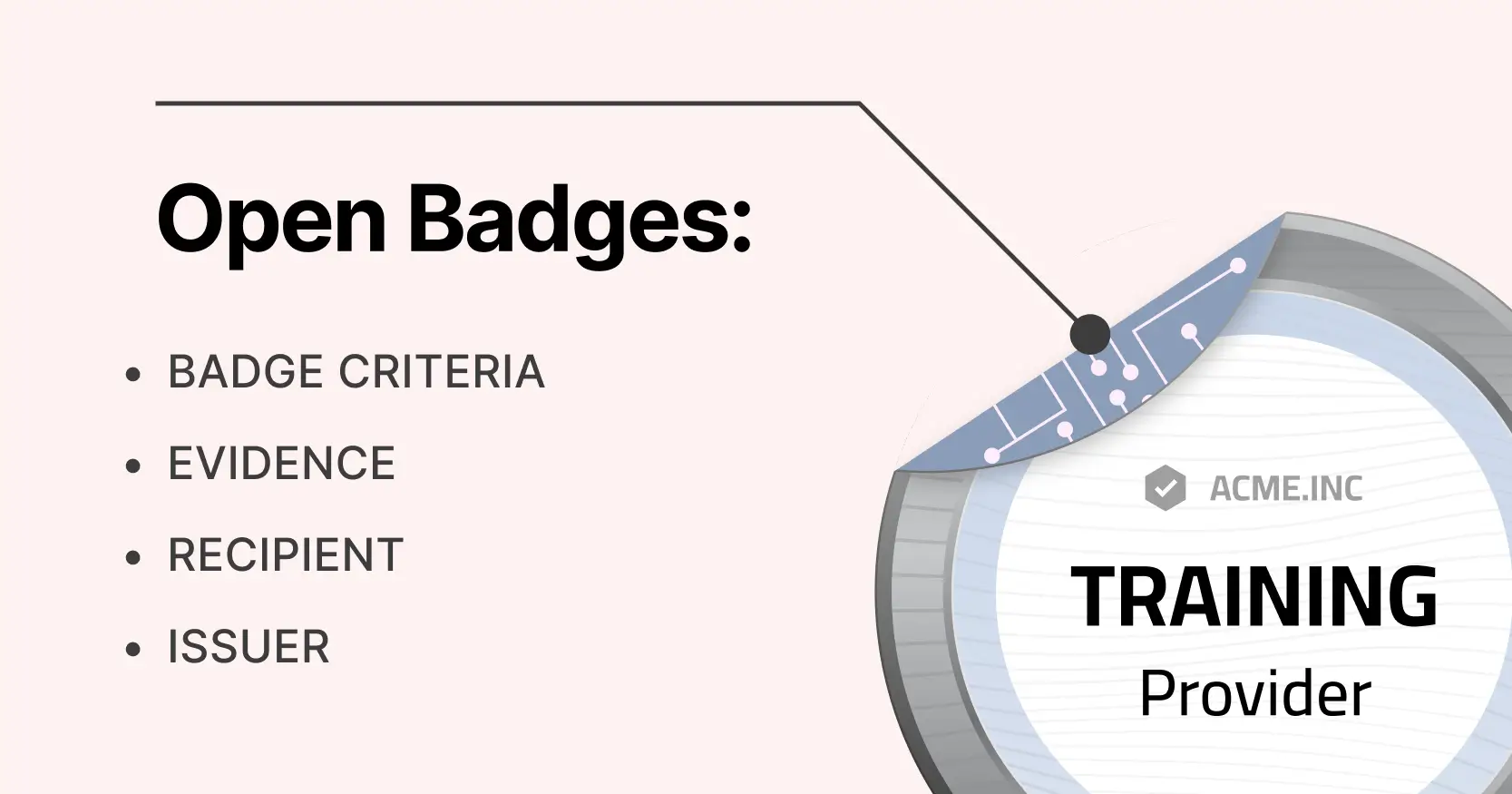
Incentivize API Developers With A Mozilla Open Badge Program
Last week Mozilla launched their new Open Badges platform, as an open standard to recognize and verify learning. I immediately started thinking about how it ...

Badge System Design for Communities
During the P2Pu community call it was suggested I tie the badge system design rubric more closely to communities (within which the badge ha...

