

A Programming Paradigm for Spatiotemporal Composability
paper/paper.pdf at main · cordiverse/paper
A Programming Paradigm for Spatiotemporal Composability - cordiverse/paper

The Glimmer — thefugue.space
A brief history of my attempts to bring Spatial Computing to the wider audience..

Real-time Motion Retargeting to Highly Varied User-Created Morphologies - Chris Hecker's Website
Chris Hecker[1] Bernd Raabe[2] Ryan W. Enslow[3]John DeWeese[4] Jordan Maynard[5] Kees van Prooijen[6]
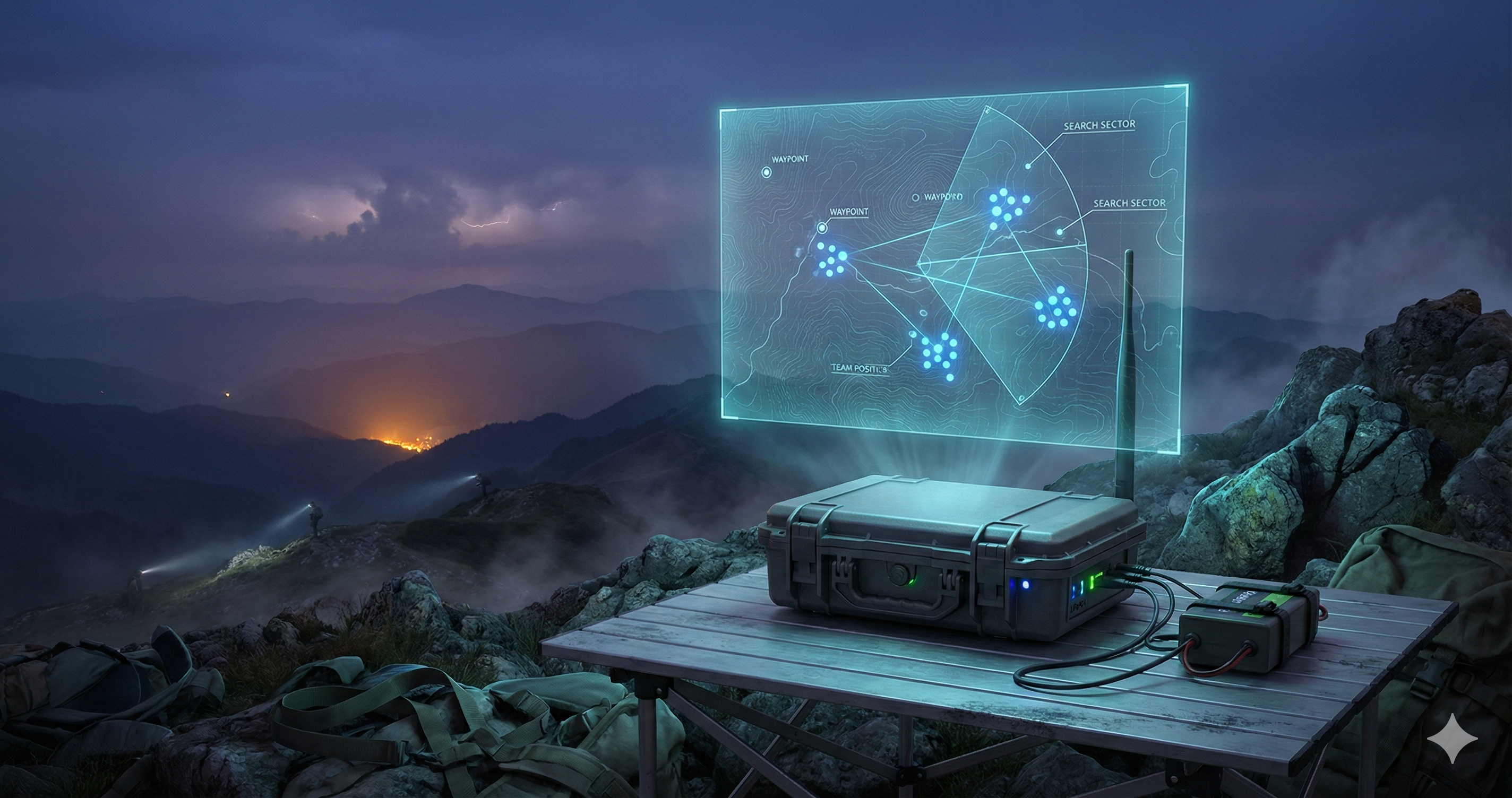
GroundWave — Situational Awareness, Anywhere
Open-source, offline-first platform for real-time mapping, position tracking, and team coordination. Runs on portable hardware. No cloud required.
Live code with Tidal Cycles | Tidal Cycles
Live coding environment for making algorithmic patterns
I Built a Device to Never Miss the Subway
ChangeBridge: Spatiotemporal Image Generation with Multimodal Controls for Remote Sensing
Spatiotemporal image generation is a highly meaningful task, which can generate future scenes conditioned on given observations. However, existing change generation methods can only handle event-driven changes (e.g., new buildings) and fail to model cross-temporal variations (e.g., seasonal shifts). In this work, we propose ChangeBridge, a conditional spatiotemporal image generation model for remote sensing. Given pre-event images and multimodal event controls, ChangeBridge generates post-event scenes that are both spatially and temporally coherent. The core idea is a drift-asynchronous diffusion bridge. Specifically, it consists of three main modules: a) Composed Bridge Initialization, which replaces noise initialization. It starts the diffusion from a composed pre-event state, modeling a diffusion bridge process. b) Asynchronous Drift Diffusion, which uses a pixel-wise drift map, assigning different drift magnitudes to event and temporal evolution. This enables differentiated generation during the pre-to-post transition. c) Drift-Aware Denoising, which embeds the drift map into the denoising network, guiding drift-aware reconstruction. Experiments show that ChangeBridge can generate better cross-spatiotemporal aligned scenarios compared to state-of-the-art methods. Additionally, ChangeBridge shows great potential for land-use planning and as a data generation engine for a series of change detection tasks. Code is available at https://github.com/zhenghuizhao/ChangeBridge
inFORM: dynamic physical affordances and constraints through shape and object actuation
We propose a new approach to Physical Telepresence, based on shared workspaces with the ability to capture and remotely render the shapes of people and objects. In this paper, we describe the concept of shape transmission, and propose interaction ...

Airglow | Automations for the AT Protocol
Automations for the AT Protocol. Subscribe to Jetstream events, match a lexicon, and send a webhook, create a record, or post to Bluesky.
<i>Webstrates</i>: Shareable Dynamic Media
Shareable Dynamic Media is our vision for an interactive computing environment that blurs the distinction between documents and applications, characterized by three key properties: malleability, so that users can appropriate and repurpose media in ...

My Agentic Coding Setup, July 2026
With the right tools, coding agents can run autonomously, in parallel, and be reachable from anywhere. Here's how I've stitched them together.
Exploring interoperability & composability for local-first software | grjte
Check out the project at https://github.com/grjte/groundmist-syncCross-posted to https://baincapitalcrypto.com/atproto-for-local-first-interoperability/ This is the third exploration connecting local-first software with the AT Protocol (atproto). Previously, I explored how atproto can enable new fu...

Tiles: Own your AI with local models and open protocols
Tiles: Own your AI with local models and open protocols is a Lightning Talk proposal for PuneFOSS 4.0. As AI becomes central to how we work and communicate, I believe we’re seeing a new form of technological feudalism, where a handful of platforms [...]
Radial (@radl.app)
Collaborative coding-agent orchestrator for the Atmosphere by @disnetdev.com - https://radl.app - https://tangled.org/disnetdev.com/radial

Low-code programming for event-driven applications : Node-RED
Node-RED's goal is to enable anyone to build applications that collect, transform and visualize their data; building flows that can automate their world. Its low-code nature makes it accessible to users of any background, whether for home automation, industrial control systems or anything in between.