

Awesome Object Capabilities and Capability Security
Capability Trees: A Protocol-Level Extension of Object Capabilities, Draft 2
This draft addresses questions and feedback from the ATProto community, in particular from Zicklag (@zicklag.dev) and Brooklyn Zelenka (@expede.wtf). Draft 1 remains available for transparency.
Capability Trees: A Protocol-Level Extension of Object Capabilities, Draft 4
This draft incorporates feedback from Brooklyn Zelenka (@expede.wtf) and Daniel Holmgren (@dholms.at), and developments in the ATProto Private Data Working Group. Previous drafts remain available for transparency.
Capability Trees: A Protocol-Level Extension of Object Capabilities, Draft 3
This draft incorporates feedback from Brooklyn Zelenka (@expede.wtf), Daniel Holmgren (@dholms.at), and Zicklag (@zicklag.dev), and addresses questions raised in the ATProto Private Data Working Group. Draft 2 remains available for transparency.
Object-capability model
The object-capability model is a computer security model. A capability describes a transferable right to perform one (or more) operations on a given object. It can be obtained by the following combination:
Authority as Possession: Permissioned Spaces Deserve Better Than ACLs
Why Capability Trees are the right governance primitive for permissioned spaces.
Landlock: unprivileged access control — The Linux Kernel documentation
The goal of Landlock is to enable restriction of ambient rights (e.g. global filesystem or network access) for a set of processes. Because Landlock is a stackable LSM, it makes it possible to create safe security sandboxes as new security layers in addition to the existing system-wide access-controls. This kind of sandbox is expected to help mitigate the security impact of bugs or unexpected/malicious behaviors in user space applications. Landlock empowers any process, including unprivileged ones, to securely restrict themselves.
roost.tools/awesome-safety-tools
Mirror of https://github.com/roostorg/awesome-safety-tools
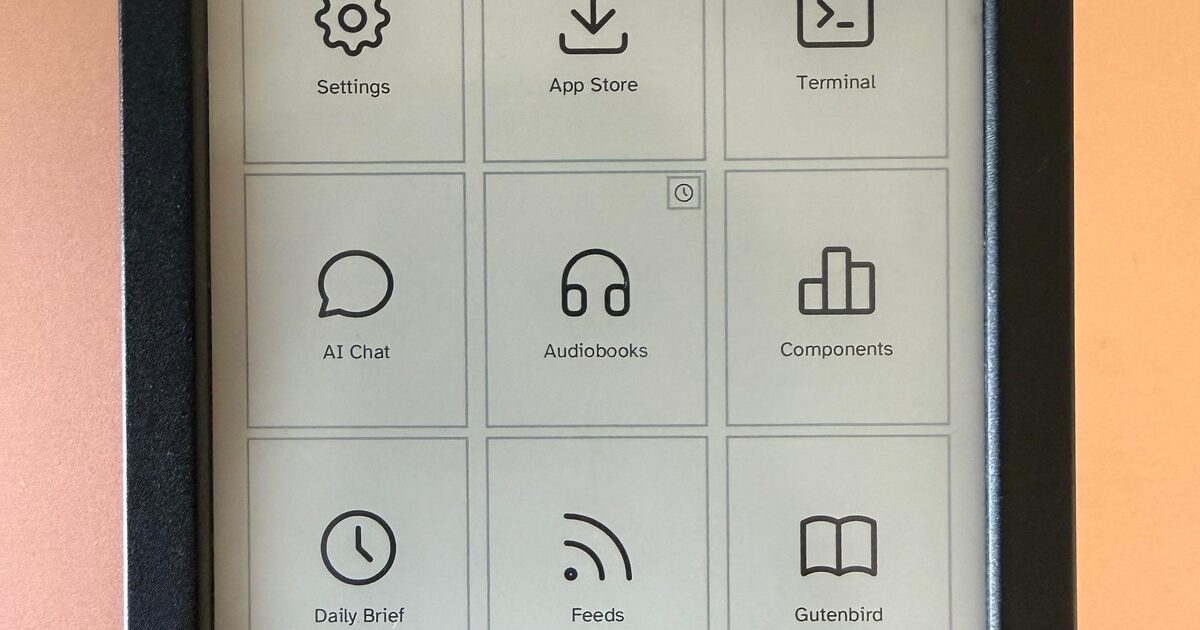
Cobalt: apps and an SDK for Kobo e-readers
A launcher, a signed App Store, a Rust SDK, and a capability-isolated runtime for the Kobo Clara BW.
Composing capability security and conflict-free replicated data types — Spritely Institute
In August, I attended the DWeb Seminar where a small group of builders gathered to discuss the state-of-the-art and open problems in the distributed web space. Some in the group are primarily concerned with distributed data and focus on sync algorithms and local-first use cases. I am mainly concerned with distributed behavior and focus on the object capability security model. Both areas of study are steeped in their own lore and research papers, which makes it difficult for the two camps to communicate effectively with each other.
ROOST (Mirror) / awesome-safety-tools · GitLab
Mirror of https://github.com/roostorg/awesome-safety-tools

FOSDEM 2025 - Goblins: The framework for your next project!
Building peer-to-peer decentralised applications remains difficult and error-prone. Most attempts at this either abandon collaborative features entirely or fall back on centralised architectures. The Spritely Institute is working on this challenge by creating (among other things) Goblins, a Guile framework that makes secure, fault-tolerant peer-to-peer applications accessible to developers. These tools are especially valuable for developers building secure collaborative applications that aim to foster healthy online communities. This talk walks you through Goblins’ most powerful features, including the actor model, object capability security, networking, time travel debugging, and persistence.

Capability Trees: Sovereignty Is the Point
This piece argues that DASL introduces security risk when applied to delegations, and that by not using DASL, capability trees avoid that risk.
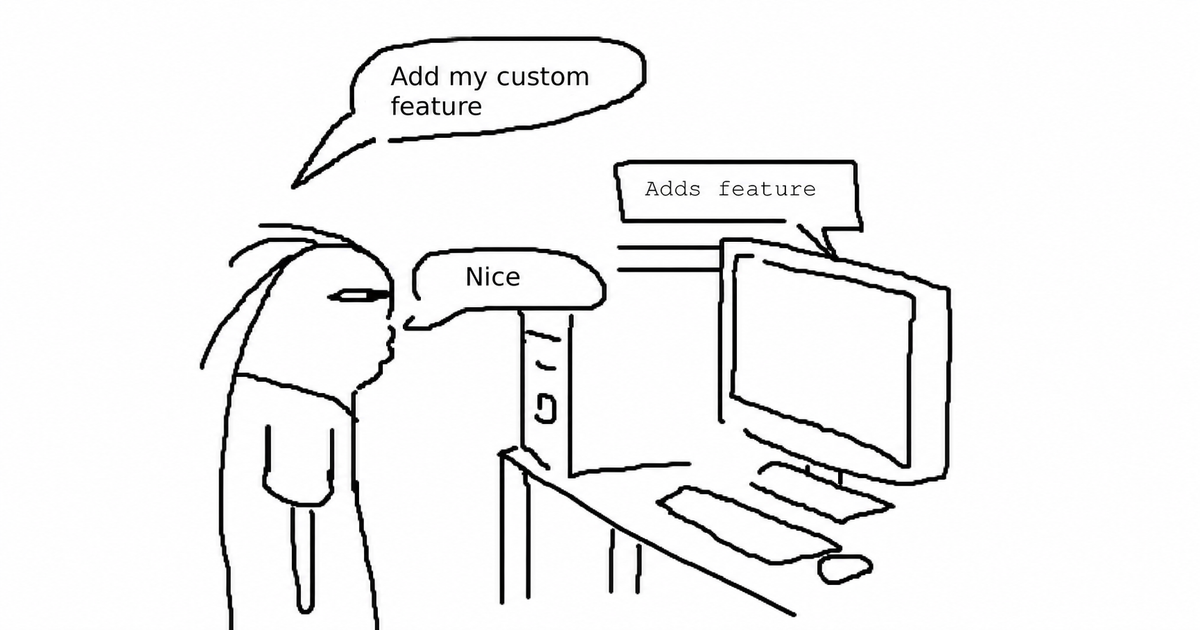
Extensible Software in the age of LLMs | Jeremy Morrell
Solid core + capability-based sandboxes + LLMs = Users with superpowers
OAuth 2.0 DPoP-bound Access Tokens :: Spring Security
RFC 9449 OAuth 2.0 Demonstrating Proof of Possession (DPoP) is an application-level mechanism for sender-constraining an access token.