

A simple but effective project memory framework based on change management principles. Luria tracks and lints references to decision records to catch justifications which reference evidence that the repository's record no longer endorses.

Software Is Made Between Commits
From the Zed Blog: Agents turned the conversation into the real source of our software. DeltaDB is the version control built for it.
Universal Version Control
Building tools to help people explore alternatives, keep track of history, and collaborate better, across all kinds of media.
A Better Memory Bank - Convergence.ninja
As my projects grow and evolve, I've come to realize that a simple snapshot of the "current state" isn't always enough. To truly understand a project's journey—the why behind the what—you need context. You need history. My original Memory Bank was great for telling me where I was, but it wasn't so great at telling me how I got there. That's why I decided it was time for an upgrade.
The Myth of Deterministic Software
How I've come to terms with LLM non-determinism in software and abandoned the comforting lies we've been telling ourselves about traditional software.
Instant LLM Updates with Doc-to-LoRA and Text-to-LoRA
Recent LLM agents have shown impressive capabilities on complex computer use and long-horizon tasks. Yet, they still struggle with long-term memory and adaptation--two of the most important cognitive capabilities that still limit LLMs today. Without long-term memory, users have to provide LLMs with relevant content at the start of every new session, creating friction, discontinuity, and longer time-to-response. Additionally, due to the lack of adaptation, they do not learn from mistakes or user preferences from previous sessions, making each interaction as cumbersome as the first. Traditionally, these two problems are tackled by "updating" the model.
The rebel alliance
This blog is co-authored with Zoe Weinberg and Matt Hawes at ex/ante, and is a follow-up to our first blog post on the topic, 'You don't own your memory.' We need an open architecture that puts us in control of our memories while making their exploitation technically impossible. But how will this shift happen? In order to discover possible implementations, we must understand how our data informs LLMs. The three predominant context engineering techniques are prompt design, retrieval-augmented ...

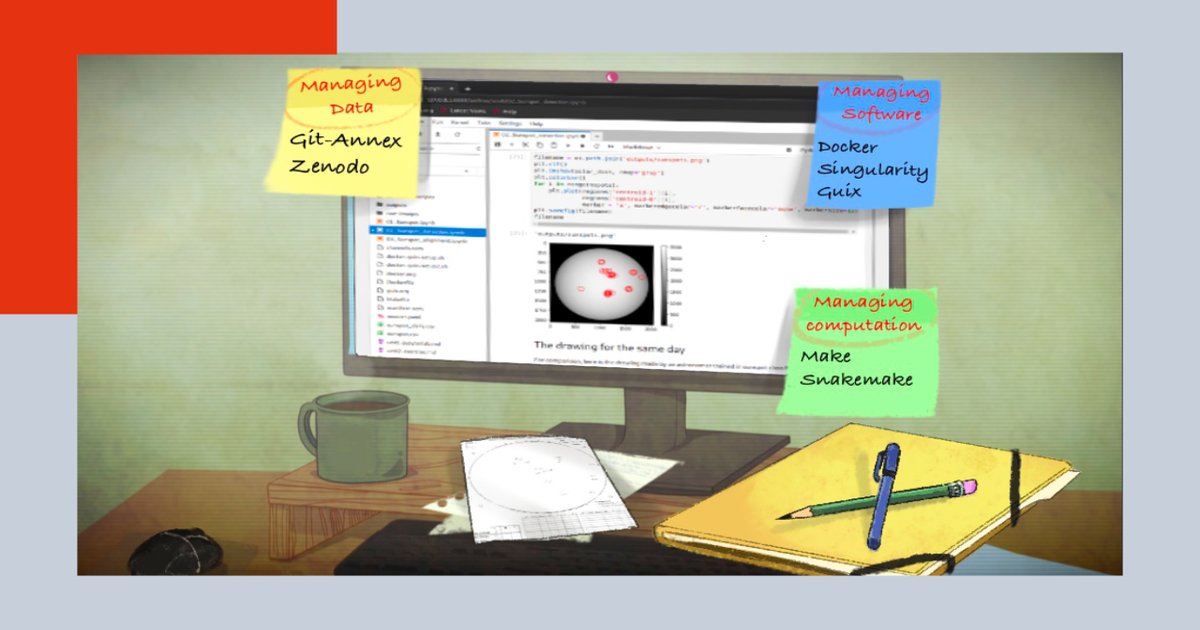
Reproducible Research II: Practices and tools for managing compu…
In this MOOC, we will show you how to improve your practices and your ability to manage and process larger amounts of data, complex computations, while controlling your software environment.
panproto | schematic version control
One engine for schematic version control within and across any schema language.
5 Engineering Manager Archetypes
“There are only two hard things in Computer Science: cache invalidation and naming things.” — Phil Karlton Introduction In today’s tech organisations, you find 2 ... Read more
Lody Is Now Open Source: A Shared Workspace for Teams and Coding Agents
Lody helps teams understand the context behind software decisions. We are moving Lody toward local-first, with the goal of making that context durable, portable, and ultimately controlled by the team

Decision-making software for groups and organizations
Make important decisions together without endless meetings. Loomio keeps discussion, voting, outcomes, and the reasoning behind them in one clear place.

Edit lenses
A lens is a bidirectional transformation between a pair of connected data structures, capable of translating an edit on one structure into an appropriate edit on the other. Many varieties of lenses have been studied, but none, to date, has offered a satisfactory treatment of how edits are represented. Many foundational accounts only consider edits of the form "overwrite the whole structure," leading to poor behavior in many situations by failing to track the associations between corresponding parts of the structures when elements are inserted and deleted in ordered lists, for example. Other theories of lenses do maintain these associations, either by annotating the structures themselves with change information or using auxiliary data structures, but every extant theory assumes that the entire original source structure is part of the information passed to the lens.We offer a general theory of edit lenses, which work with descriptions of changes to structures, rather than with the structures themselves. We identify a simple notion of "editable structure"--a set of states plus a monoid of edits with a partial monoid action on the states--and construct a semantic space of lenses between such structures, with natural laws governing their behavior. We show how a range of constructions from earlier papers on "state-based" lenses can be carried out in this space, including composition, products, sums, list operations, etc. Further, we show how to construct edit lenses for arbitrary containers in the sense of Abbott, Altenkirch, and Ghani. Finally, we show that edit lenses refine a well-known formulation of state-based lenses, in the sense that every state-based lens gives rise to an edit lens over structures with a simple overwrite-only edit language, and conversely every edit lens on such structures gives rise to a state-based lens.


