

Unified Schema-Based Information Extraction
IWE - Agent Memory in Plain Markdown
A local-first knowledge graph for you and your AI agents. Query markdown like a database, edit it with guarded operations, enforce structure with schemas.
MainPage8
The InfoCentral project has historically been focused more heavily upon the symbolic (human-meaningful) side of AI. This included derivatives of Semantic Web and related knowledge representation research, which were dependent on human effort to curate and categorize structured data. The symbolic approach to AI has largely lost the race to the neuro/neuro-symbolic (opaque vectors, statistical) side of AI research, notably the success of the Large Language Model (LLM) paradigm. Due to its faculties with natural language, remarkably little human involvement is needed to infer structure and meaning from traditional (mostly unstructured) information. As such, some of the approaches previously explored in the InfoCentral project have lost relevance. That said, LLM-based tools can perhaps help us finish the symbolic side of the grand AI project, by doing the tedious work that humans were reluctant to do! It has long been theorized that a combination of approaches will ultimately provide the most robust and performant systems, able to work with messy transient unstructured information while also building networks of verifiable persistent structured information that both humans and machines can cross-verify. This may prove useful in both ensuring that future AI systems remain aligned to human goals and values and that inevitable abuses and failures can be easily recovered from. To that end, some research results of this project may be re-usable in a new context.
Schema Induction using LLMs | Sumit Agarwal
Inducing patterns from articles using LLMs
AutoSchemaKG: Autonomous Knowledge Graph Construction through Dynamic Schema Induction from Web-Scale Corpora
In the current era of information abundance, transforming vast amounts of unstructured data into structured, machine-readable knowledge remains one of the most significant challenges in artificial intelligence. Knowledge Graphs (KGs) have emerged as the cornerstone technology for this transformation Zhao et al. (2024), providing the semantic backbone for applications ranging from search engines and question answering Wu et al. (2024); Chen et al. (2024c); Zong et al. (2024); Sun et al. (2024b) to recommendation systems Lyu et al. (2024) and complex reasoning tasks Li et al. (2024b). Yet despite their critical importance, current KG construction approaches remain hampered by an inherent paradox: they require predefined schemas created by domain experts, which fundamentally limits their scalability, adaptability, and domain coverage.
DITA Open Toolkit
The open-source publishing engine for content authored in the Darwin Information Typing Architecture
Open information extraction
In natural language processing, open information extraction (OIE) is the task of generating a structured, machine-readable representation of the information in text, usually in the form of triples or n-ary propositions.
Structured Outputs with Will Kurt and Cameron Pfiffer - Weaviate Podcast #119!
Google for Developers Blog - News about Web, Mobile, AI and Cloud
Explore LangExtract: a Gemini-powered, open-source Python library for reliable, structured information extraction from unstructured text with precise source grounding.
KARMA: Leveraging Multi-Agent LLMs for Automated Knowledge Graph Enrichment
Maintaining comprehensive and up-to-date knowledge graphs (KGs) is critical for modern AI systems, but manual curation struggles to scale with the rapid growth of scientific literature. This paper presents KARMA, a novel framework employing multi-agent large language models (LLMs) to automate KG enrichment through structured analysis of unstructured text. Our approach employs nine collaborative agents, spanning entity discovery, relation extraction, schema alignment, and conflict resolution that iteratively parse documents, verify extracted knowledge, and integrate it into existing graph structures while adhering to domain-specific schema. Experiments on 1,200 PubMed articles from three different domains demonstrate the effectiveness of KARMA in knowledge graph enrichment, with the identification of up to 38,230 new entities while achieving 83.1% LLM-verified correctness and reducing conflict edges by 18.6% through multi-layer assessments.
Semble: Fast and Accurate Code Search for Agents
Fast and Accurate Code Search for Agents. Uses ~98% fewer tokens than grep+read
Mutual intelligibility for schema idiolects.

GitHub - idiolect-dev/idiolect: Mutual intelligibility for schema idiolects.
github.comMutual intelligibility for schema idiolects.
GitHub - idiolect-dev/idiolect: Mutual intelligibility for schema idiolects.
github.comLLM Wikis

AI-compiled knowledge bases
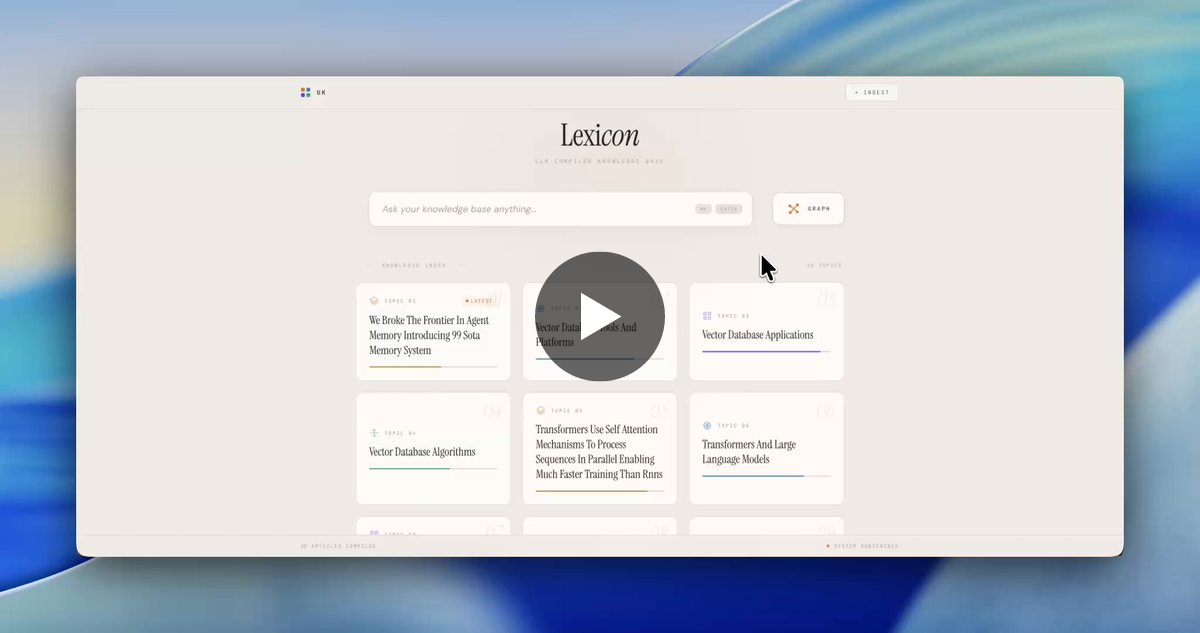
Jared Goering on Twitter / X
OpenWiki: Open Source Repo Documentation for Coding Agents
Wiki Memory

The Obsidian heads were right.
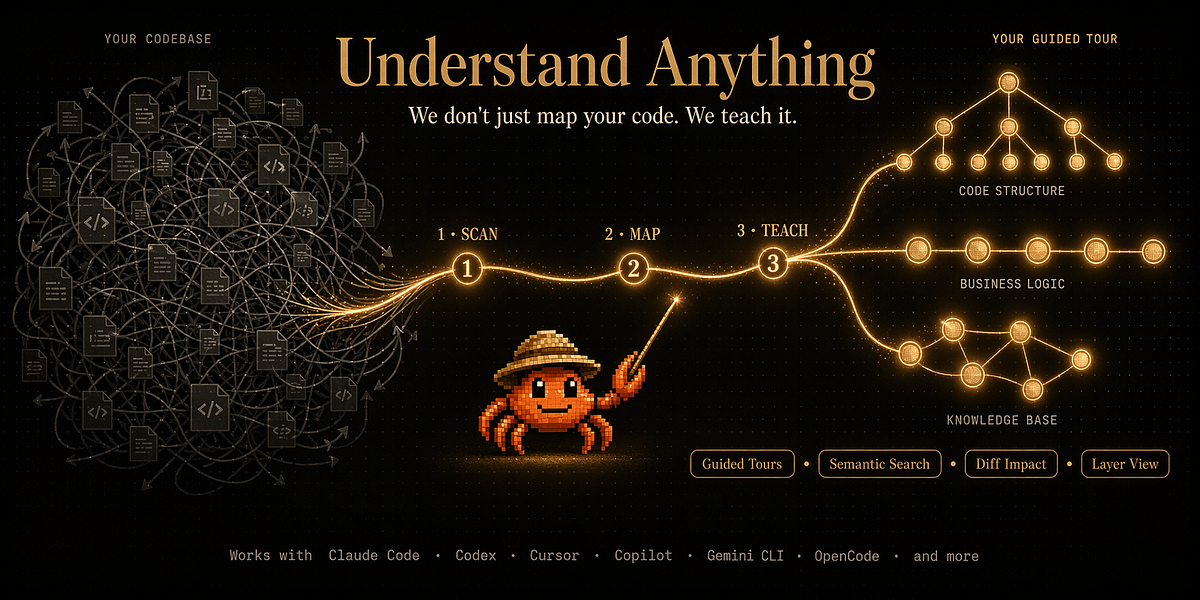
The Definitive Guide to Understand Anything: Turning Code and Knowledge Into Graphs That Teach
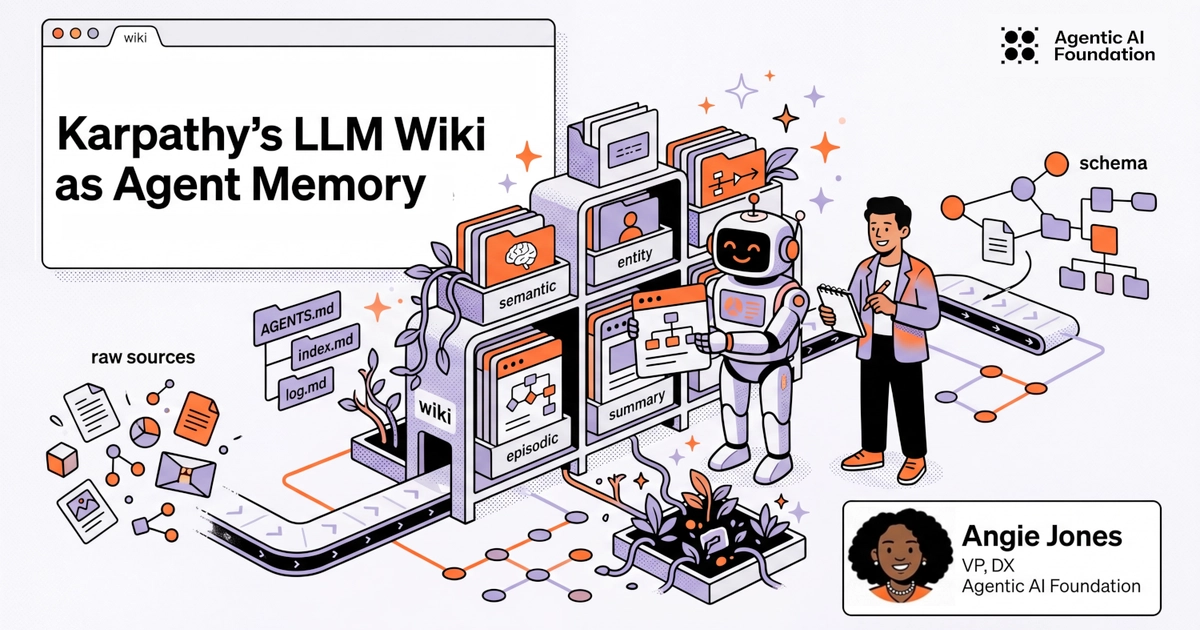
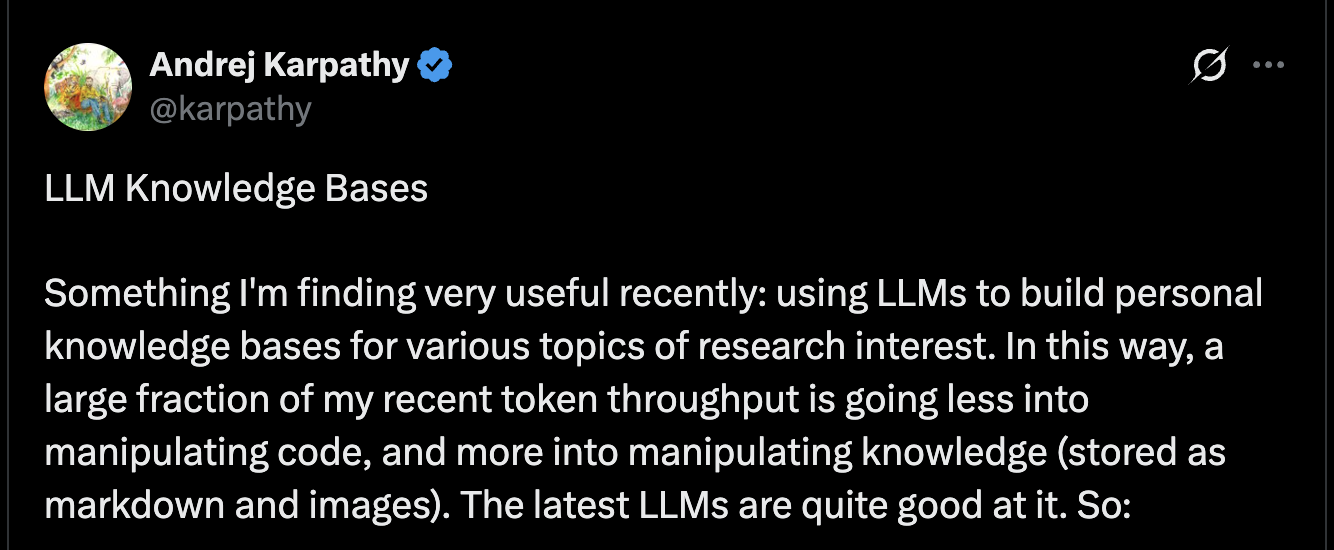
Karpathy's LLM Wiki as Agent Memory - Agentic AI Foundation (AAIF)

