Provider-agnostic, open-source evaluation infrastructure for language models
Introducing gpt-oss
We’re releasing gpt-oss-120b and gpt-oss-20b—two state-of-the-art open-weight language models that deliver strong real-world performance at low cost. Available under the flexible Apache 2.0 license, these models outperform similarly sized open models on reasoning tasks, demonstrate strong tool use capabilities, and are optimized for efficient deployment on consumer hardware.

ToolSandbox: A Stateful, Conversational, Interactive Evaluation Benchmark for LLM Tool Use Capabilities
Recent large language models (LLMs) advancements sparked a growing research interest in tool assisted LLMs solving real-world challenges…

Maintaining the love for coding in the time of AI
By Alex Band Over the last year, we have seen the profound effects Large Language Models (LLMs) have on our open-source software work at NLnet Labs. These can be grouped into two main areas: community contributions and security reports. Before we dive into this topic, let me first give

Stanford CS336 | Language Modeling from Scratch (Spring 2025 Archive)
Archived course website for Stanford CS336: Language Modeling from Scratch (Spring 2025), including schedule, assignments, logistics, and materials.

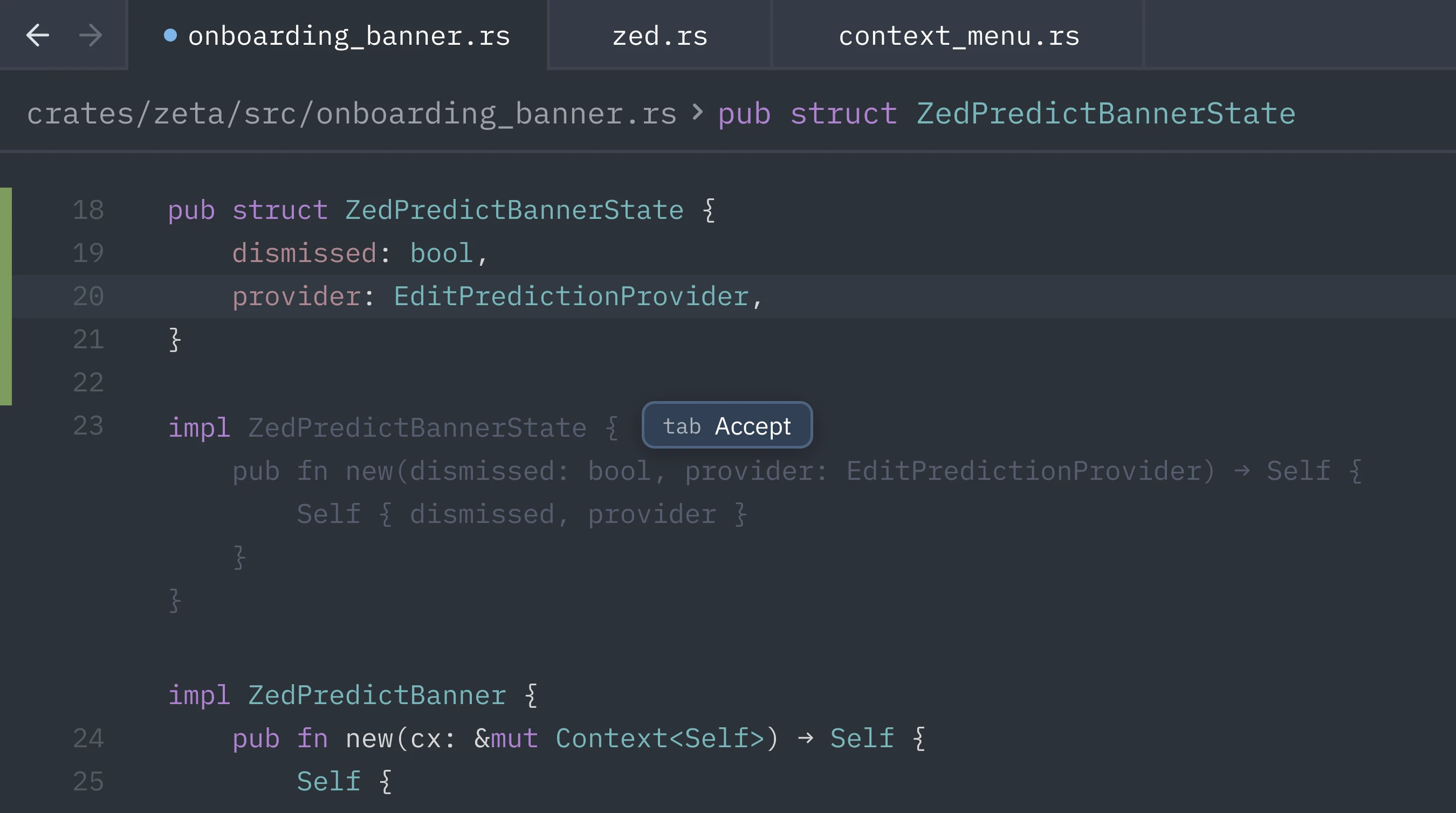
Zed now predicts your next edit with Zeta, our new open model
From the Zed Blog: A tool that predicts your next move. Powered by Zeta, our new open-source, open-data language model.
brexhq/prompt-engineering
Tips and tricks for working with Large Language Models like OpenAI's GPT-4.
Scaling Laws Across Model Architectures: A Comparative Analysis of...
The scaling of large language models (LLMs) is a critical research area for the efficiency and effectiveness of model training and deployment. Our work investigates the transferability and...

gpt-oss: OpenAI validates the open ecosystem (finally)
OpenAI's first open language model release since GPT 2 and what it means for the ecosystem.
Wiki-40B: Multilingual Language Model Dataset
We propose a new multilingual language model benchmark that is composed of 40+ languages spanning several scripts and linguistic families. With around 40 billion characters, we hope this new resource will accelerate the research of multilingual modeling. We train monolingual causal language models using a state-of-the-art model (Transformer-XL) establishing baselines for many languages. We also introduce the task of multilingual causal language modeling where we train our model on the combined text of 40+ languages from Wikipedia with different vocabulary sizes and evaluate on the languages individually. We released the cleaned-up text of 40+ Wikipedia language editions, the corresponding trained monolingual language models, and several multilingual language models with different fixed vocabulary sizes.
Training Large Language Models with Interpreter Feedback using WebAssembly
A fast, local, and secure approach to training LLMs for code with WebAssembly and interpreter-based rewards

Stanford CS336 Language Modeling from Scratch I 2025
Models overview
Claude is a family of state-of-the-art large language models developed by Anthropic. This guide introduces the available models and compares their performance.