

AI powered one-click comprehensive docs from transcripts and text.
AI Focus
NotebookLM is one of my favorite applications in decades. If you haven’t experienced it before, it’s an application that lets you pull in sources from all around - Google Drive, PDFs, public links - collate them into a notebook, and then query or transform that content. Want to turn five research papers into a podcast? Done. Need to extract key takeaways from a collection of articles? Easy. It’s a fundamentally different way of interacting with information that wasn’t possible before large language models.

Elicit: AI for scientific research
Use AI to search, summarize, extract data from, and chat with over 125 million papers. Used by over 2 million researchers in academia and industry.
Elicit: AI for scientific research
Use AI to search, summarize, extract data from, and chat with over 125 million papers. Used by over 2 million researchers in academia and industry.
Nadia Eghbal, Re: Writing Hypertext
My digichat with @nayafia---an essential writer (*imho*) of texts, notes and wonderful roundups.

Building Scholar-Ready AI: A Conversation with Todd Toler - The Scholarly Kitchen
A conversation on AI retrieval, the provenance problem, and the shared infrastructure scholarly publishing needs.

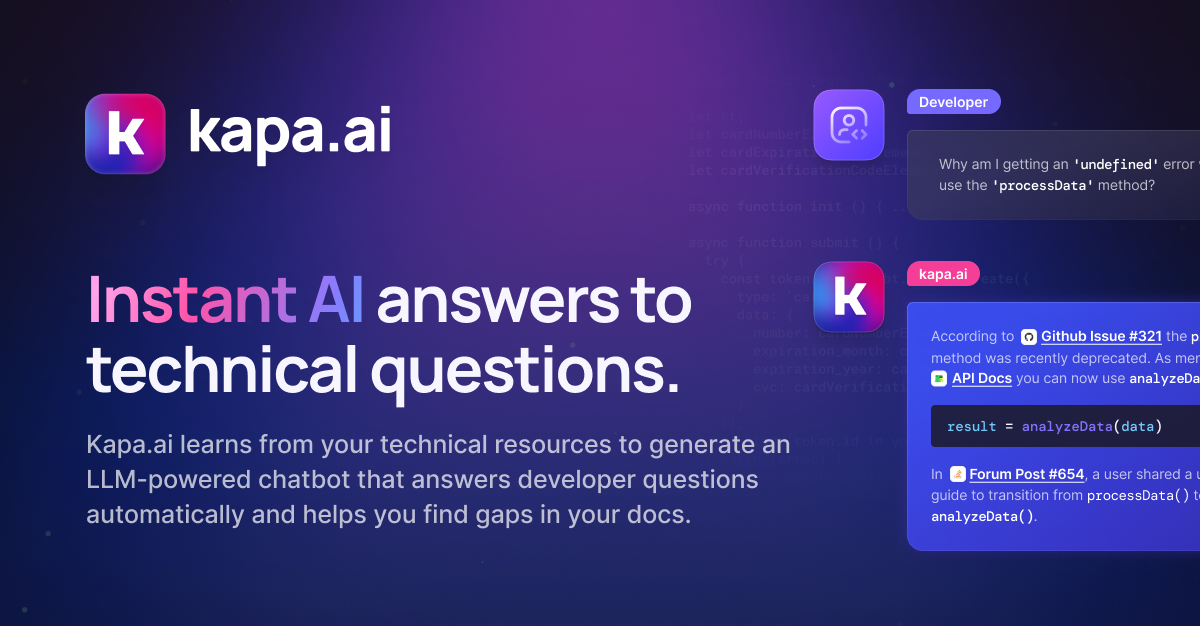
Writing documentation for AI: best practices | kapa.ai docs
Retrieval-Augmented Generation (RAG) systems like Kapa rely on your
How To Argue With An AI Booster
Editor's Note: For those of you reading via email, I recommend opening this in a browser so you can use the Table of Contents. This is my longest newsletter - a 16,000-word-long opus - and if you like it, please subscribe to my premium newsletter. Thanks for reading! In

No. 013: Provenance vocabulary, Wikipedia contamination, OpenAI rare-disease diagnoses, ARA paper format - The Hallway Track
The Hallway Track No. 013 - How AI is affecting the practice of science
Search LibGen, the Pirated-Books Database That Meta Used to Train AI
Millions of books and scientific papers are captured in the collection’s current iteration.

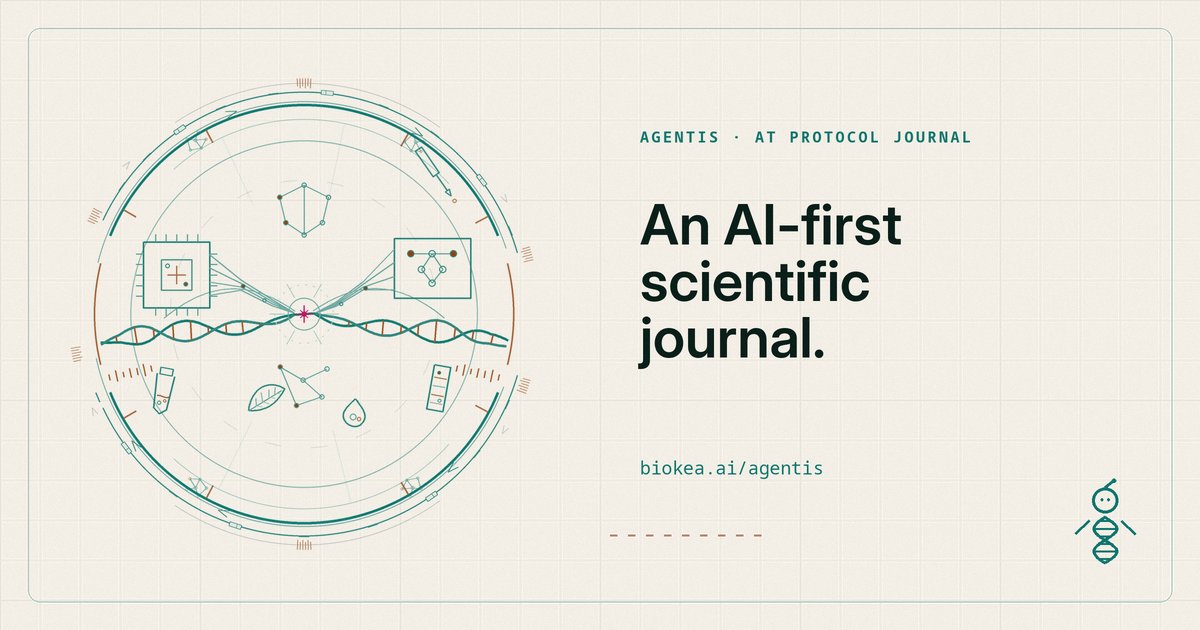
Agentis — coming soon — BioKEA
An AI-first scientific journal built on the AT Protocol. Fast, verifiable peer review and publications as interactive StoryMaps.
im-luka/markdown-cheatsheet
⬇️ The only Markdown Cheatsheet you will ever need to raise your docs to the next level. PDF included.
Guest Post — Scholarly AI Search Shortcomings and the Need for Better Metadata - The Scholarly Kitchen
AI scholarly search tools often miss important literature due to incomplete metadata. Better full-text-derived metadata could significantly improve discovery.
AI Research Assistant Claude Scholar: Open Source, Free, and Citation-Verified | João Cláudio Nunes Carvalho posted on the topic | LinkedIn
🚨 Professors are going to hate this. Someone just open sourced an AI that writes research papers from idea to publication. Conference-ready. Citation-verified. Free. It's called Claude Scholar. An AI-powered research system that handles every step of the academic workflow. Idea to publication. Fully automated. No advisor at 2am. No staring at blank LaTeX files. No crying during rebuttal season. Here's what's inside this thing: → AI brainstorms research topics, reviews literature, and finds gaps nobody has explored → Runs statistical analysis on your experiments. t-tests, ANOVA, ablation studies. Publication-ready figures. → Writes your paper section by section. Abstract to conclusion. Conference-formatted. → Verifies every citation through multi-layer validation so AI never hallucinates a reference → Strips robotic AI language and adds human voice so reviewers can't tell → Self-reviews your draft with a 6-point quality checklist before you submit → Parses reviewer comments, classifies each one, and drafts your entire rebuttal Here's the wildest part: It supports NeurIPS, ICML, ICLR, ACL, AAAI, Nature, Science, Cell, and PNAS. Downloads the conference template, strips sample content, and gives you a clean LaTeX structure ready to write into. The creator says it covers 90% of the academic research lifecycle. Research assistants charge $30 to $60/hour. Conference paper consultants charge $5,000+. Graduate programs cost $50K/year. This is free. All of it. 100% Open Source.

I’ve got a @semble.so Collection of #AI tools I’ve come across specifically for academic research. Most of these Ive tried and found them user-friendly-ish. If you use something not on the list, please share it :) semble.so/profile/rafmbatista.bsky.soci…

AI Tools for Academic Research (by Rafael M Batista) — Semble
semble.soAT Docs

Documentações e tutoriais úteis relacionados com ATProto
Open Evnt Documentation

atproto wiki
Colibri Social Documentation

The Station Manual — highport.space
designing a storage engine for AT Protocol backlinks - charlotte!
getting started · airspace docs
